Login / Register









 Trolleys & Hand Trucks
 Cage Trolleys
 Cleaning Carts & Trolleys
 Construction Trolleys
 Custom Trolleys
 Hand Trucks & Dollies
 Laundry/Linen Trolleys
 Lifting Trolleys
 Order Picking Trolleys
 Panel Cart Trolleys
 Platform Trolleys
 Powered Trolleys
 Shelf & Tiered Trolleys
 Shopping Trolleys
 Stainless Steel Trolleys
 Tool Trolleys
 Utility & Service Carts
 Lifting & Handling Equipment
 Forklift Attachments
 Jib Attachments
 Lifting Hoists & Pallet Hooks Accessories
 Load Skates & Tow Tugs
 Manual Stackers & Lifters
 Pallet Jacks
 Pallet Lifters
 Pallet Rotators & Dispenser
 Powered Pallet Trucks & Electric Lifters
 Scissor Lift Trolleys and Tables
 Conveyor Equipment
 Conveyor Frames & Stands
 Roller & Skate Conveyors
 Ladders & Access Equipment
 Container & Yard Ramps
 Ladders & Step Stools
 Work Platforms & Crane Cages
 Drum Handling Equipment
 Drum Storage & Bunding
 Drum Trolleys & Lifters
 Forklift Drum Handling
 Waste Handling & Bins
 Bin Lifters & Tippers
 Plastic Waste & Wheelie Bins
 Steel Waste & Tipping Bins
 Waste Carts
 Dangerous Goods Storage & Spillage
 Aerosol Cans Storage Cages
 Bunded Pallets & Storage
 Corrosive Goods Storage Cabinets
 DG Storage & Trolleys
 Flammable Liquid Cabinets
 Forklift Gas Storage Cages
 Gas Cylinder Storage Bays
 Site Storage
 Spill Kits
 Shelving & Storage Equipment
 Stillage & Transport Cages
 750 Series Cage Configurations
 Heavy Duty Cabinets
 Heavy Duty Longspan Shelving
 Heavy Duty Shelving
 Mega Bins & Pallets
 Packing & Workbenches
 Parts Trays & Stor-Pak Bins
 Pegboard & Louvre Panels
 Plastic Bins & Crates
 Plastic Handling Solution Bins
 Plastic Pallets
 Stack & Nest Bins
 Pallet Racking Accessories
 Workplace Equipment
 Modular Workbenches
 Electric Height-Adjustable Workbenches
 Floor Matting
 General Workplace Equipment
 Industrial Weighing Scales
 Packaging Machinery
 Stationery Cupboards
 Storage and Stillage Cages
 Tool Trolleys
 Tooling Cabinets
 Workshop Fans and Coolers
 Safety Barriers, PPE & Signage
 Modular Safety Fence System
 Barriers & Bollards
 First Aid Equipment
 Gloves, Knives and PPE
 Signage
 Cleaning & Site Supplies
 Cleaning Equipment
 Cleaning Trolleys
 Rubbish Bins
 Signs & Traffic Supplies
 Construction Equipment
 Construction Trolleys
 Waste Handling
 General Site Equipment
 Concrete Equipment
 Site Storage
 Lifting Equipment
 Spring Workplace Selections
Verdex Insights: At a Glance
-
The Challenge: Indoor workplaces often require safe separation between people, machinery and active work zones, especially as layouts change over time.
-
The Insight: Permanent barriers suit fixed environments, while modular fencing offers flexibility for evolving operations.
-
The Verdex Approach: Verdex supplies modular safety fencing systems designed to create adaptable, compliant work zones in dynamic indoor environments.
Temporary vs Permanent Safety Barriers: What’s the Difference?
Not every safety zone inside a warehouse or factory needs a permanent wall. In many Australian industrial facilities, layouts evolve as operations grow, automation increases or workflows change. The challenge for safety managers and operations teams is determining what type of safety equipment should be used. Whether a fixed, permanent barrier is necessary—and when a flexible modular solution makes more sense.
Understanding the difference between temporary and permanent safety barriers helps businesses invest wisely, improve compliance and maintain operational efficiency.
What Are Permanent Safety Barriers?
Permanent safety barriers are fixed structural installations designed to remain in place long term. These may include:
-
Concrete or masonry walls
-
Steel-framed partition walls
-
Fixed structural guarding
-
Permanently installed caged enclosures
In indoor industrial environments, permanent barriers are often used to create dedicated plant rooms, secure storage areas or fully enclosed machinery cells where the layout is unlikely to change.
Because they are structural in nature, permanent barriers typically require building works, approvals and professional installation. Once installed, they are not designed to be relocated or modified without significant cost and disruption.
For facilities where layouts may evolve over time, many businesses instead consider modular safety fencing systems. Verdex supplies Modular Safety Fence Systems designed for indoor industrial environments, offering a more flexible approach to creating safe work zones without permanent structural changes.
What Is Modular Safety Fencing?
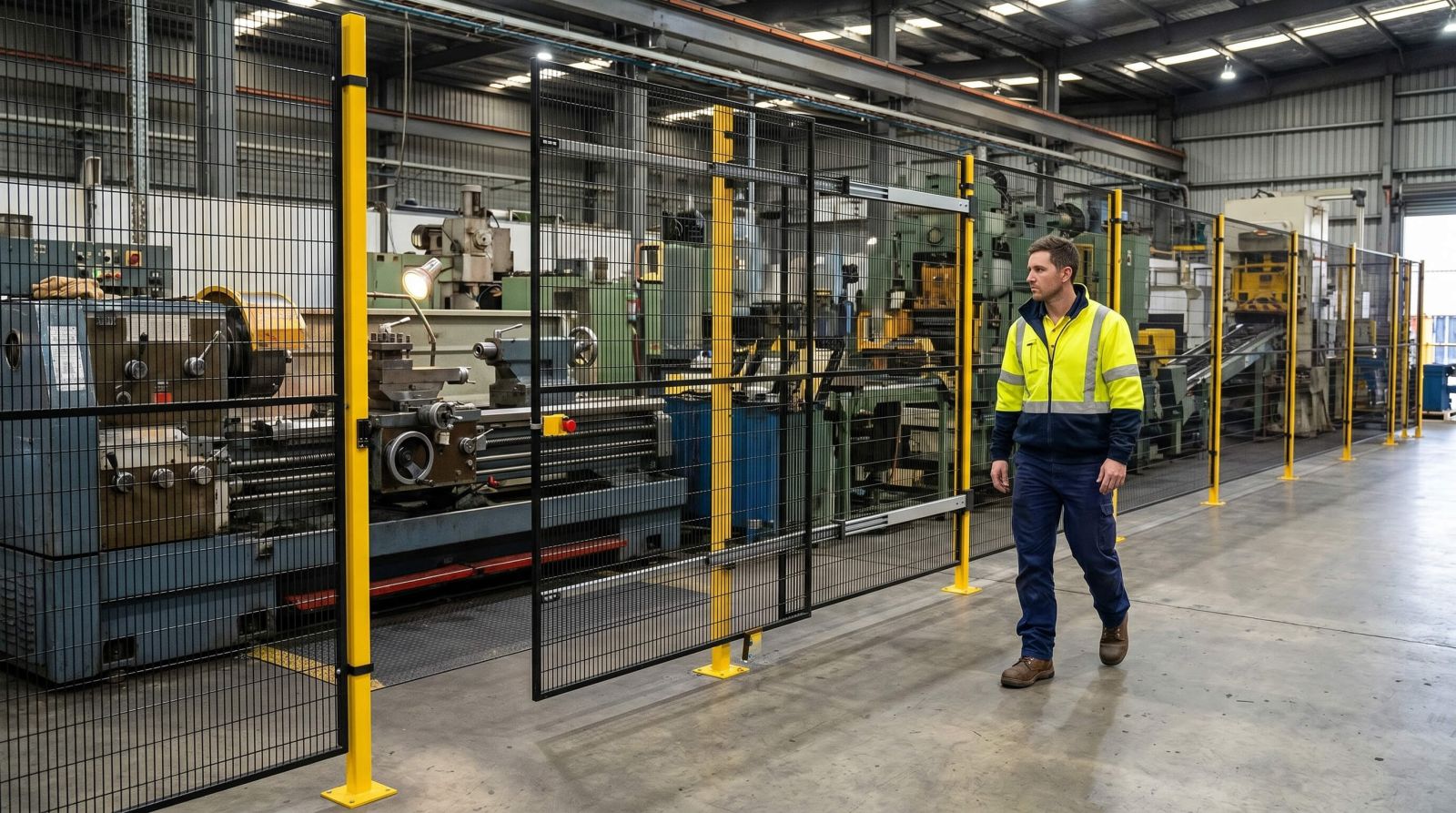
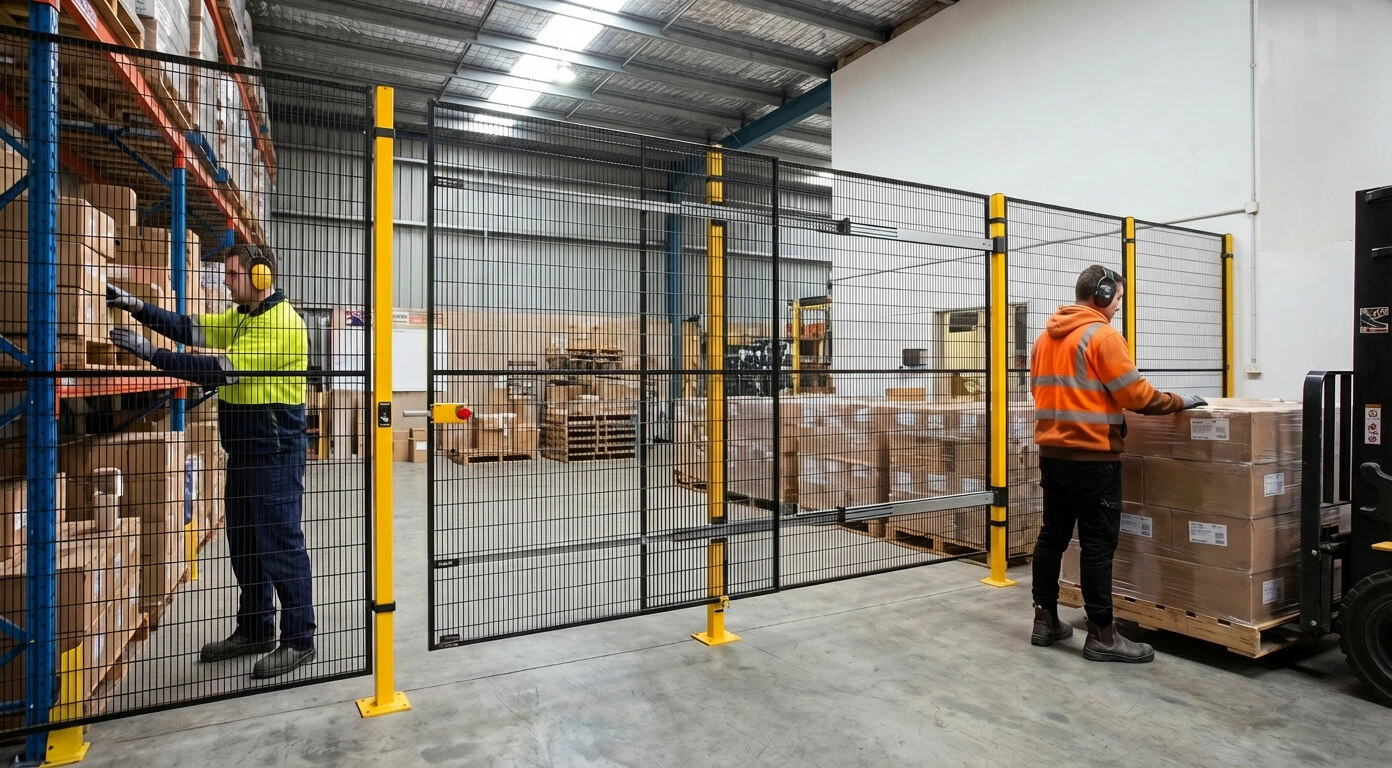
Modular safety fencing is a flexible barrier system made up of interlocking panels, posts and gates that can be configured to create secure indoor work zones.
Unlike permanent walls, modular fencing systems are designed to be:
-
Installed quickly
-
Reconfigured easily
-
Expanded as needed
-
Relocated within the facility
For warehouses, manufacturing plants and distribution centres, modular safety fence systems provide a practical way to isolate machinery, create pedestrian exclusion zones or separate internal construction works—without committing to fixed building alterations.
Verdex supplies modular safety fencing solutions specifically designed for indoor industrial use, including safety fence panels, posts and access gates that can be tailored to suit different operational requirements.
Key Differences Between Temporary and Permanent Barriers
When comparing permanent structures with modular safety fencing, several factors should guide the decision.
1. Installation Time
Permanent barriers often involve building contractors, structural anchoring and potential disruption to surrounding operations. Installation time can range from days to weeks, depending on complexity.
Modular safety fence panels, on the other hand, are designed for efficient installation. Many systems can be assembled with minimal tools and without major structural modification.
This makes them particularly suitable for fast-moving industrial environments where downtime must be minimised.
For short lead-time projects, modular systems clearly offer an advantage.
2. Flexibility
Permanent walls are exactly that—permanent. Once installed, altering their footprint can be costly and disruptive.
Modular fencing is inherently flexible. Panels can be repositioned, extended or reduced as operational requirements change. This is especially valuable in facilities that frequently adjust racking layouts, introduce new machinery or modify production lines.
If your warehouse layout changes every 12–24 months, a fixed wall may quickly become an obstacle rather than an asset.
3. Cost Considerations
Upfront costs for permanent barriers typically include materials, labour, potential engineering consultation and compliance approvals. Over time, modification costs add further expense.
Modular safety fencing generally requires lower initial investment and avoids major construction costs. Because components can be reused and reconfigured, businesses gain longer-term value from the same system.
For expanding facilities, modular systems offer a scalable investment rather than a fixed structural commitment.
4. Ability to Relocate
Relocation is one of the most significant differences between the two options.
Permanent barriers cannot be relocated without demolition and reconstruction.
Modular safety fencing systems can be dismantled and reinstalled elsewhere within the facility. This is ideal for:
-
Machinery upgrades
-
Production line reconfiguration
-
Warehouse expansion
-
Temporary isolation zones
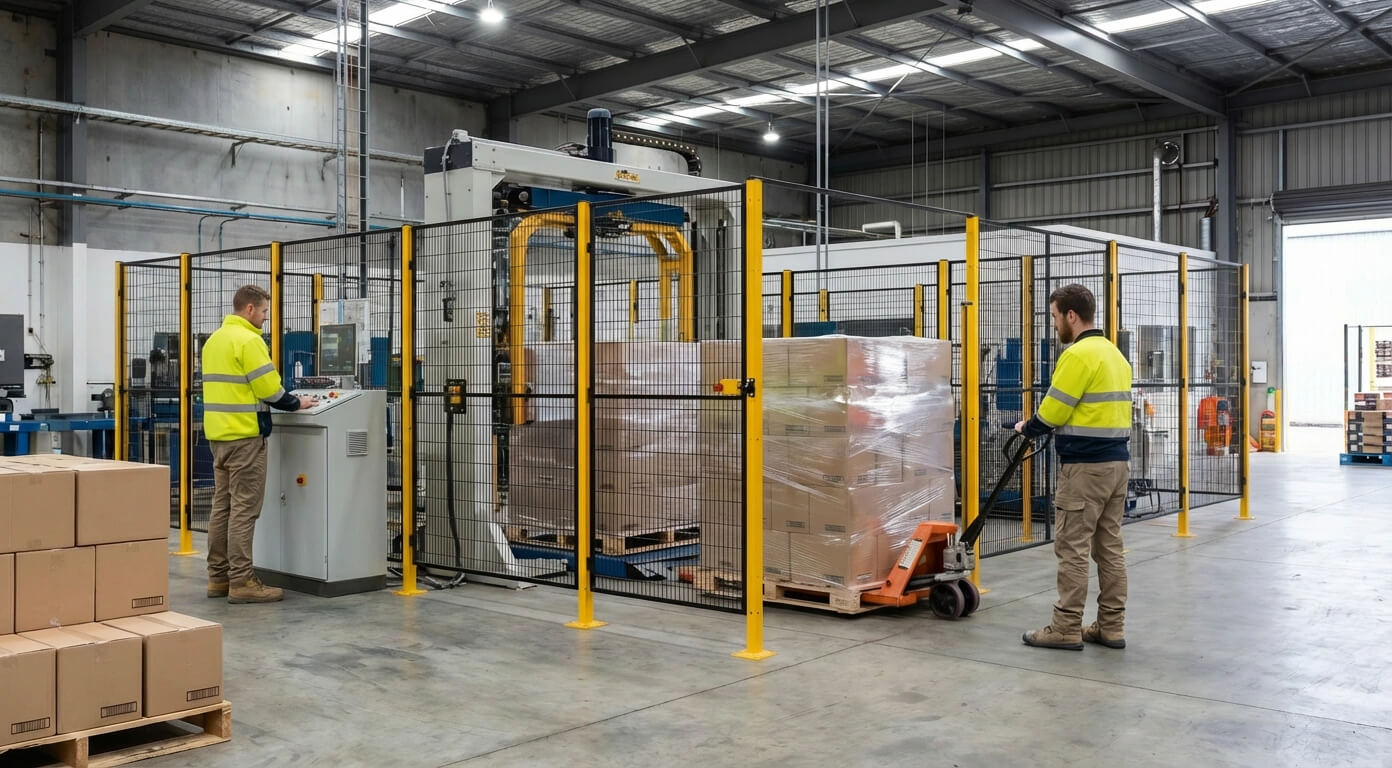
In practical terms, this flexibility is often applied to isolating machinery and automated processes. Modular safety fencing can be configured around equipment such as pallet wrapping machines or production systems, creating a secure perimeter that can be adjusted as machinery is upgraded or repositioned.
For growing operations, the ability to relocate safety infrastructure provides both operational and financial benefits.
When Permanent Structures Are Suitable
While modular fencing offers clear advantages, there are circumstances where permanent structures are appropriate.
Permanent barriers may be suitable when:
-
A facility requires long-term segregation with no expected layout changes
-
High-security storage areas demand fully enclosed construction
-
Fire-rated or acoustically insulated walls are required
-
Regulatory requirements mandate structural separation
In these cases, fixed construction provides durability and compliance certainty for static environments.
However, businesses should carefully consider whether the space is truly static—or whether future changes are likely.
When Modular Safety Fencing Is the Better Choice
For many indoor industrial facilities, modular systems provide a more practical and future-proof solution.
Short-Term Projects
Internal refurbishments, equipment installations or temporary maintenance activities often require defined safety zones for weeks or months—not years. Installing permanent walls for short-term needs is rarely cost-effective.
Temporary modular safety barriers can be deployed quickly and removed once the project is complete, without leaving structural alterations behind.
Changing Layouts
Warehouses frequently adapt to:
-
Increased inventory volumes
-
Automation upgrades
-
Revised picking systems
-
New compliance requirements
In practice, this often involves creating defined work zones within open factory floors. Modular safety fencing can be used to separate different operational areas, helping maintain clear boundaries between workspaces while allowing layouts to be adjusted as requirements change.
Expanding Facilities
Growing businesses often reconfigure indoor floor space to accommodate new processes or equipment. Modular fencing supports phased expansion by enabling incremental safety upgrades without committing to permanent infrastructure too early.
Machinery and Automation Isolation
Modern production environments increasingly rely on automated systems and robotics. These systems may need to be repositioned or upgraded over time.
Using modular fencing with integrated safety gates provides controlled access while maintaining flexibility for future modifications.
Supporting Compliance and Risk Management
Both permanent and modular barriers contribute to safer workplaces when implemented correctly. The key is selecting the right control for the level and duration of risk.
Physical barriers align with the hierarchy of controls promoted by Safe Work Australia. Installing appropriate separation demonstrates that a business has taken reasonably practicable steps to reduce exposure to hazards.
For facilities that undergo regular change, modular systems often provide a more responsive way to maintain compliance without repeated construction works.
Thinking Strategically About Your Facility Layout
Before committing to a permanent structure, it is worth asking:
-
How often does our layout change?
-
Are we planning equipment upgrades in the next 1–3 years?
-
Do we anticipate expansion?
-
Are we isolating a temporary or long-term hazard?
If change is frequent, flexibility becomes a critical safety feature—not just a convenience.
Businesses that proactively assess how dynamic their environment is are better positioned to choose barrier systems that support long-term operational goals.
Integrating Modular Fencing with Broader Indoor Safety Systems
Modular fencing works effectively alongside other indoor safety measures such as:
-
Warehouse safety barriers
-
Bollards and guard rails
-
Pedestrian exclusion zones
-
Clearly marked forklift pathways
For further reading on how modular fencing can be applied in real-world environments, see our guide on Creating Safe Work Zones with Modular Safety Fence Systems.
You may also find our article on 6 Modern Safety Barrier Solutions Every Warehouse Needs useful for understanding how different barrier types work together across industrial settings.
These resources explore how layered safety controls can work together inside enclosed industrial environments.
Making the Right Choice for Your Workplace
Choosing between temporary and permanent safety barriers is not simply about strength or appearance—it is about aligning your safety infrastructure with how your facility operates.
Permanent structures offer durability for static, long-term requirements. Modular safety fencing provides flexibility, faster installation and the ability to adapt as your business evolves.
For many Australian warehouses and manufacturing facilities, the key question is not whether a barrier is needed—but how often the space around it will change.
By considering future growth, operational flexibility and compliance requirements, businesses can select the right solution to create safer, more efficient indoor work environments.
Get Expert Advice on Modular Safety Fencing
Choosing the right barrier system depends on your facility layout, operational requirements and how often your environment changes.
Verdex supplies modular safety fencing solutions designed for indoor industrial and warehouse environments. Our team can help assess your site, identify suitable barrier configurations and recommend systems that balance safety, flexibility and compliance.
If you’re planning a new layout, upgrading machinery or reviewing your current safety controls, speak with the Verdex team to find a solution suited to your workplace.