Login / Register









 Trolleys & Hand Trucks
 Cage Trolleys
 Cleaning Carts & Trolleys
 Construction Trolleys
 Custom Trolleys
 Hand Trucks & Dollies
 Laundry/Linen Trolleys
 Lifting Trolleys
 Order Picking Trolleys
 Panel Cart Trolleys
 Platform Trolleys
 Powered Trolleys
 Shelf & Tiered Trolleys
 Shopping Trolleys
 Stainless Steel Trolleys
 Tool Trolleys
 Utility & Service Carts
 Lifting & Handling Equipment
 Forklift Attachments
 Jib Attachments
 Lifting Hoists & Pallet Hooks Accessories
 Load Skates & Tow Tugs
 Manual Stackers & Lifters
 Pallet Jacks
 Pallet Lifters
 Pallet Rotators & Dispenser
 Powered Pallet Trucks & Electric Lifters
 Scissor Lift Trolleys and Tables
 Conveyor Equipment
 Conveyor Frames & Stands
 Roller & Skate Conveyors
 Ladders & Access Equipment
 Container & Yard Ramps
 Ladders & Step Stools
 Work Platforms & Crane Cages
 Drum Handling Equipment
 Drum Storage & Bunding
 Drum Trolleys & Lifters
 Forklift Drum Handling
 Waste Handling & Bins
 Bin Lifters & Tippers
 Plastic Waste & Wheelie Bins
 Steel Waste & Tipping Bins
 Waste Carts
 Dangerous Goods Storage & Spillage
 Aerosol Cans Storage Cages
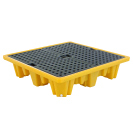 Bunded Pallets & Storage
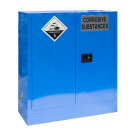 Corrosive Goods Storage Cabinets
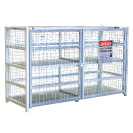 DG Storage & Trolleys
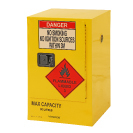 Flammable Liquid Cabinets
 Forklift Gas Storage Cages
 Gas Cylinder Storage Bays
 Site Storage
 Spill Kits
 Shelving & Storage Equipment
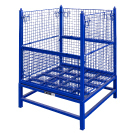 Stillage & Transport Cages
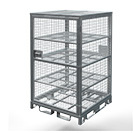 750 Series Cage Configurations
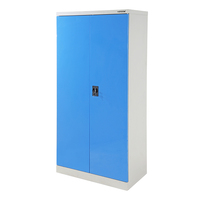 Heavy Duty Cabinets
 Heavy Duty Longspan Shelving
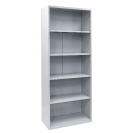 Heavy Duty Shelving
 Mega Bins & Pallets
 Packing & Workbenches
 Parts Trays & Stor-Pak Bins
 Pegboard & Louvre Panels
 Plastic Bins & Crates
 Plastic Handling Solution Bins
 Plastic Pallets
 Stack & Nest Bins
 Pallet Racking Accessories
 Workplace Equipment
 Modular Workbenches
 Electric Height-Adjustable Workbenches
 Floor Matting
 General Workplace Equipment
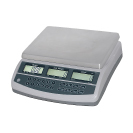 Industrial Weighing Scales
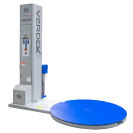 Packaging Machinery
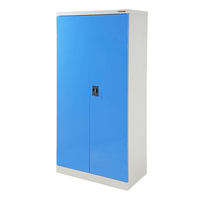 Stationery Cupboards
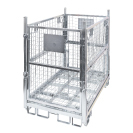 Storage and Stillage Cages
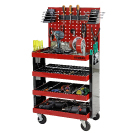 Tool Trolleys
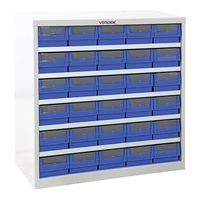 Tooling Cabinets
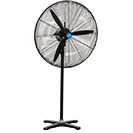 Workshop Fans and Coolers
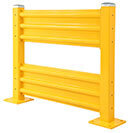 Safety Barriers, PPE & Signage
 Modular Safety Fence System
 Barriers & Bollards
 First Aid Equipment
 Gloves, Knives and PPE
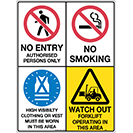 Signage
 Cleaning & Site Supplies
 Cleaning Equipment
 Cleaning Trolleys
 Rubbish Bins
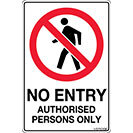 Signs & Traffic Supplies
 Construction Equipment
 Construction Trolleys
 Waste Handling
 General Site Equipment
 Concrete Equipment
 Site Storage
 Lifting Equipment
 Spring Workplace Selections


Categories
- Trolleys & Hand Trucks
- Lifting & Handling Equipment
- Conveyor Equipment
- Ladders & Access Equipment
- Drum Handling Equipment
- Waste Handling & Bins
- Dangerous Goods Storage & Spillage
- Shelving & Storage Equipment
- Workplace Equipment
- Safety Barriers, PPE & Signage
- Cleaning & Site Supplies
- Construction Equipment
- Spring Workplace Selections
Safety Signs
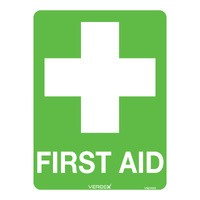

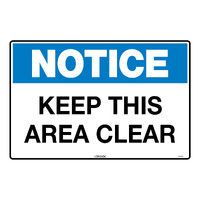
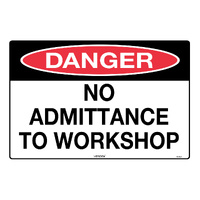
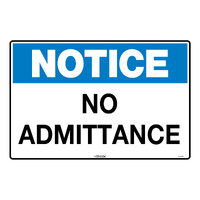
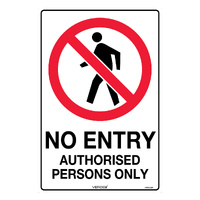
Frequently Asked Questions for Safety Signs
1. What are safety signs used for in workplaces?
Safety signs are used to communicate hazards, instructions, and safety requirements. They help guide behaviour, reduce risks, and ensure workers and visitors are aware of important site information.
2. What types of safety signs are commonly used?
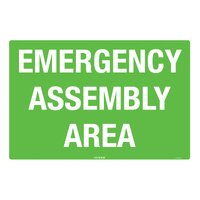
Common types include warning signs, mandatory signs, prohibition signs, and emergency information signs. Each type serves a different purpose in communicating safety messages.
3. Where should safety signs be installed?
Safety signs should be placed in visible locations near hazards, entry points, and high-traffic areas. Proper placement ensures they are seen before a person enters a risk zone.
4. How do safety signs improve workplace safety?
They provide clear, immediate communication that helps prevent unsafe actions. This reduces confusion and supports safer decision-making in everyday tasks.
5. What is the difference between warning and mandatory signs?
Warning signs alert people to potential hazards, while mandatory signs instruct them on actions that must be taken, such as wearing PPE or following specific procedures.
6. Why is visibility important for safety signage?
High visibility ensures that signs are easily noticed and understood. Clear signage helps ensure messages are followed and reduces the chance of accidents caused by missed information.
7. How do safety signs support compliance?
They help businesses meet safety regulations by clearly communicating hazards and required actions. Proper signage is an important part of workplace safety management.
8. What materials are safety signs made from?
Safety signs are commonly made from durable materials such as plastic, metal, or composite materials. The choice depends on the environment and whether the sign is used indoors or outdoors.
9. How often should safety signs be reviewed or updated?
Signs should be reviewed regularly to ensure they remain relevant, visible, and in good condition. Updates may be needed if site layouts or hazards change.
10. What should I consider when selecting safety signs?
Key factors include clarity, durability, compliance standards, and placement. Choosing the right signage ensures effective communication and long-term performance.
Safety Signs – Essential Visual Communication for WHS Compliance
Safety Signs are specialised visual indicators designed to communicate critical information about potential hazards, mandatory actions, restricted areas, and emergency procedures in the workplace. Compliance with Australian Standards (AS 1319-1994) is mandatory, making these signs fundamental tools for risk mitigation, directing personnel, and reinforcing safety culture across all industries. They serve as the final layer of defense and instruction, ensuring workers and visitors are immediately aware of site-specific rules and dangers.
Clear, conspicuous communication is key to preventing accidents and meeting legislative requirements. Verdex supplies a comprehensive range of durable, compliant Safety Signs covering all categories, materials, and sizes, ensuring clear visibility in any environment. These signs are the core of our Safety Signs offering within our larger Workplace Safety Equipment.
Categorisation and Function of Workplace Safety Signs
Safety Signs are categorised by purpose, colour, and shape to convey specific, immediate meaning:
-
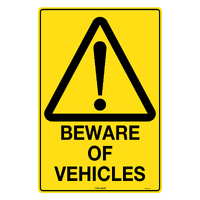
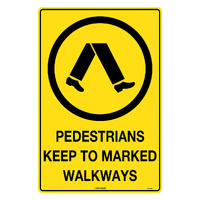
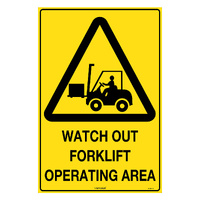
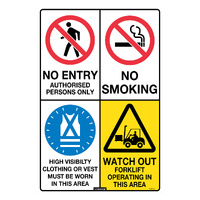
Danger and Warning: Red/White (Danger) and Black/Yellow (Warning) signs alert personnel to immediate life-threatening or non-immediate injury hazards, respectively. See our Danger Signs and Warning Signs.
-
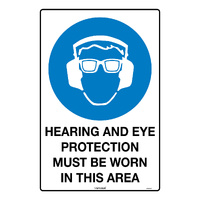
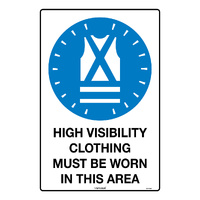
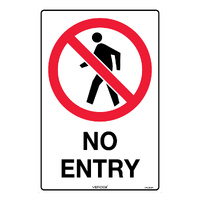
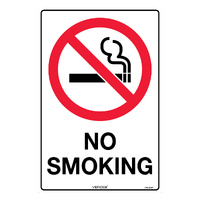
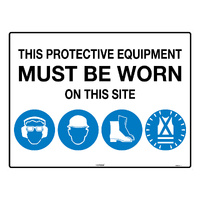
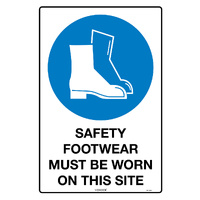
Mandatory and Prohibition: Blue (Mandatory) and Red Circle/Slash (Prohibition) signs dictate required actions or forbid specific behaviour, such as wearing PPE or prohibiting smoking. Explore our Mandatory Signs and Prohibition Signs.
-
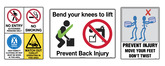
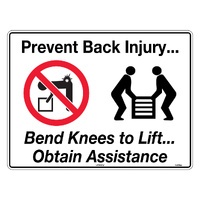
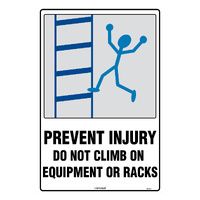
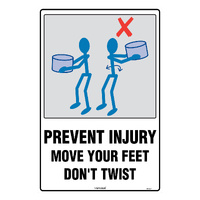
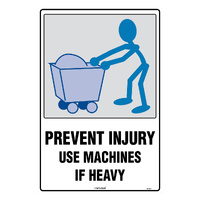
General Safety and Information: Used to provide non-hazard-specific instructions, directions, or housekeeping rules. This includes General Signs and signs specifically designed to Prevent Injury Signs.
How Safety Signs Are Used in the Workforce
Safety Signs are universally required, serving a foundational role in hazard communication across every sector that operates plant, machinery, or handles goods. They are essential across a broad range of Australian industries, including Manufacturing, Construction, Healthcare, Education, Mining, and Logistics, with specific use cases in the following workplaces:
-
Manufacturing Production Halls: Used to mark immediate hazards from machinery moving parts, designate required PPE zones, and indicate emergency shut-off points.
-
Chemical and Processing Plants: Critical for posting information about chemical hazards, acid storage, required ventilation, and the location of spill kits.
-
Warehouse and Distribution Centres: Used extensively to post traffic directions, maximum stack heights, forklift operating rules, and Warehouse Signs for loading dock safety.
-
Construction and Demolition Sites: Essential for outlining exclusion zones, warning of overhead hazards, mandating hard hats, and marking temporary access control points (often alongside equipment like Traffic Cones).
-
Hospital and Medical Facilities: Used to mark biohazard disposal, fire escape routes, restricted access areas, and wet floor zones.
-
Mine Sites and Quarries: Crucial for marking haul roads, blasting zones, vehicle exclusion areas, and high-voltage electricity supply areas.
-
Automotive Workshops: Used to specify lifting points, mark hot surfaces, mandate eye protection during grinding, and outline fire extinguisher locations.
-
School and University Workshops: Essential for marking the correct usage of fixed tools, designating waste disposal bins, and showing emergency stop buttons.
-
Food Production Facilities: Used to enforce hygiene standards, prohibit unauthorised personnel, and mark designated hand-washing stations.
-
Near Physical Barriers: Signs are often permanently mounted on protective barriers, such as alerting staff to collision hazards near Safety Floor Angles.
Shop Compliant Safety Signs
Every Verdex Safety Sign is manufactured to meet rigorous Australian standards, ensuring clear and effective communication that protects your employees and facility.
Ensure your site communications are compliant and effective. Browse our full selection of professional Safety Signs online, or contact our team for advice on sign placement and custom requirements.