Login / Register






 Trolleys & Hand Trucks
 Cage Trolleys
 Cleaning Carts & Trolleys
 Construction Trolleys
 Custom Trolleys
 Hand Trucks & Dollies
 Laundry/Linen Trolleys
 Lifting Trolleys
 Order Picking Trolleys
 Panel Cart Trolleys
 Platform Trolleys
 Powered Trolleys
 Shelf & Tiered Trolleys
 Shopping Trolleys
 Stainless Steel Trolleys
 Tool Trolleys
 Utility & Service Carts
 Lifting & Handling Equipment
 Forklift Attachments
 Jib Attachments
 Lifting Hoists & Pallet Hooks Accessories
 Load Skates & Tow Tugs
 Manual Stackers & Lifters
 Pallet Jacks
 Pallet Lifters
 Pallet Rotators & Dispenser
 Powered Pallet Trucks & Electric Lifters
 Scissor Lift Trolleys and Tables
 Conveyor Equipment
 Conveyor Frames & Stands
 Roller & Skate Conveyors
 Ladders & Access Equipment
 Container & Yard Ramps
 Ladders & Step Stools
 Work Platforms & Crane Cages
 Drum Handling Equipment
 Drum Storage & Bunding
 Drum Trolleys & Lifters
 Forklift Drum Handling
 Waste Handling & Bins
 Bin Lifters & Tippers
 Plastic Waste & Wheelie Bins
 Steel Waste & Tipping Bins
 Waste Carts
 Dangerous Goods Storage & Spillage
 Aerosol Cans Storage Cages
 Bunded Pallets & Storage
 Corrosive Goods Storage Cabinets
 DG Storage & Trolleys
 Flammable Liquid Cabinets
 Forklift Gas Storage Cages
 Gas Cylinder Storage Bays
 Site Storage
 Spill Kits
 Shelving & Storage Equipment
 Stillage & Transport Cages
 750 Series Cage Configurations
 Heavy Duty Cabinets
 Heavy Duty Longspan Shelving
 Heavy Duty Shelving
 Mega Bins & Pallets
 Packing & Workbenches
 Parts Trays & Stor-Pak Bins
 Pegboard & Louvre Panels
 Plastic Bins & Crates
 Plastic Handling Solution Bins
 Plastic Pallets
 Stack & Nest Bins
 Pallet Racking Accessories
 Workplace Equipment
 Modular Workbenches
 Electric Height-Adjustable Workbenches
 Floor Matting
 General Workplace Equipment
 Industrial Weighing Scales
 Packaging Machinery
 Stationery Cupboards
 Storage and Stillage Cages
 Tool Trolleys
 Tooling Cabinets
 Workshop Fans and Coolers
 Safety Barriers, PPE & Signage
 Modular Safety Fence System
 Barriers & Bollards
 First Aid Equipment
 Gloves, Knives and PPE
 Signage
 Cleaning & Site Supplies
 Cleaning Equipment
 Cleaning Trolleys
 Rubbish Bins
 Signs & Traffic Supplies
 Construction Equipment
 Construction Trolleys
 Waste Handling
 General Site Equipment
 Concrete Equipment
 Site Storage
 Lifting Equipment
 Spring Workplace Selections
Verdex Insights: At a Glance
-
The Challenge: Traffic cones are often used incorrectly on worksites, with poor spacing, weak visibility, limited signage, and scattered storage creating avoidable safety and compliance risks.
-
The Insight: Effective cone use depends on clear placement, strong visual cues, night visibility, and organised storage so crews can respond quickly to changing hazards.
-
The Verdex Solution: Verdex supplies traffic cones, cone barriers, signage, and traffic cone trolleys that help worksites create safer zones, improve organisation, and deploy traffic control equipment faster.
Common Mistakes When Using Traffic Cones on Worksites and How to Fix Them
Traffic cones may look simple, but on industrial and construction worksites they play an important role in improving safety, delineating hazards, and organising traffic flow. However, even experienced site managers can make avoidable mistakes when using them — mistakes that undermine safety, reduce compliance with WHS expectations, and make sites look unprofessional.
In this article we explore the most common errors associated with traffic cone use, why site organisation matters, and how utilising the right equipment — including efficient storage systems — improves safety, compliance and overall site effectiveness. For a broader overview of the equipment used to manage temporary traffic zones, see our guide The Complete Guide to Temporary Traffic Control Equipment for Worksites.
For outdoor worksites or larger exclusion zones, taller cones such as the Traffic Cone - 700mm High provide stronger visibility and a clearer boundary between workers, vehicles, and active work areas.
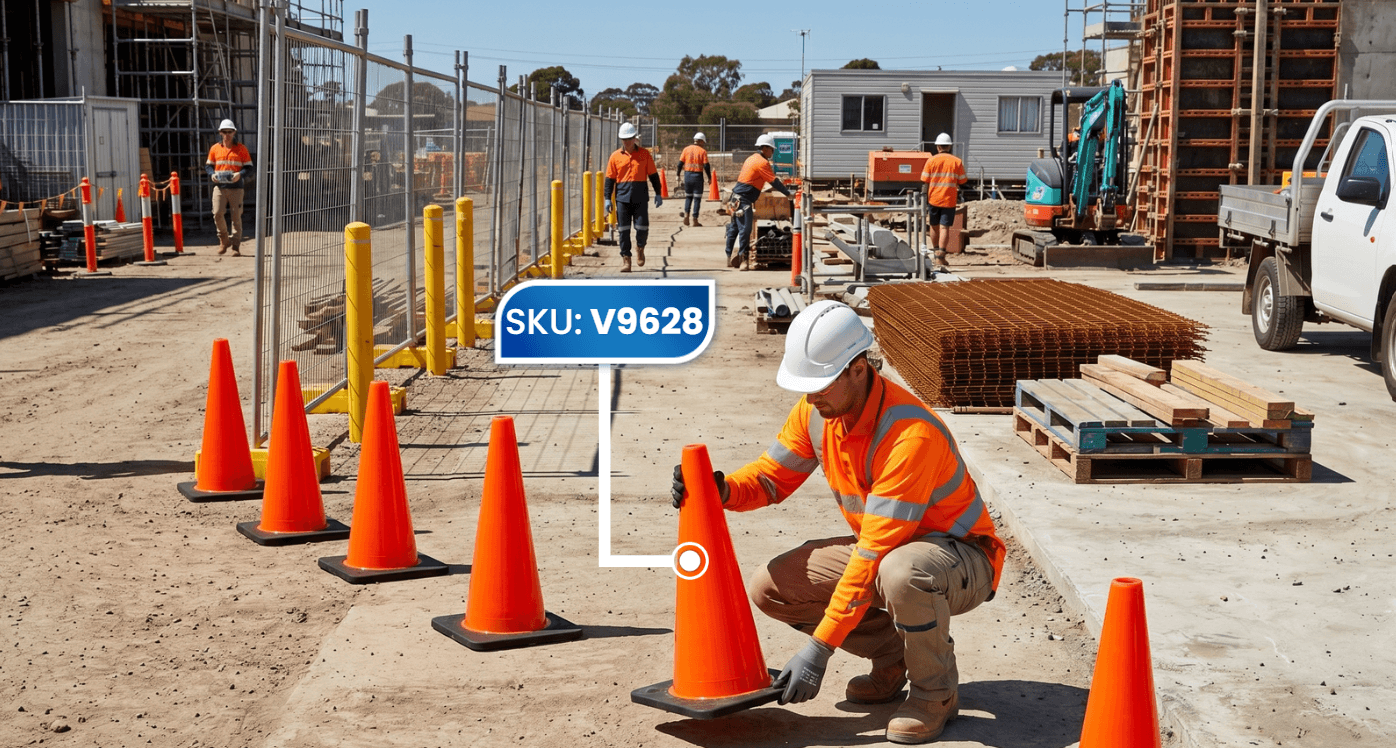
1. Placing Cones Too Close Together or Too Far Apart
One of the simplest, but most consequential mistakes is incorrect spacing of cones.
Why it matters:
Traffic cones are meant to define a safe pathway or hazard zone. When cones are placed too close together, they create visual “noise” and people may disregard them. When placed too far apart, gaps encourage vehicles or pedestrians to stray into restricted or dangerous areas.
How to avoid it:
-
Follow WHS guidance for spacing based on site speed and environment — tighter spacing for slower pedestrian areas, wider spacing for vehicle lanes.
-
Combine cones with supplementary guidance such as safety signage or retractable barriers to reinforce the exclusion zone.
Tool tip: You can use a Traffic Cone - 700mm High or Traffic Cone - 450mm High with spacing adjusted appropriately for your environment. For enhanced visibility in low light, consider traffic cones with reflective tape to ensure they are conspicuous at all times.
2. Not Enough Signage or Visual Cues
A line of cones without adequate direction doesn’t communicate what’s expected. Workers and visitors need clear visual confirmation of risk and how to navigate around it.
Combining cones with Signs & Traffic Supplies helps make hazards, detours and restricted zones easier for workers and visitors to understand.
Why it matters:
Cones act as indicators — but without signage, people often misinterpret them or ignore them altogether, especially in high traffic environments.
How to avoid it:
-
Use standard WHS signage in conjunction with traffic cones, especially where a hazard isn’t obvious.
-
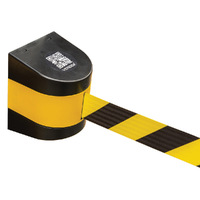
Employ accessories such as cone top retractable barriers to turn cones into continuous visual guidelines — ideal for pedestrians or delineating work zones. For example, Verdex’s Cone Top 10m Retractable Barrier - Black/Yellow enhances cone functionality while enabling easy setup and removal.
If your team regularly sets up cones, barriers and pedestrian exclusion zones, our guide How to Set Up Temporary Barriers Quickly and Safely on Busy Sites explains how to improve setup speed and consistency.
3. Poor Visibility at Night or in Poor Weather
Worksites don’t stop when it gets dark — and neither should effective hazard protection.
Why it matters:
Low light reduces the distance at which cones are recognisable. Without reflective elements, cones are less effective in twilight or night conditions.
How to avoid it:
-
Choose traffic cones with reflective tape that complies with AS/NZS visibility standards.
-
Supplement cones with lighting or reflective signage for key pathways. Reflective cones make a real difference on night shift worksites or in wet, dusty, or foggy conditions, helping vehicles and pedestrians respond sooner.
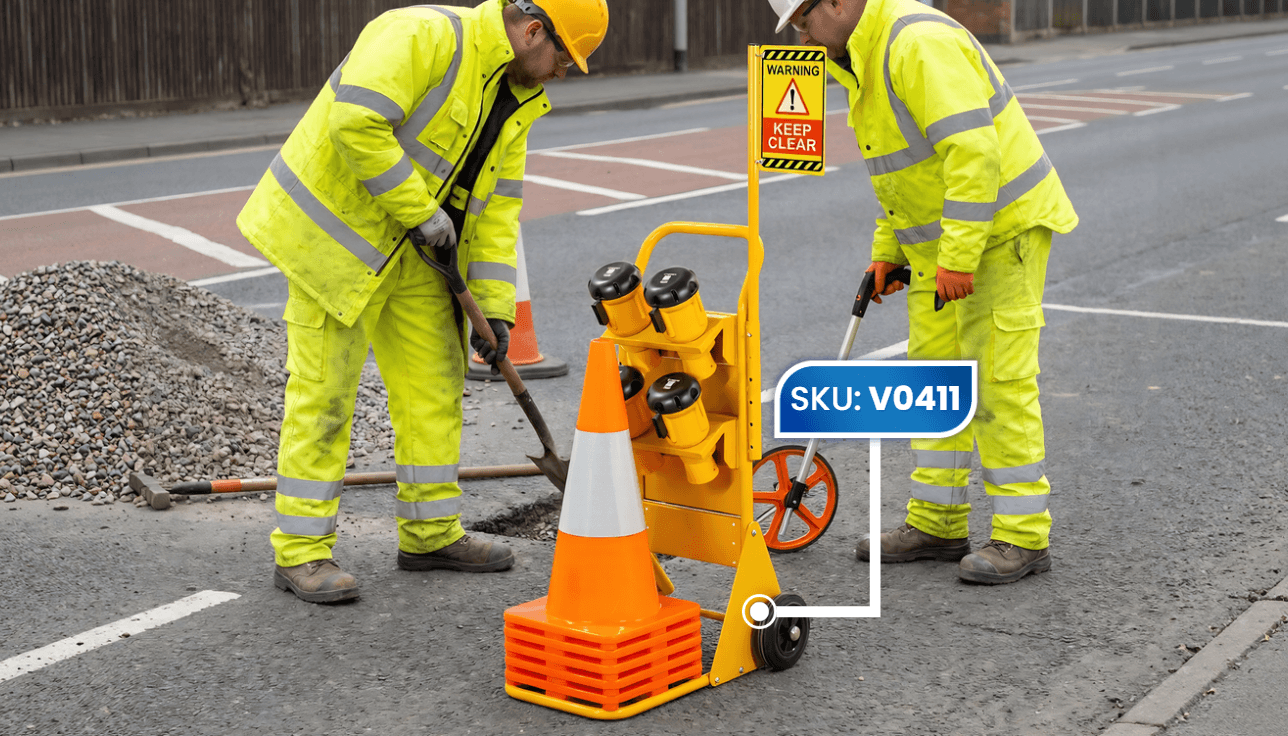
When cones and retractable barriers need to be deployed together, a Traffic Cone Trolley (with Cone Top Holder) helps keep both items organised and ready for faster setup across changing work zones.
By planning for 24/7 visibility, you reduce the risk of incidents during shift changes and outside regular hours.
4. Cones Left Scattered Across Site
Rounding up cones at the end of the day (or shift change) often feels like an afterthought — but forgetting to manage them properly causes problems.
Why it matters:
Loose cones create clutter, increase trip hazards, and reflect poorly on site organisation. They can get in the way of forklifts, vehicles or pedestrians, and slow work down.
How to avoid it:
-
Schedule cone collection as part of end of shift duties.
-
Standardise cone placement and retrieval routines so cones aren’t left on the ground long term.
This approach reinforces good site practices and reduces workplace hazards associated with disorganisation — something we’ve emphasised in our blog on How to Regain Control of Unorganised Worksites with Reliable Material Handling Equipment, which highlights how structured systems reduce clutter, improve safety, and boost productivity.
5. No Central Storage Point for Cones
If cones aren’t stored properly, they’re harder to locate, quicker to get damaged, and slower to deploy — all of which add inefficiency and risk.
Why it matters:
Sites with no designated storage often see cones piling up in tool rooms, corridors, or scattered outside sheds. This increases retrieval time and leads to cones being forgotten.
How to avoid it:
Invest in a dedicated storage system for cones. The benefits include:
-
Speed of access: Workers know exactly where cones are stored, so they can deploy them quickly when required.
-
Asset protection: Cones stored properly are less likely to suffer damage, extending their usable life.
-
Professional appearance: An organised site looks safer and more compliant.
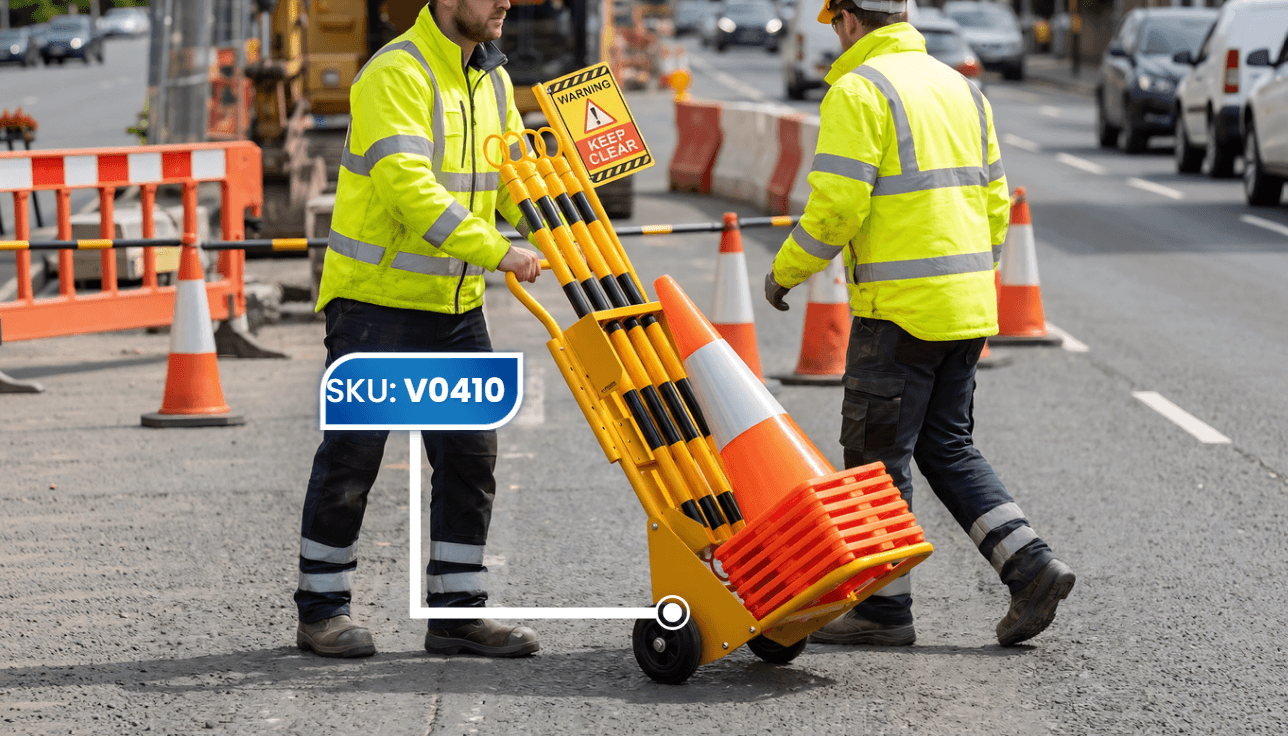
Solution: A specialised cone storage and transport unit from our 400 Series Traffic Cone Trolleys range provides a designated place to keep cones together with related safety accessories.
Designed for industrial use, it also has space for chains, signage and other items, making setup and tear down faster and more efficient.
Having a central storage point elevates your workplace’s organisation, reduces setup times, and reinforces safety culture among crews.
Why Organisation Matters — Beyond Just Tidiness
Good organisation is not a cosmetic concern; it supports safety, compliance and productivity:
-
Reduces Risk: Clear, structured zones reduce trip hazards, collisions, and confusion around work areas.
-
Improves Compliance: Well organised cone placement — combined with signage — supports WHS risk controls.
-
Signals Professionalism: A tidy worksite demonstrates management commitment to safety and helps build trust with workers, auditors and clients.
For sites that also use extension bars or longer barrier components, a Traffic Cone Trolley (with Extension Bar Holder) helps transport cones and accessories together, reducing trips and improving setup consistency.
Why Quick Access to Cones Makes a Difference
In dynamic environments, hazards can change quickly — and safety equipment needs to keep up. When cones are easy to find and deploy, you can:
-
React promptly to emerging hazards (e.g. spill zones, equipment outages).
-
Maintain consistent traffic management across shifts.
-
Reduce downtime associated with setup or re work.
Lack of quick access increases the chances of cones being substituted with inappropriate tools (e.g. barrels, random objects), which compromises safety and compliance.
How a Trolley Keeps Cones Together — And Why That Matters
A traffic cone trolley is more than just a storage rack:
-
Mobility: Move all cones across site in one trip.
-
Organisation: Dedicated spots for cones and accessories prevent loss.
-
Visibility: Trolleys are themselves a visible safety asset when stored properly.
-
Integration: Many trolleys include holders for signs, chains and other boundaries.
By investing in one, you create a single point of responsibility, making safety equipment deployment quicker and more consistent.
Improve Worksite Safety and Traffic Control with Verdex
Effective traffic cone use is about more than simply placing cones around a hazard. Proper spacing, strong visibility, clear signage, and organised storage all play an important role in maintaining safer, more compliant worksites. When traffic control equipment is easy to access and deployed correctly, crews can respond faster to changing conditions while reducing clutter, confusion, and unnecessary risk.
Verdex supplies a wide range of traffic cones, cone barriers, signage, and traffic cone trolleys designed to support safer industrial, warehouse, and construction environments. From improving pedestrian separation to streamlining equipment storage and deployment, our solutions help businesses create more organised and efficient worksites.
If you’re reviewing your current traffic management setup or looking to improve worksite organisation, the Verdex team can help you identify practical solutions suited to your site requirements and operational workflow.