Login / Register





 Trolleys & Hand Trucks
 Cage Trolleys
 Cleaning Carts & Trolleys
 Construction Trolleys
 Custom Trolleys
 Hand Trucks & Dollies
 Laundry/Linen Trolleys
 Lifting Trolleys
 Order Picking Trolleys
 Panel Cart Trolleys
 Platform Trolleys
 Powered Trolleys
 Shelf & Tiered Trolleys
 Shopping Trolleys
 Stainless Steel Trolleys
 Tool Trolleys
 Utility & Service Carts
 Lifting & Handling Equipment
 Forklift Attachments
 Jib Attachments
 Lifting Hoists & Pallet Hooks Accessories
 Load Skates & Tow Tugs
 Manual Stackers & Lifters
 Pallet Jacks
 Pallet Lifters
 Pallet Rotators & Dispenser
 Powered Pallet Trucks & Electric Lifters
 Scissor Lift Trolleys and Tables
 Conveyor Equipment
 Conveyor Frames & Stands
 Roller & Skate Conveyors
 Ladders & Access Equipment
 Container & Yard Ramps
 Ladders & Step Stools
 Work Platforms & Crane Cages
 Drum Handling Equipment
 Drum Storage & Bunding
 Drum Trolleys & Lifters
 Forklift Drum Handling
 Waste Handling & Bins
 Bin Lifters & Tippers
 Plastic Waste & Wheelie Bins
 Steel Waste & Tipping Bins
 Waste Carts
 Dangerous Goods Storage & Spillage
 Aerosol Cans Storage Cages
 Bunded Pallets & Storage
 Corrosive Goods Storage Cabinets
 DG Storage & Trolleys
 Flammable Liquid Cabinets
 Forklift Gas Storage Cages
 Gas Cylinder Storage Bays
 Site Storage
 Spill Kits
 Shelving & Storage Equipment
 Stillage & Transport Cages
 750 Series Cage Configurations
 Heavy Duty Cabinets
 Heavy Duty Longspan Shelving
 Heavy Duty Shelving
 Mega Bins & Pallets
 Packing & Workbenches
 Parts Trays & Stor-Pak Bins
 Pegboard & Louvre Panels
 Plastic Bins & Crates
 Plastic Handling Solution Bins
 Plastic Pallets
 Stack & Nest Bins
 Pallet Racking Accessories
 Workplace Equipment
 Modular Workbenches
 Electric Height-Adjustable Workbenches
 Floor Matting
 General Workplace Equipment
 Industrial Weighing Scales
 Packaging Machinery
 Stationery Cupboards
 Storage and Stillage Cages
 Tool Trolleys
 Tooling Cabinets
 Workshop Fans and Coolers
 Safety Barriers, PPE & Signage
 Modular Safety Fence System
 Barriers & Bollards
 First Aid Equipment
 Gloves, Knives and PPE
 Signage
 Cleaning & Site Supplies
 Cleaning Equipment
 Cleaning Trolleys
 Rubbish Bins
 Signs & Traffic Supplies
 Construction Equipment
 Construction Trolleys
 Waste Handling
 General Site Equipment
 Concrete Equipment
 Site Storage
 Lifting Equipment
 Spring Workplace Selections
Verdex Insights: At a Glance
-
The Challenge: Busy worksites require temporary barriers to be deployed quickly, but poor organisation and manual handling can slow setup and increase risk.
-
The Insight: Effective temporary barriers rely on visibility, correct placement and having equipment that can be deployed efficiently as conditions change.
-
The Verdex Approach: Verdex supplies traffic management equipment designed to streamline setup, improve organisation and support safer, faster barrier deployment on site.
How to Set Up Temporary Barriers Quickly and Safely on Busy Sites
Managing movement and safety on busy worksites is a constant challenge. Whether it is a warehouse loading area, construction zone, car park, or public event site, temporary barriers are an important workplace safety equipment that play an essential role in protecting both workers and visitors.
When deployed properly, temporary barriers help control access, guide traffic, and clearly define hazardous areas. They reduce the risk of accidents while ensuring that work activities can continue with minimal disruption. However, barriers must be set up efficiently to avoid slowing down operations.
This guide explains how to set up temporary barriers quickly and safely, including practical advice on cone spacing, sign placement and how tools like a cone trolley can help streamline the process.
When Temporary Barriers Are Needed
Temporary barriers are widely used across industrial and commercial sites. Because they can be deployed and removed quickly, they provide a flexible safety solution when conditions change.
Some common situations where temporary barriers are used include:
Repairs and maintenance
Worksites often need to isolate machinery or infrastructure during repairs. Temporary barriers help keep workers safe by preventing unauthorised access to the work zone.
Cleaning operations
Wet floors, chemical cleaning agents or equipment in operation can pose hazards. Cones and barriers clearly indicate restricted areas until the surface is safe again.
Loading and unloading trucks
Busy loading docks frequently involve both pedestrian and vehicle movement. Temporary barriers can separate these zones to reduce the risk of collisions.
Events or public access management
Industrial sites sometimes host visitors, contractors or training events. Temporary barriers help direct foot traffic and ensure visitors stay within designated areas.
Spill clean-up
When liquids or chemicals spill, quickly marking the area helps prevent slips and accidental exposure. Barriers provide a clear visual signal until the hazard is removed.
In all these situations, the key to maintaining safety is having equipment that is easy to deploy, highly visible and organised.
Temporary barriers are used across a wide range of industries and environments. To see how different workplaces rely on these systems, read our guide on Workplaces That Rely On Safety Barriers.
Simple Tips for Setting Up Temporary Barriers
Setting up temporary barriers effectively requires more than simply placing cones around an area. A well-planned setup improves visibility, maintains workflow and ensures hazards are clearly communicated.
1. Correct Cone Spacing
Consistent cone spacing helps people quickly understand where they can and cannot move.
-
For pedestrian areas, cones spaced around 1–2 metres apart generally provide a clear visual boundary.
-
For vehicle lanes or traffic control, spacing may be wider depending on traffic speed and site conditions.
-
Cones should be positioned in straight lines where possible to create a clearly defined pathway.
Maintaining even spacing improves visibility and prevents confusion for workers, drivers and visitors moving through the area.
2. Clear Sign Placement
Signs are a crucial part of temporary barrier systems because they communicate hazards before people reach the restricted area.
Effective sign placement includes:
-
Positioning signs in advance of the hazard to provide adequate warning.
-
Ensuring signs are visible and readable at a distance.
-
Placing signs at eye level where possible for pedestrians and drivers.
Simple wording such as “Work Zone Ahead”, “Pedestrian Detour” or “Cleaning in Progress” helps people instantly understand the situation and respond appropriately.
3. Stable Barrier Setup
Temporary barriers must remain stable even in busy environments where they may be bumped by equipment, exposed to wind or placed on uneven surfaces.
To improve stability:
-
Use cones with weighted bases where possible.
-
Ensure retractable belts, chains or bunting are properly attached.
-
Check that barriers remain upright and clearly visible after installation.
A well-organised setup not only improves safety but also reduces the time required to deploy and adjust barriers throughout the day. On larger or more active sites, using equipment that keeps cones, barriers and accessories together can significantly improve efficiency.
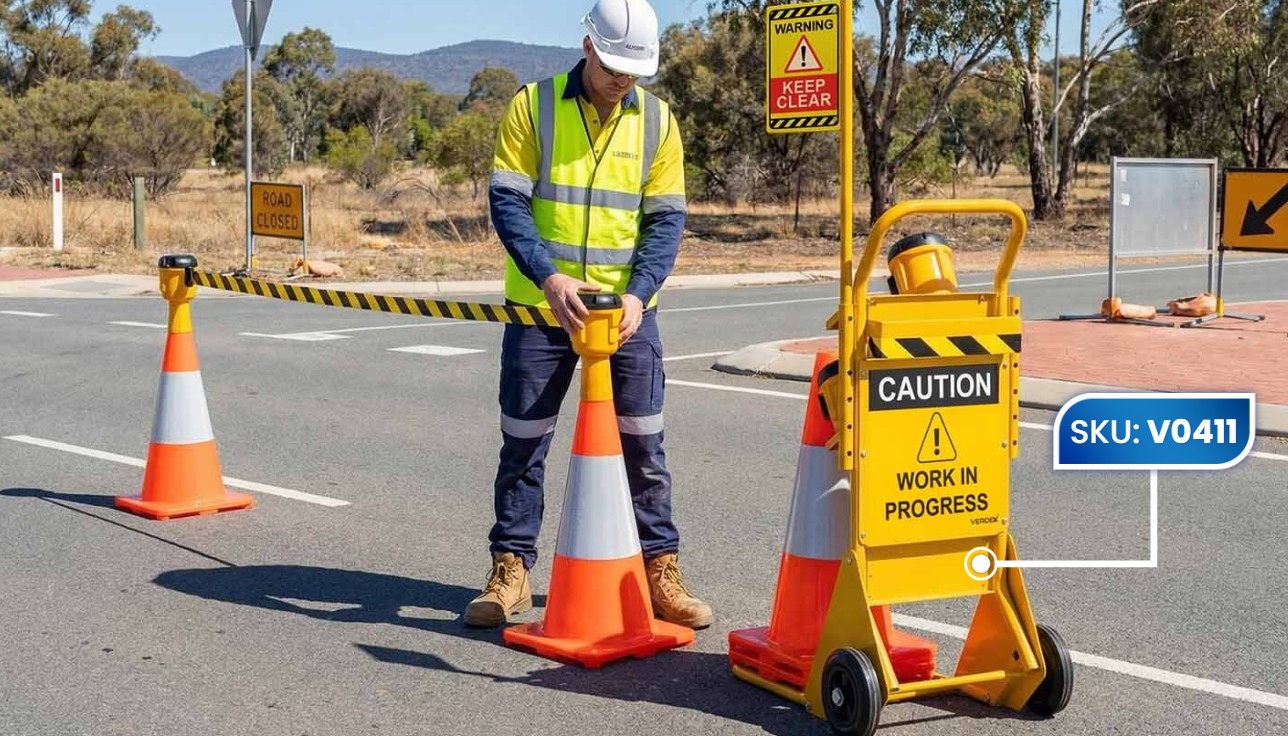
In situations where barriers need to be connected quickly and adjusted frequently, tools such as a traffic cone trolley with integrated cone top holders allow teams to position cones and attach retractable belts in one continuous process. This helps maintain consistent spacing while speeding up setup across changing work zones.
Common Problems Without Proper Organisation
Even experienced teams can face delays when temporary barriers are not managed efficiently.
Some of the most common issues include:
Carrying cones one by one
Transporting cones individually can significantly slow down setup time, particularly when barriers need to cover large areas.
Equipment stored in multiple locations
When cones, chains and signs are stored separately, staff may waste valuable time locating the required equipment.
Slow setup times
If barriers are difficult to deploy, work tasks such as maintenance or cleaning may be delayed while the area is secured.
These challenges are particularly noticeable on large worksites where barriers are deployed frequently throughout the day.
How a Cone Trolley Helps
A cone trolley is a simple yet highly effective tool that improves the efficiency of temporary barrier setup.
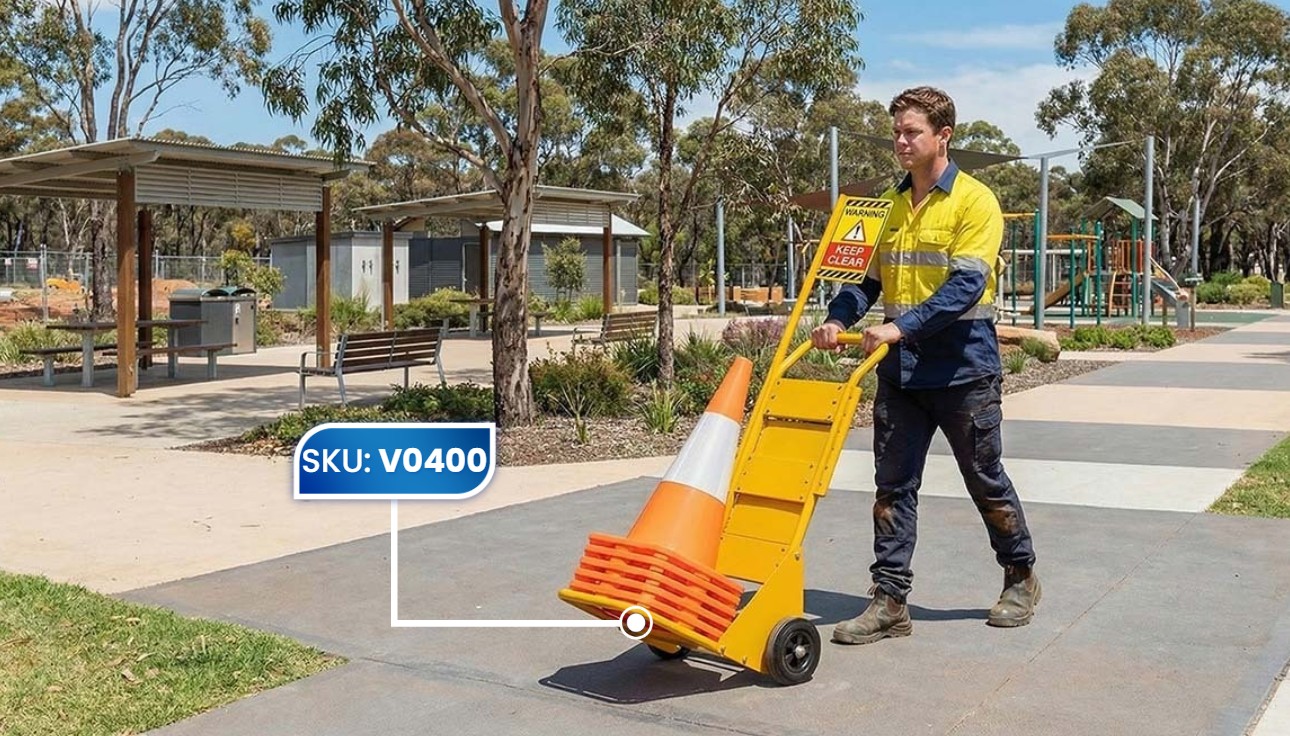
By allowing staff to transport multiple cones and accessories at once, a trolley helps streamline the entire process.
Move Multiple Cones at Once
Cone trolleys allow workers to transport several cones in a single trip, rather than carrying them individually.
This provides several advantages:
-
Reduced physical strain for workers
-
Faster setup across large areas
-
Fewer trips required to gather equipment
On busy sites where barriers are frequently moved, this can save significant time each day.
Keep Equipment Organised
Cone trolleys also provide a central place to store related equipment such as:
-
Retractable belts
-
Chains and bunting
-
Small safety signs
-
Additional traffic control accessories
Keeping everything together ensures that staff always have the equipment they need when deploying temporary barriers.
Faster Response in Emergencies
In urgent situations — such as spill clean-up, emergency repairs or sudden lane closures — speed is critical.
A cone trolley allows teams to quickly transport all necessary equipment to the location and establish a safe perimeter within minutes.
For example, the Verdex Traffic Cone Trolley (with Extension Bar) is designed to support efficient outdoor deployment. Its powder-coated steel construction helps withstand harsh site conditions while keeping cones and accessories organised and ready for use.
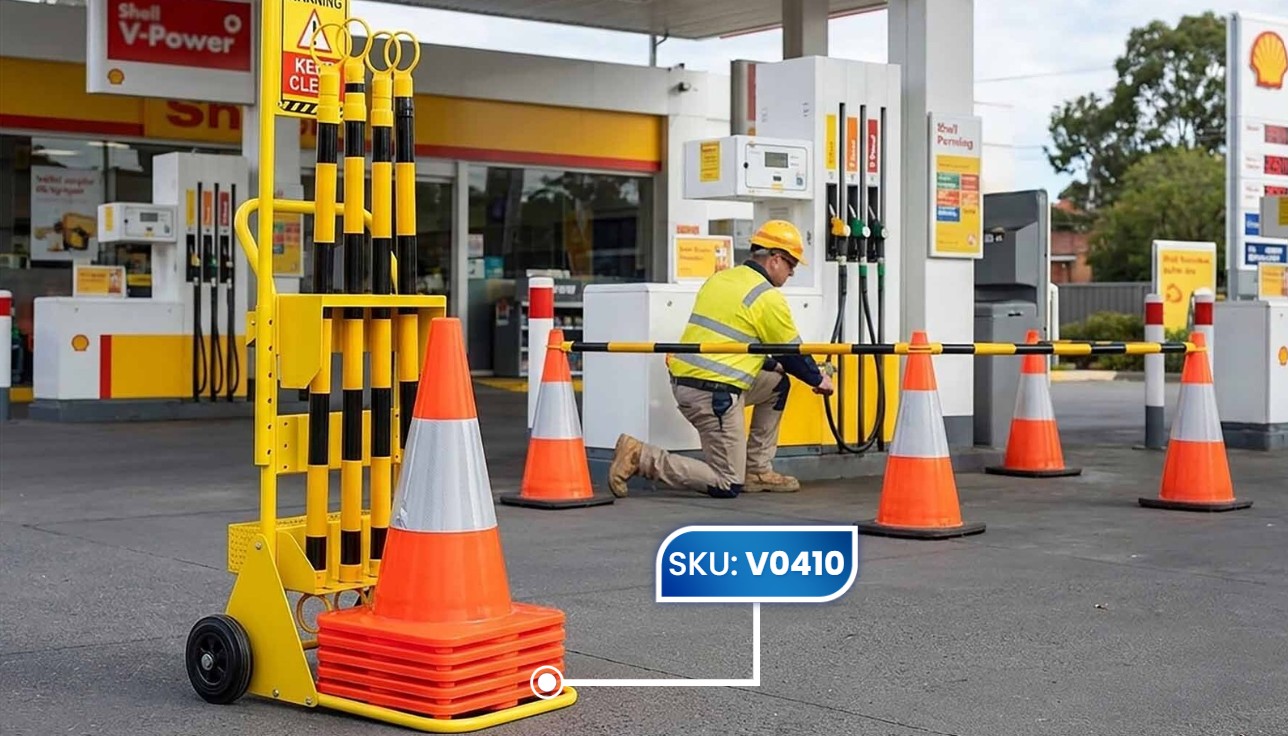
For sites that require additional equipment such as barrier rails or extension bars, models with integrated extension bar holders allow longer components to be transported alongside cones and accessories, helping maintain organisation while reducing the need for multiple trips.
Integrating Cones, Barriers and Accessories
Temporary traffic management is most effective when cones, barriers and accessories are used together as a coordinated system. Each element serves a specific purpose:
Traffic cones
Provide highly visible markers that define boundaries and guide movement.
Retractable barriers or cone top belts
Connect cones together to create continuous barrier lines.
Chains or bunting
Add additional visual separation in areas with increased pedestrian movement.
Safety signs
Communicate important information and warnings before people reach the restricted zone.
Using a cone trolley to transport and deploy these items helps ensure the entire barrier system is set up quickly and consistently.
Understanding how different barrier components work together is key to effective site safety. For a deeper breakdown, see our guide on 6 Features That Make Safety Barriers Vital in Work Environments.
Practical Advice for Outdoor Industrial Use
Temporary barriers are often used outdoors in areas such as construction sites, loading yards and car parks. Outdoor conditions introduce additional factors that should be considered.
Weather resistance
Choose equipment designed to withstand sun exposure, rain and dust. Powder-coated steel trolleys and UV-resistant cones help maintain durability.
Stability on uneven surfaces
Outdoor sites may have gravel, concrete or uneven ground. Weighted bases or anti-slip cones help prevent barriers from tipping over.
Visibility in low-light conditions
Reflective bands and high-visibility colours make cones easier to see during early mornings, evenings or dusty conditions.
Ease of relocation
Outdoor worksites often require barriers to be moved frequently. A trolley allows equipment to be relocated quickly across large areas without damaging surfaces.
These factors help ensure temporary barriers remain effective in demanding industrial environments.
Setting Up Temporary Barriers: A Quick Process
For efficient deployment, many sites follow a simple step-by-step process:
-
Prepare equipment: Load cones, belts, chains and signs onto a cone trolley.
-
Mark the work zone: Place cones at consistent spacing to outline the hazard area.
-
Connect barriers: Attach retractable belts or chains to create continuous boundaries.
-
Position warning signs: Place signage where approaching workers or vehicles can easily see them.
-
Check stability: Confirm cones and barriers are secure and visible.
-
Adjust as required: Make small adjustments to improve visibility or workflow.
Following this approach allows teams to establish safe temporary barriers quickly while maintaining professional site organisation.
Set Up Temporary Barriers Faster with the Right Equipment
Efficient barrier setup comes down to having the right tools on hand. When cones, barriers and accessories are organised and easy to move, teams can respond quickly while maintaining a safe, controlled work environment.
Verdex supplies a range of traffic management and site safety equipment, including our 400 Series Traffic Cone Trolleys, retractable barriers and traffic cone supplies and equipment designed for fast deployment on busy industrial and construction sites.
If you’re looking to improve setup speed, organisation and on-site safety, speak with the Verdex team to find the right solution for your workplace.