Login / Register













 Trolleys & Hand Trucks
 Cage Trolleys
 Cleaning Carts & Trolleys
 Construction Trolleys
 Custom Trolleys
 Hand Trucks & Dollies
 Laundry/Linen Trolleys
 Lifting Trolleys
 Order Picking Trolleys
 Panel Cart Trolleys
 Platform Trolleys
 Powered Trolleys
 Shelf & Tiered Trolleys
 Shopping Trolleys
 Stainless Steel Trolleys
 Tool Trolleys
 Utility & Service Carts
 Lifting & Handling Equipment
 Forklift Attachments
 Jib Attachments
 Lifting Hoists & Pallet Hooks Accessories
 Load Skates & Tow Tugs
 Manual Stackers & Lifters
 Pallet Jacks
 Pallet Lifters
 Pallet Rotators & Dispenser
 Powered Pallet Trucks & Electric Lifters
 Scissor Lift Trolleys and Tables
 Conveyor Equipment
 Conveyor Frames & Stands
 Roller & Skate Conveyors
 Ladders & Access Equipment
 Container & Yard Ramps
 Ladders & Step Stools
 Work Platforms & Crane Cages
 Drum Handling Equipment
 Drum Storage & Bunding
 Drum Trolleys & Lifters
 Forklift Drum Handling
 Waste Handling & Bins
 Bin Lifters & Tippers
 Plastic Waste & Wheelie Bins
 Steel Waste & Tipping Bins
 Waste Carts
 Dangerous Goods Storage & Spillage
 Aerosol Cans Storage Cages
 Bunded Pallets & Storage
 Corrosive Goods Storage Cabinets
 DG Storage & Trolleys
 Flammable Liquid Cabinets
 Forklift Gas Storage Cages
 Gas Cylinder Storage Bays
 Site Storage
 Spill Kits
 Shelving & Storage Equipment
 Stillage & Transport Cages
 750 Series Cage Configurations
 Heavy Duty Cabinets
 Heavy Duty Longspan Shelving
 Heavy Duty Shelving
 Mega Bins & Pallets
 Packing & Workbenches
 Parts Trays & Stor-Pak Bins
 Pegboard & Louvre Panels
 Plastic Bins & Crates
 Plastic Handling Solution Bins
 Plastic Pallets
 Stack & Nest Bins
 Pallet Racking Accessories
 Workplace Equipment
 Modular Workbenches
 Electric Height-Adjustable Workbenches
 Floor Matting
 General Workplace Equipment
 Industrial Weighing Scales
 Packaging Machinery
 Stationery Cupboards
 Storage and Stillage Cages
 Tool Trolleys
 Tooling Cabinets
 Workshop Fans and Coolers
 Safety Barriers, PPE & Signage
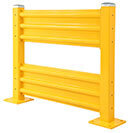
 Modular Safety Fence System
 Barriers & Bollards
 First Aid Equipment
 Gloves, Knives and PPE
 Signage
 Cleaning & Site Supplies
 Cleaning Equipment
 Cleaning Trolleys
 Rubbish Bins
 Signs & Traffic Supplies
 Construction Equipment
 Construction Trolleys
 Waste Handling
 General Site Equipment
 Concrete Equipment
 Site Storage
 Lifting Equipment
 Spring Workplace Selections
Verdex Insights: At a Glance
-
The Challenge: Safety signs and floor markings alone rely on workers noticing and following instructions, which can become unreliable in busy, high-traffic industrial environments.
-
The Insight: Clear physical barriers create stronger risk control by actively separating pedestrians, forklifts, machinery, and hazardous work zones, helping reduce accidental access and workplace incidents.
-
The Verdex Solution: Verdex modular safety fencing helps warehouses and industrial facilities create flexible, visible, and adaptable exclusion zones that improve safety, workflow control, and workplace compliance.
Improving Site Safety with Clear Physical Barriers
Maintaining a safe workplace in busy industrial environments requires more than policies and procedures. Warehouses, distribution centres and manufacturing facilities often involve multiple activities occurring at the same time — forklift movements, machinery operation, pedestrian traffic and ongoing maintenance work.
While safety signs and floor markings play an important role in communicating hazards, they do not always provide enough protection on their own. In many cases, clear physical separation is needed to prevent accidents and ensure workers remain protected from high-risk areas.
Physical barriers such as modular safety fencing provide a practical way to create visible boundaries, control access, and guide movement throughout indoor industrial workplaces. By physically separating people from hazards, businesses can significantly reduce the likelihood of incidents.
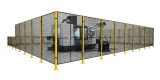
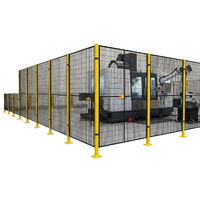
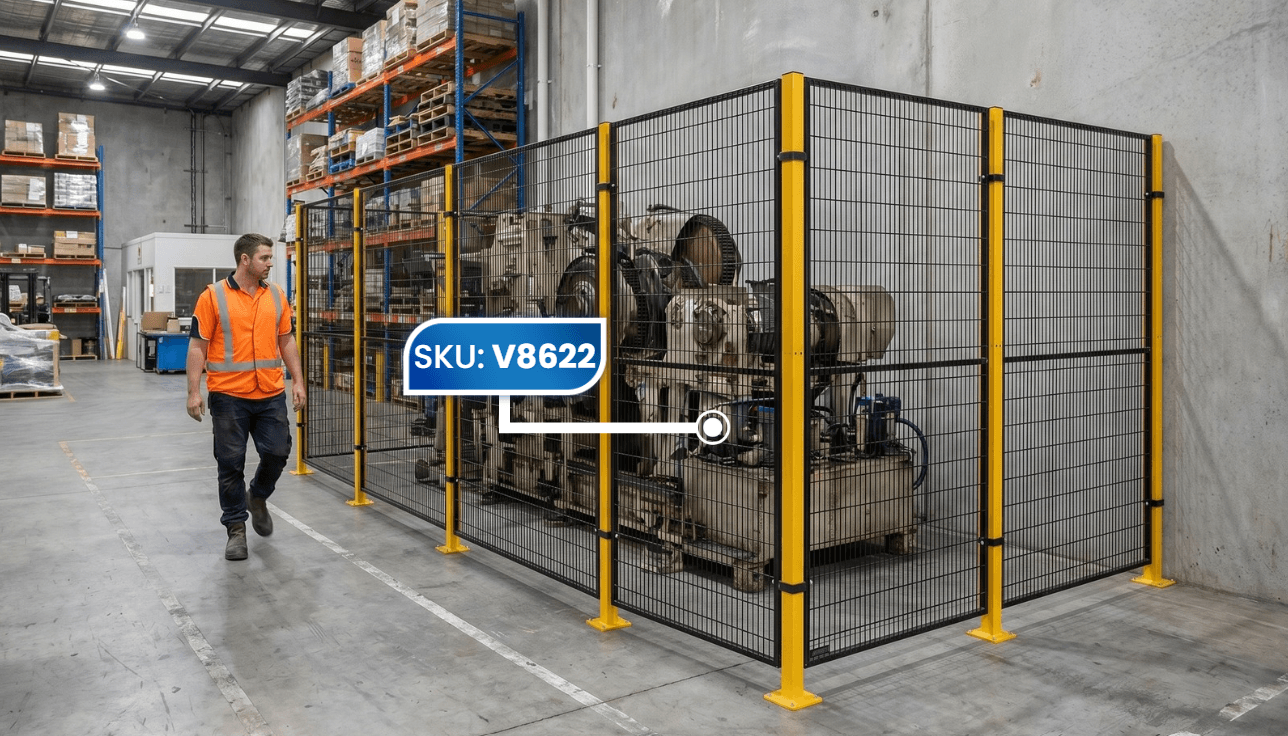
In many warehouses and manufacturing facilities, a Modular Safety Fence System helps create clearly defined exclusion zones around machinery, pedestrian walkways, and hazardous work areas while still allowing layouts to be adjusted as operations evolve.
Why Visual Warnings Alone Are Not Always Enough
Visual safety controls like signage and floor markings are commonly used in workplaces because they are easy to install and relatively low cost. However, they rely heavily on people noticing them and choosing to follow instructions.
In fast-paced environments, this reliance on behaviour can create risks. Workers may become distracted, unfamiliar with the site or temporarily focused on tasks rather than surroundings. Contractors and visitors may also be less familiar with site-specific safety systems.
For this reason, many industrial facilities combine visual warnings with physical barriers to strengthen safety controls.
Understanding the Difference Between Safety Signs, Floor Markings and Physical Barriers
Each safety measure serves a different purpose within a workplace safety strategy.
Safety Signs
Safety signs are designed to communicate hazards, instructions or warnings. They help inform workers about potential dangers and remind them to follow procedures.
Examples include:
-
Warning signs near machinery
-
“Authorised personnel only” notices
-
Forklift operation warnings
Signs are an important part of communication, but they do not physically stop someone from entering a hazardous area.
Floor Markings
Floor markings are widely used to designate safe walkways, forklift routes and storage zones within warehouses and factories.
These markings help organise traffic flow and make operational areas easier to navigate. However, like signs, they rely on workers recognising and following the designated zones..
Over time, floor markings can also fade or become less visible due to heavy traffic.
Physical Barriers
Physical barriers are designed to actively prevent access to hazardous areas. Unlike visual warnings, they provide a tangible boundary that workers cannot easily cross unintentionally.
Examples of physical barriers include:
-
Safety fencing
-
Guard rails
-
Bollards
-
Machine enclosures
For a broader overview of industrial barrier systems, see our guide 6 Types of Safety Barriers Used in Industrial Workplaces, which explores how different barrier types are used across warehouses, factories, and commercial sites.
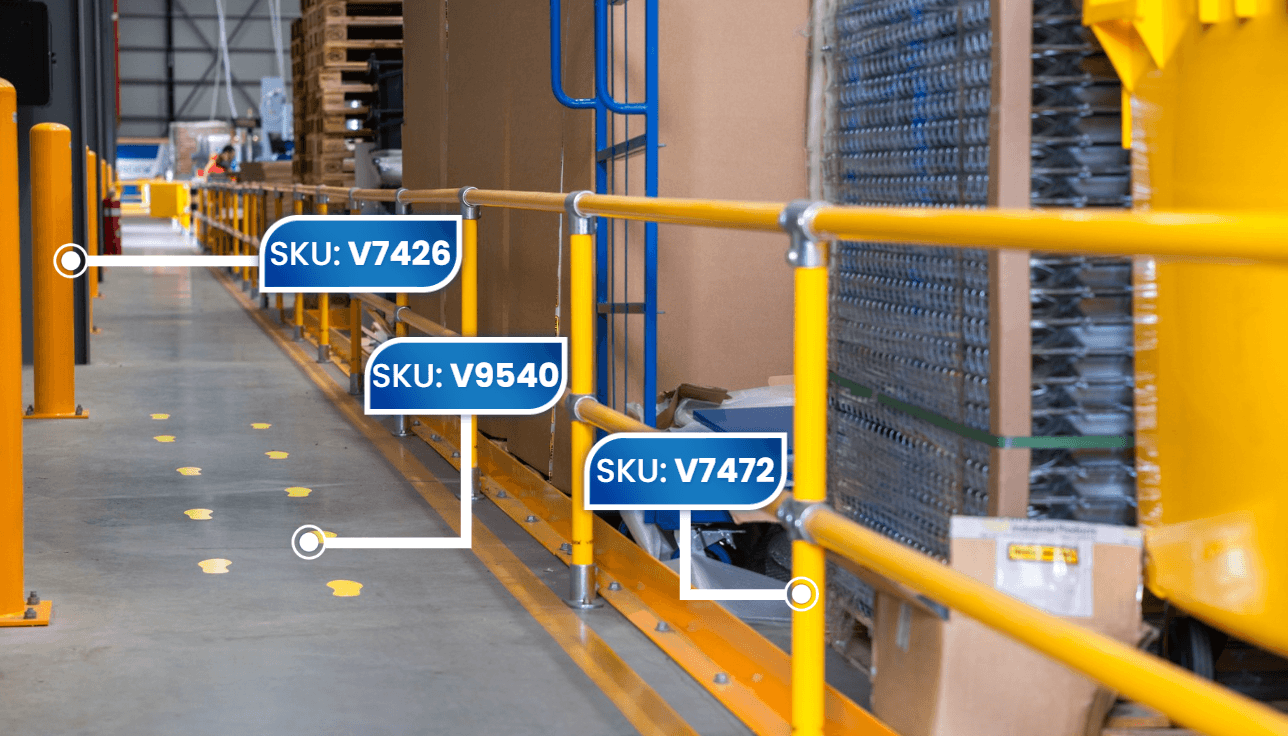
Many industrial sites also combine modular fencing with Barriers & Bollards to strengthen pedestrian separation, protect walkways, and improve visibility around forklift routes and loading zones.
By combining physical barriers with visual safety controls, workplaces can create stronger and more reliable risk management systems.
Many facilities also integrate broader Safety Barriers, PPE & Signage systems to improve hazard communication, pedestrian separation, and workplace compliance across active industrial environments.
Why Physical Barriers Reduce Workplace Risk
Physical separation is one of the most effective ways to reduce hazards in busy industrial environments. Instead of relying solely on behaviour, barriers create clear and enforceable boundaries.
Prevent Unauthorised Access
One of the most important benefits of physical barriers is preventing workers or visitors from entering restricted zones.
Areas containing operating machinery, maintenance activities or hazardous materials should not be freely accessible. Modular fencing helps clearly identify these zones and restrict access to authorised personnel only.
Guide Pedestrian Movement
In large warehouses, workers often move between different areas throughout the day. Without clear pathways, pedestrians may unknowingly enter forklift operating zones or other hazardous areas.
In high-traffic warehouse environments, Pedestrian Barriers are commonly used to create safer walkways and improve separation between workers and moving equipment.
These barriers help guide pedestrian traffic safely through facilities, ensuring workers remain within designated walkways.
Separate Vehicles and People
Forklifts and other mobile equipment are common sources of workplace incidents. Collisions between vehicles and pedestrians are a serious risk in many industrial environments.
Installing physical barriers to separate vehicle routes from pedestrian areas provides a much higher level of protection than painted floor markings alone.
This separation creates predictable traffic patterns and reduces the likelihood of unexpected interactions.
Where Modular Safety Fencing Can Be Used
Modular safety fencing is particularly effective in indoor industrial environments where flexible safety solutions are required.
Verdex supplies modular safety fencing systems designed for warehouses, manufacturing facilities and other commercial workplaces. These systems can be configured in various ways to suit different operational requirements.
Loading Dock Safety Zones
Loading docks are high-risk areas where forklifts, pallet jacks and delivery vehicles operate in close proximity to workers. Clear separation between operational zones and pedestrian access areas is essential.
Modular safety fencing can be used to create controlled access points and guide worker movement around loading areas, reducing the risk of collisions or falls.
Machinery and Equipment Zones
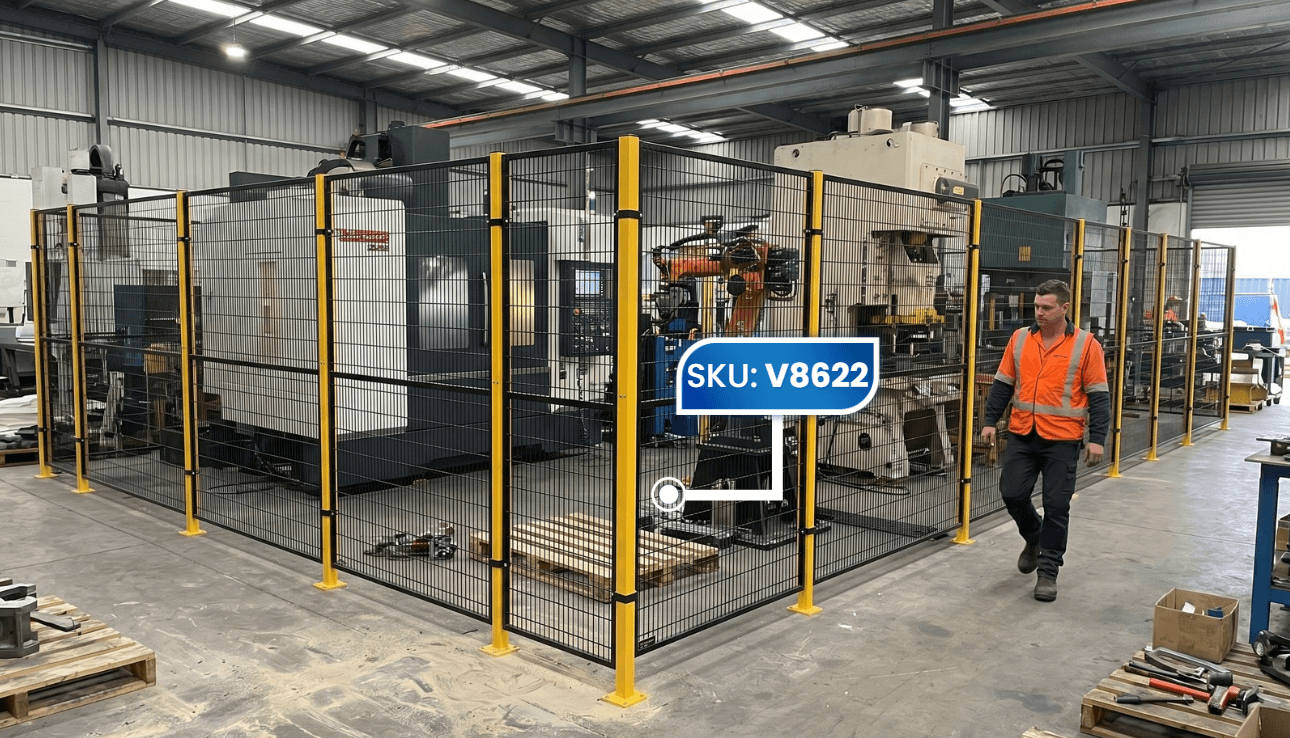
Industrial machinery often requires defined safety perimeters to protect workers from moving parts or automated processes.
Using modular fence panels around equipment helps ensure that only trained personnel can enter these areas while machinery is operating.
The fencing also improves visibility of the restricted zone, making it easier for workers to identify potential hazards.
Temporary Exclusion Areas
Many workplaces regularly carry out maintenance, repairs or internal refurbishment projects. These activities may introduce temporary hazards such as exposed wiring, tools or partially dismantled equipment.
Modular fencing provides a quick way to create temporary exclusion zones that keep workers safely separated from these hazards until the work is complete.
Once the task is finished, the fencing can be removed or relocated for use elsewhere in the facility.
For shorter-term maintenance work or temporary access restrictions, Retractable Barriers can also be used alongside modular fencing to create flexible exclusion zones that are quick to deploy and remove.
Our blog How to Set Up Temporary Barriers Quickly and Safely on Busy Sites also outlines practical strategies for deploying temporary exclusion zones efficiently while maintaining safe pedestrian and vehicle separation.
Supporting Workplace Compliance
Workplace safety regulations encourage businesses to implement effective risk control measures wherever reasonably practicable. Physical barriers are often considered a stronger safety control than visual warnings alone because they actively prevent exposure to hazards.
Guidelines from Safe Work Australia emphasise the importance of isolating hazards where possible. Installing physical barriers around dangerous areas helps demonstrate that an organisation is taking appropriate steps to protect workers.
Clear barriers also make it easier for supervisors and safety officers to enforce site rules, as restricted zones are immediately visible.
Practical Benefits for Industrial Workplaces
Beyond improving safety, physical barriers offer several practical advantages for warehouse and manufacturing environments.
They help organise workplaces by clearly defining operational zones. This can improve workflow efficiency and reduce confusion for workers moving throughout the facility.
Barriers also support training and induction processes. New workers and contractors can quickly identify restricted areas, helping them understand site rules without relying solely on verbal instructions.
Because modular systems can be reconfigured, they also adapt easily as operational requirements change.
Creating Safer Industrial Workplaces
In busy warehouses and industrial facilities, relying solely on signs or floor markings may not provide enough protection. While visual warnings play an important role, physical barriers offer an additional layer of safety by actively preventing access to hazardous areas.
Modular safety fencing provides a practical way to create clear boundaries, guide worker movement and separate people from vehicles or machinery. By introducing strong physical separation, businesses can significantly reduce the risk of incidents while maintaining efficient operations.
For organisations looking to strengthen workplace safety, investing in clear and adaptable physical barriers is an important step toward creating safer and more controlled industrial environments.
Improve Site Safety with Verdex Modular Safety Fencing
Clear physical barriers help create safer, more controlled industrial workplaces by separating people from hazards, guiding movement and reducing accidental access to restricted areas. For busy warehouses, loading docks and machinery zones, modular safety fencing provides a practical way to strengthen workplace safety beyond signage and floor markings alone.
Verdex supplies modular safety fencing systems designed for indoor industrial environments where layouts, workflows and safety requirements can change over time. Our fencing solutions help businesses create visible exclusion zones, protect workers from high-risk areas and maintain more organised site operations.
If you’re reviewing your current safety controls or looking to improve separation between pedestrians, vehicles, and machinery, the Verdex team can help identify a modular fencing solution suited to your operational requirements.