Login / Register











 Trolleys & Hand Trucks
 Cage Trolleys
 Cleaning Carts & Trolleys
 Construction Trolleys
 Custom Trolleys
 Hand Trucks & Dollies
 Laundry/Linen Trolleys
 Lifting Trolleys
 Order Picking Trolleys
 Panel Cart Trolleys
 Platform Trolleys
 Powered Trolleys
 Shelf & Tiered Trolleys
 Shopping Trolleys
 Stainless Steel Trolleys
 Tool Trolleys
 Utility & Service Carts
 Lifting & Handling Equipment
 Forklift Attachments
 Jib Attachments
 Lifting Hoists & Pallet Hooks Accessories
 Load Skates & Tow Tugs
 Manual Stackers & Lifters
 Pallet Jacks
 Pallet Lifters
 Pallet Rotators & Dispenser
 Powered Pallet Trucks & Electric Lifters
 Scissor Lift Trolleys and Tables
 Conveyor Equipment
 Conveyor Frames & Stands
 Roller & Skate Conveyors
 Ladders & Access Equipment
 Container & Yard Ramps
 Ladders & Step Stools
 Work Platforms & Crane Cages
 Drum Handling Equipment
 Drum Storage & Bunding
 Drum Trolleys & Lifters
 Forklift Drum Handling
 Waste Handling & Bins
 Bin Lifters & Tippers
 Plastic Waste & Wheelie Bins
 Steel Waste & Tipping Bins
 Waste Carts
 Dangerous Goods Storage & Spillage
 Aerosol Cans Storage Cages
 Bunded Pallets & Storage
 Corrosive Goods Storage Cabinets
 DG Storage & Trolleys
 Flammable Liquid Cabinets
 Forklift Gas Storage Cages
 Gas Cylinder Storage Bays
 Site Storage
 Spill Kits
 Shelving & Storage Equipment
 Stillage & Transport Cages
 750 Series Cage Configurations
 Heavy Duty Cabinets
 Heavy Duty Longspan Shelving
 Heavy Duty Shelving
 Mega Bins & Pallets
 Packing & Workbenches
 Parts Trays & Stor-Pak Bins
 Pegboard & Louvre Panels
 Plastic Bins & Crates
 Plastic Handling Solution Bins
 Plastic Pallets
 Stack & Nest Bins
 Pallet Racking Accessories
 Workplace Equipment
 Modular Workbenches
 Electric Height-Adjustable Workbenches
 Floor Matting
 General Workplace Equipment
 Industrial Weighing Scales
 Packaging Machinery
 Stationery Cupboards
 Storage and Stillage Cages
 Tool Trolleys
 Tooling Cabinets
 Workshop Fans and Coolers
 Safety Barriers, PPE & Signage
 Modular Safety Fence System
 Barriers & Bollards
 First Aid Equipment
 Gloves, Knives and PPE
 Signage
 Cleaning & Site Supplies
 Cleaning Equipment
 Cleaning Trolleys
 Rubbish Bins
 Signs & Traffic Supplies
 Construction Equipment
 Construction Trolleys
 Waste Handling
 General Site Equipment
 Concrete Equipment
 Site Storage
 Lifting Equipment
 Spring Workplace Selections
Verdex Insights: At a Glance
-
The Challenge: Incorrect gas cylinder storage can increase the risk of leaks, fire hazards, poor ventilation exposure, and unsafe interactions with vehicles or workers.
-
The Insight: The safest storage location depends on ventilation, traffic flow, cylinder volume, and access control, but many workplaces prefer outdoor storage to improve airflow, reduce ignition risks, and keep cylinders organised.
-
The Verdex Solution: Verdex supplies secure gas cylinder cages and outdoor storage solutions designed to improve ventilation, weather protection, site organisation, and WHS compliance across Australian workplaces.
Indoor vs Outdoor Gas Cylinder Storage: What Should You Consider?
How Location Affects Safety, Compliance and Site Organisation
Gas cylinders — whether for welding, forklifts, industrial heating or other uses — are a common sight in workplaces. But storing them safely requires more than just stacking them in any spare corner. The location of cylinder storage can strongly influence workplace safety, ventilation, site access and risk exposure.
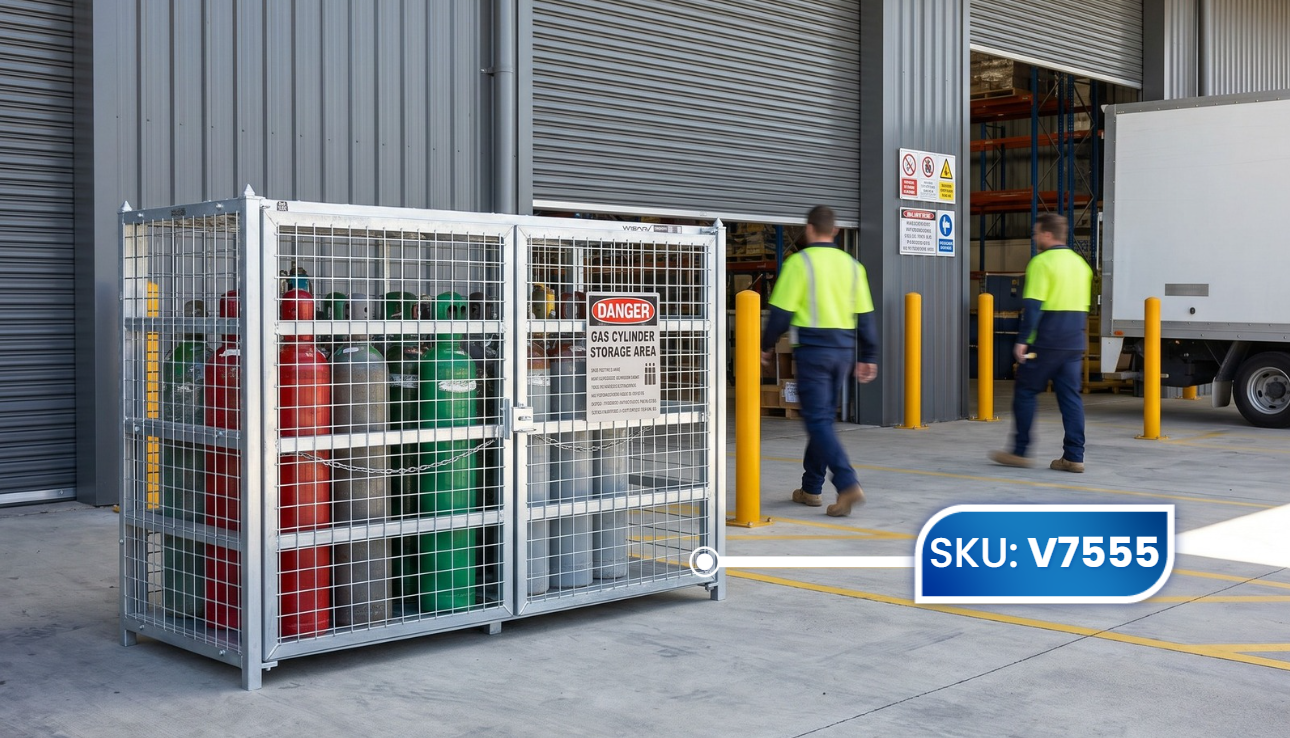
In many industrial workplaces, this means using dedicated outdoor Gas Cylinder Storage Cages that improve ventilation, security, and organisation while keeping cylinders separated from general work areas.
In this blog, we’ll walk you through key considerations when choosing between indoor and outdoor storage, highlight the safety implications of each, and explain why many facilities favour purpose built outdoor storage bays and cages. Along the way we’ll reference relevant Verdex products that help industrial workplaces store gas cylinders safely and efficiently.
Why Storage Location Matters
Gas cylinders contain pressurised gases that may be flammable, oxidising or inert. If stored incorrectly, they present several hazards: pressure release, leaks, ignition, chemical reactions and physical injury from falls or impacts. Placing cylinders in inappropriate locations can increase all of these risks.
For a broader look at gas cylinder hazards, storage risks, and practical safety measures, see our guide on Safe Storage of Gas Cylinders in Industrial Workplaces.
Understanding how environmental conditions, traffic patterns and ventilation affect the risk profile is the first step to selecting the right storage location.
When Indoor Storage May Be Allowed
There are scenarios where indoor storage is acceptable — but it always needs careful planning and controls:
Controlled Ventilation
Indoor spaces that are well ventilated and designed for hazardous material storage can sometimes house gas cylinders. This can work when:
-
The room has forced ventilation systems that prevent gas accumulation
-
Only small numbers of cylinders are stored
-
Ignition sources are eliminated (e.g., no electrical equipment that isn’t rated for hazardous zones)
Good ventilation is essential because even a small leak in an enclosed space can lead to gas build up and create fire or asphyxiation risks.
Limited Quantity and Access Control
Indoor storage may be appropriate where only a small number of cylinders are kept, handling is infrequent, and access is controlled by trained personnel.
In these controlled environments, some workplaces also use dedicated Gas Cylinder Cabinets to help improve storage organisation, separation, and restricted access for smaller cylinder volumes.
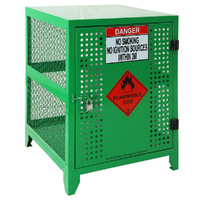
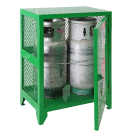
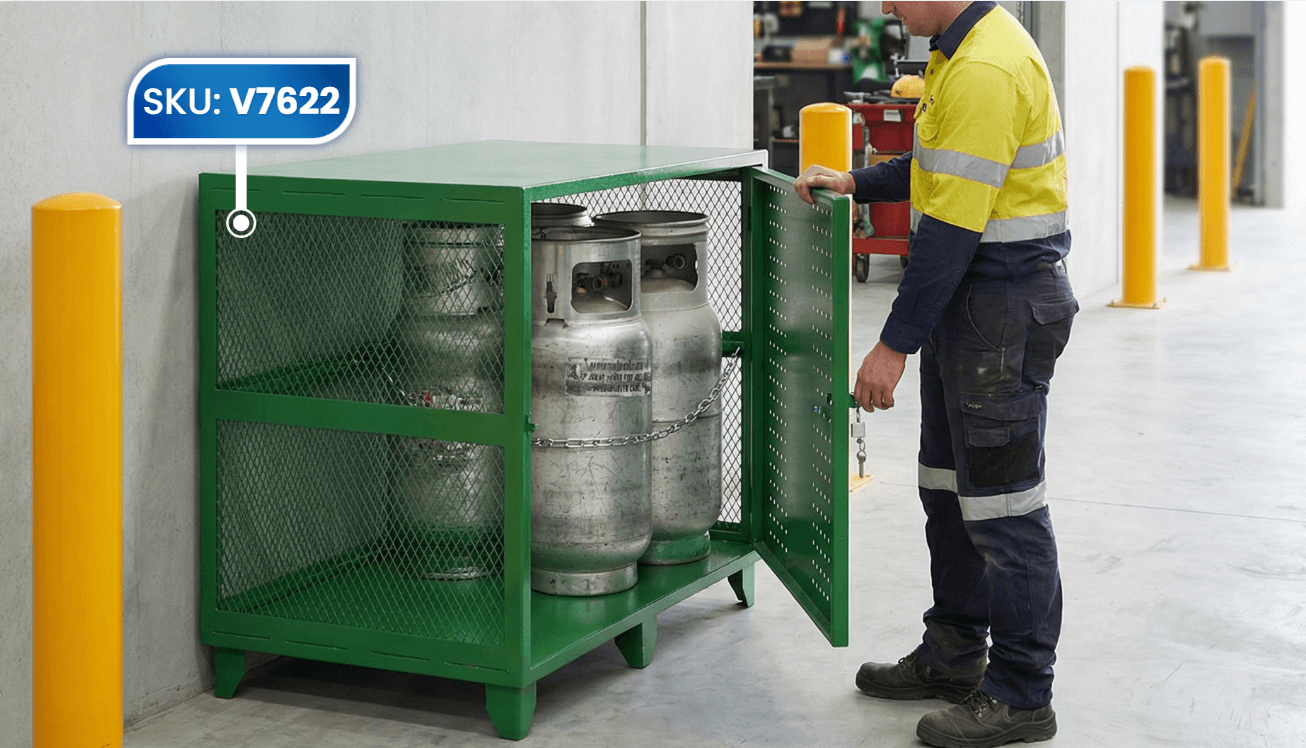
Forklift-compatible storage solutions such as the V7622 Verdex Fork Gas Storage Cage - 6 Cylinders can help keep smaller cylinder volumes secure, organised, and easier to manage in controlled operational areas.
However, indoor storage should always be treated as a specialised scenario, with a documented risk assessment and management plan in place. Avoid assuming indoor storage is automatically “safer” — poor ventilation or nearby ignition sources can turn an enclosed space into a dangerous one.
When Outdoor Storage Is Preferred
For many industrial and commercial workplaces, outdoor storage is the preferred choice — especially when:
Large Volumes of Cylinders Are Used
Outdoor storage allows you to keep many cylinders safely in one place without cluttering indoor facilities. This is especially true for sites that:
-
Use cylinders with forklifts
-
Keep multiple gas types on hand
-
Move cylinders frequently
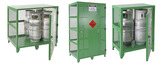
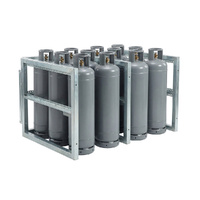
For example, purpose built solutions like the Fork Gas Storage Cage - 6 Cylinders and Fork Gas Storage Cage - 12 Cylinders from Verdex provide secure outdoor stations where LPG or other industrial gases can be stored in an organised and ventilated way.
Ventilation Is Critical
In outdoor settings, natural ventilation disperses any leaking gas safely into the atmosphere. Even open mesh storage cages — such as the Gas Cylinder Cage with weather protected top — combine security with airflow, reducing the risk of dangerous gas accumulations.
Reduced Risk from Indoor Ignition Sources
Storing cylinders outdoors helps keep them away from electrical equipment, heaters or machinery that could act as ignition sources indoors. It also means non trained personnel are less likely to encounter them during normal operations.
Complying with Best Practice Safety Approaches
While specific storage regulations vary by jurisdiction, general safety consensus often favours outdoor setups with segregation from general work areas, good ventilation and controlled access — conditions that most outdoor bays facilitate.
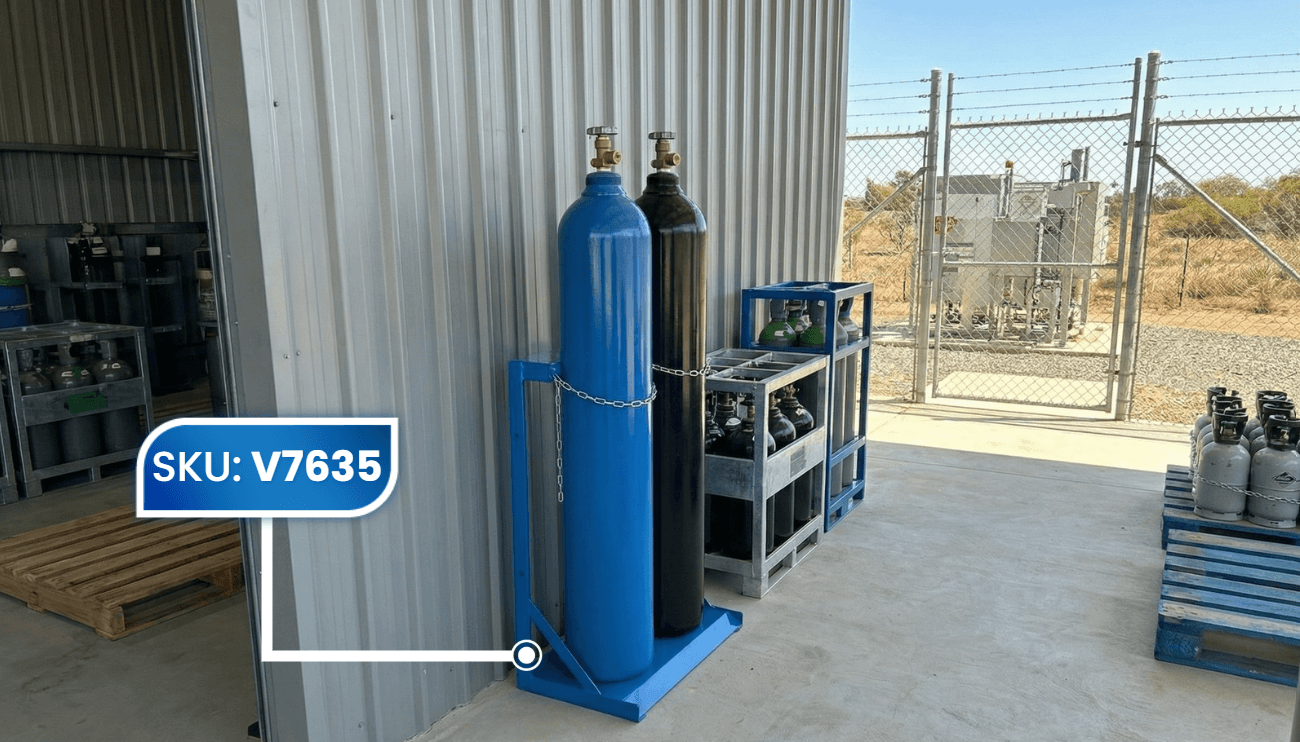
Depending on cylinder volume and site requirements, some workplaces also use simpler rack-style storage systems (such as the V7635 Gas Cylinder Rack) to keep cylinders upright, accessible, and safely organised outdoors.
Ventilation Considerations
No matter whether you store cylinders indoors or outdoors, ventilation is a key safety factor:
-
Outdoor sites generally offer the best natural ventilation — gas disperses quickly in open air.
-
Indoor options must have mechanical extraction or purpose built airflow (as discussed above).
-
Poor ventilation in either context increases the risk of leaks becoming a hazard — especially for flammable or heavier than air gases.
For example, passive ventilation isn’t enough in an enclosed warehouse without windows or exhaust fans — even in temperate climates.
Weather Protection
Outdoor storage solves ventilation issues, but it can introduce weather exposure concerns:
-
Sun exposure can heat cylinders and increase internal pressure
-
Rain and humidity can contribute to corrosion or create slip hazards around the storage area
This is where products like the Lockable Gas Storage Cage or Storage Cage from Verdex are particularly useful — they offer weather resistant roofs and zinc or steel coatings that protect cylinders from rain and UV exposure while still providing airflow.
Proper shelter design helps strike the balance between protection from the elements and safe ventilation.
Access Control and Security Concerns
Another important factor for both indoor and outdoor storage is access control and security:
-
Outdoor sites need secure cages or bays to prevent tampering, theft or unauthorised access — especially in high traffic areas. Lockable designs and mesh security cages help with this.
-
Indoor sites might control access through doors and restricted zones, but ventilation and ignition control must be factored in.
Both environments benefit from clear signage, lighting and demarcation so workers know where cylinders are stored and how these areas interact with normal workflows.
Structured storage systems also help improve overall workplace organisation and site efficiency. Our blog on 4 Reasons Organised Businesses Use Storage Cages explores how dedicated storage solutions help businesses reduce clutter, improve safety, and streamline operations.
Why Many Sites Use Outdoor Storage Bays
Across industrial workplaces — distribution centres, construction sites, factories and workshops — many safety managers choose outdoor storage bays because they:
-
Provide excellent ventilation and natural gas dispersion
-
Allow segregation from risky indoor traffic
-
Offer capacity for large numbers of cylinders
-
Increase visibility to workers and visitors
-
Reduce risk of indoor gas build up or ignition sources
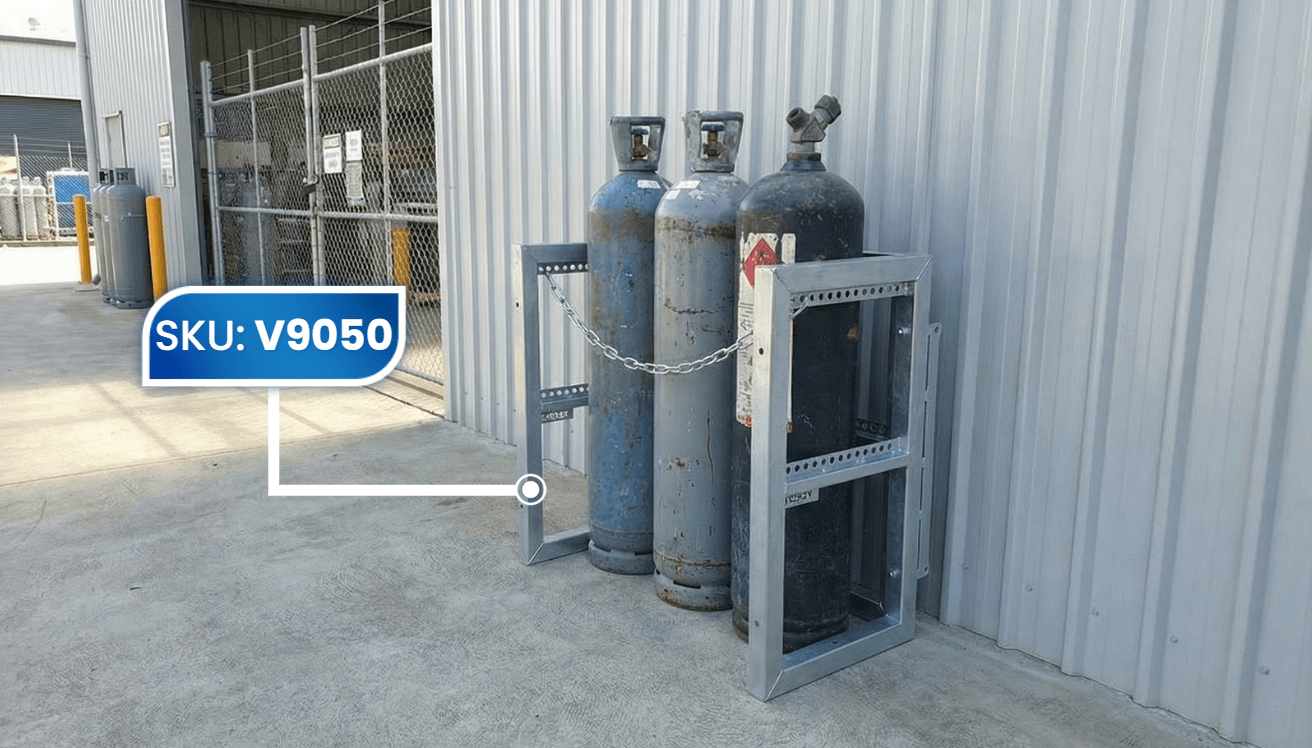
These Gas Cylinder Storage Bays are often used to create clearly defined outdoor storage zones that support cylinder filling, inspection, and rotation processes while improving ventilation, organisation, access control, and day-to-day workflow.
The V9050 Gas Cylinder Storage Bay (450mm Deep) is a compact outdoor solution particularly useful for sites that need secure cylinder separation without taking up excessive space around warehouse or workshop areas.
Keeping Cylinders Away from High Traffic Areas
One final consideration — location within your site layout. Regardless of indoor or outdoor storage, cylinders should be placed:
-
Away from high vehicle traffic (e.g., forklift routes)
-
Clear of busy pedestrian thoroughfares
-
Positioned where accidental impact is unlikely
This reduces the likelihood of cylinders being damaged by machinery, bumps or human error.
Using dedicated Gas Cylinder Trolleys also helps workers move cylinders safely between storage and work areas while reducing manual handling risks.
Making the Right Choice for Your Site
Choosing between indoor and outdoor gas cylinder storage isn’t about picking one or the other — it’s about evaluating your workplace layout, usage patterns, ventilation, ignition risks and security needs.
Here are some simple questions to guide the decision:
-
How many cylinders do you typically store?
-
Are there mechanical ventilation systems available indoors?
-
Can you dedicate an outdoor bay away from high speed traffic routes?
-
Are weather protection and security features integral to the solution?
-
Can you safely segregate incompatible gases?
By analysing your workflow and risks, you’ll be better placed to choose the right approach — or even a combination of indoor storage with strict access and mechanical ventilation for special cases, and outdoor bays for bulk cylinder storage.
Choose Safer Gas Cylinder Storage Solutions with Verdex
Selecting the right gas cylinder storage setup is an important part of maintaining a safe, organised, and compliant workplace. Whether your site requires secure outdoor storage, controlled access, weather protection, or improved ventilation, using the right equipment can help reduce risk and improve day-to-day operations.
Verdex supplies a wide range of gas cylinder cages, bays, and outdoor storage solutions suitable for industrial, commercial, and construction environments. From compact lockable cages to large forklift gas storage systems, our range is designed to help Australian workplaces store cylinders safely while supporting efficient site operations and WHS compliance.
If you’re reviewing your current gas cylinder setup or planning a new storage area, the Verdex team can help you identify practical solutions suited to your site layout, cylinder volumes, and operational requirements.
Explore the Verdex range or get in touch with our team to find the right gas cylinder storage solution for your workplace.