Login / Register












 Trolleys & Hand Trucks
 Cage Trolleys
 Cleaning Carts & Trolleys
 Construction Trolleys
 Custom Trolleys
 Hand Trucks & Dollies
 Laundry/Linen Trolleys
 Lifting Trolleys
 Order Picking Trolleys
 Panel Cart Trolleys
 Platform Trolleys
 Powered Trolleys
 Shelf & Tiered Trolleys
 Shopping Trolleys
 Stainless Steel Trolleys
 Tool Trolleys
 Utility & Service Carts
 Lifting & Handling Equipment
 Forklift Attachments
 Jib Attachments
 Lifting Hoists & Pallet Hooks Accessories
 Load Skates & Tow Tugs
 Manual Stackers & Lifters
 Pallet Jacks
 Pallet Lifters
 Pallet Rotators & Dispenser
 Powered Pallet Trucks & Electric Lifters
 Scissor Lift Trolleys and Tables
 Conveyor Equipment
 Conveyor Frames & Stands
 Roller & Skate Conveyors
 Ladders & Access Equipment
 Container & Yard Ramps
 Ladders & Step Stools
 Work Platforms & Crane Cages
 Drum Handling Equipment
 Drum Storage & Bunding
 Drum Trolleys & Lifters
 Forklift Drum Handling
 Waste Handling & Bins
 Bin Lifters & Tippers
 Plastic Waste & Wheelie Bins
 Steel Waste & Tipping Bins
 Waste Carts
 Dangerous Goods Storage & Spillage
 Aerosol Cans Storage Cages
 Bunded Pallets & Storage
 Corrosive Goods Storage Cabinets
 DG Storage & Trolleys
 Flammable Liquid Cabinets
 Forklift Gas Storage Cages
 Gas Cylinder Storage Bays
 Site Storage
 Spill Kits
 Shelving & Storage Equipment
 Stillage & Transport Cages
 750 Series Cage Configurations
 Heavy Duty Cabinets
 Heavy Duty Longspan Shelving
 Heavy Duty Shelving
 Mega Bins & Pallets
 Packing & Workbenches
 Parts Trays & Stor-Pak Bins
 Pegboard & Louvre Panels
 Plastic Bins & Crates
 Plastic Handling Solution Bins
 Plastic Pallets
 Stack & Nest Bins
 Pallet Racking Accessories
 Workplace Equipment
 Modular Workbenches
 Electric Height-Adjustable Workbenches
 Floor Matting
 General Workplace Equipment
 Industrial Weighing Scales
 Packaging Machinery
 Stationery Cupboards
 Storage and Stillage Cages
 Tool Trolleys
 Tooling Cabinets
 Workshop Fans and Coolers
 Safety Barriers, PPE & Signage
 Modular Safety Fence System
 Barriers & Bollards
 First Aid Equipment
 Gloves, Knives and PPE
 Signage
 Cleaning & Site Supplies
 Cleaning Equipment
 Cleaning Trolleys
 Rubbish Bins
 Signs & Traffic Supplies
 Construction Equipment
 Construction Trolleys
 Waste Handling
 General Site Equipment
 Concrete Equipment
 Site Storage
 Lifting Equipment
 Spring Workplace Selections
Verdex Insights: At a Glance
-
The Challenge: Gas cylinders introduce serious risk when stored incorrectly, particularly in busy industrial environments with high traffic and multiple hazards.
-
The Insight: Safe storage is not just about keeping cylinders upright. It requires proper restraint, ventilation, separation and protection from impact.
-
The Verdex Approach: Verdex supplies structured gas cylinder storage solutions that improve safety, organisation and compliance across industrial workplaces.
Safe Storage of Gas Cylinders in Industrial Workplaces
Why Proper Storage Matters — Benefits, Risks and Best Practice Solutions
Gas cylinders are essential across many industrial sectors — powering welding equipment, forklifts, heaters and specialised machinery. But while they’re vital to operations, they also introduce risk if stored incorrectly. A simple oversight — like an unsecured cylinder or poor ventilation — can create dangerous conditions on site.
In this blog we’ll explain why proper storage of gas cylinders matters, highlight common hazards, outline basic safe storage principles, and explain why dedicated Gas Cylinder Storage Bays and cages are a structured, safer storage solution for industrial workplaces.
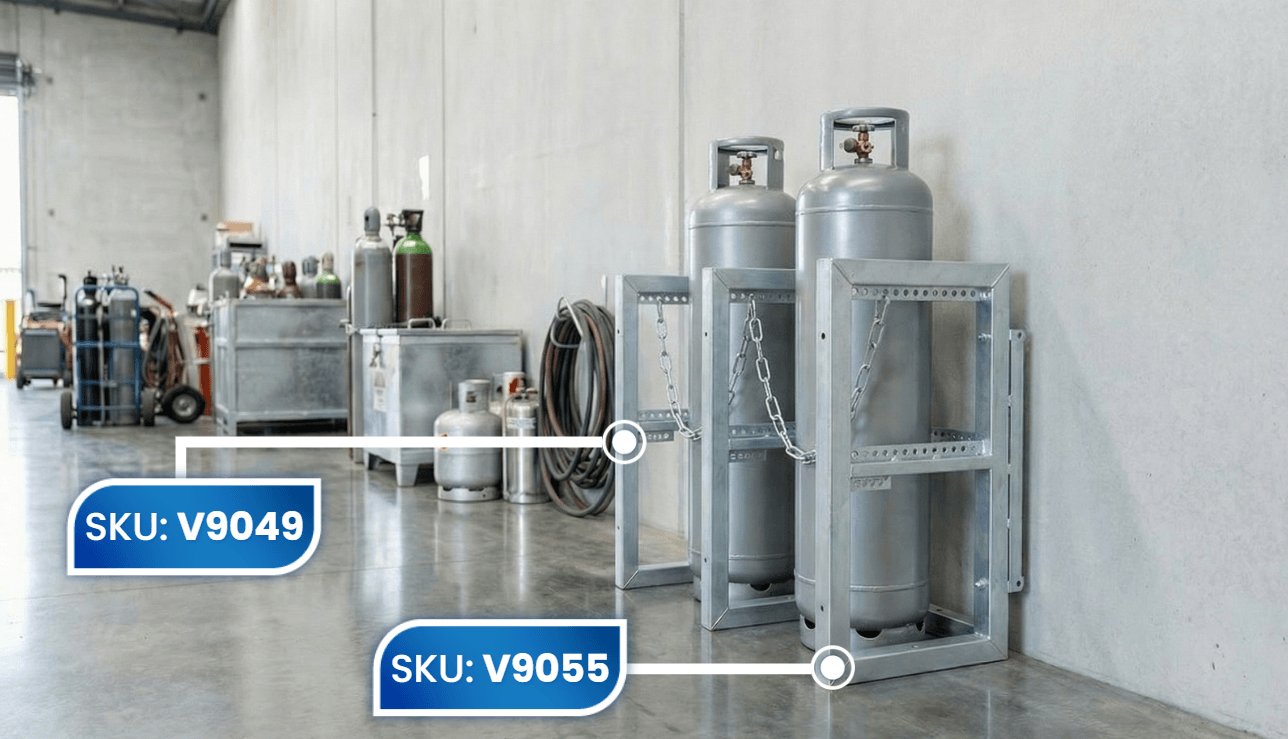
In practice, safe storage requires more than simply placing cylinders against a wall. Structured storage systems such as dedicated gas cylinder bays provide a controlled environment that improves stability, visibility and organisation within busy warehouse settings.
Why Gas Cylinders Can Be Dangerous
Compressed gas cylinders are inherently hazardous for several reasons:
1. Pressurised Contents
Gas cylinders contain gases under high pressure. If the cylinder valve is damaged or opened accidentally, it can release gas rapidly — creating risk of fire, explosion or physical injury. Even non flammable gases like nitrogen can pose asphyxiation risks if they displace oxygen in confined spaces.
2. Flammable or Oxidising Gases
Some gases are highly flammable (e.g. LPG, acetylene), while others are strong oxidisers (e.g. oxygen). A small leak near an ignition source or combustible material can have catastrophic consequences.
3. Risk of Leaks and Corrosion
Over time, corrosion or impact damage can weaken cylinders and valves, increasing the likelihood of gas leaks if they aren’t stored and maintained correctly.
Because cylinders are dangerous when uncontrolled, it’s essential to store them in a way that prevents damage, controls exposure to hazards, and protects people and property.
Common Risks from Poor Storage
Let’s break down the main risks if gas cylinders aren’t stored safely:
1. Tipping or Falling Over
An unsecured cylinder can easily tip, especially if knocked or bumped by forklifts or pedestrians. A falling cylinder may damage its valve, causing rapid gas escape or turning it into a dangerous projectile.
2. Poor Ventilation
If gas leaks in an enclosed or poorly ventilated area, gas can accumulate — increasing explosion risk for flammable gases, or causing asphyxiation for inert gases. Both SafeWork Australia and state regulators emphasise that gas cylinders should be stored in well ventilated outdoor areas rather than enclosed spaces.
3. Unsecured Storage
Loose cylinders are more likely to be bumped, roll, fall or be tampered with. Without restraint chains, racks or cages, they pose significant risk — especially in busy work environments.
4. Storing Near Ignition Sources
Flammable gas cylinders stored next to combustion engines, heaters, electrical equipment or welding areas can lead to ignition if a leak occurs. Always maintain distance from obvious ignition sources.
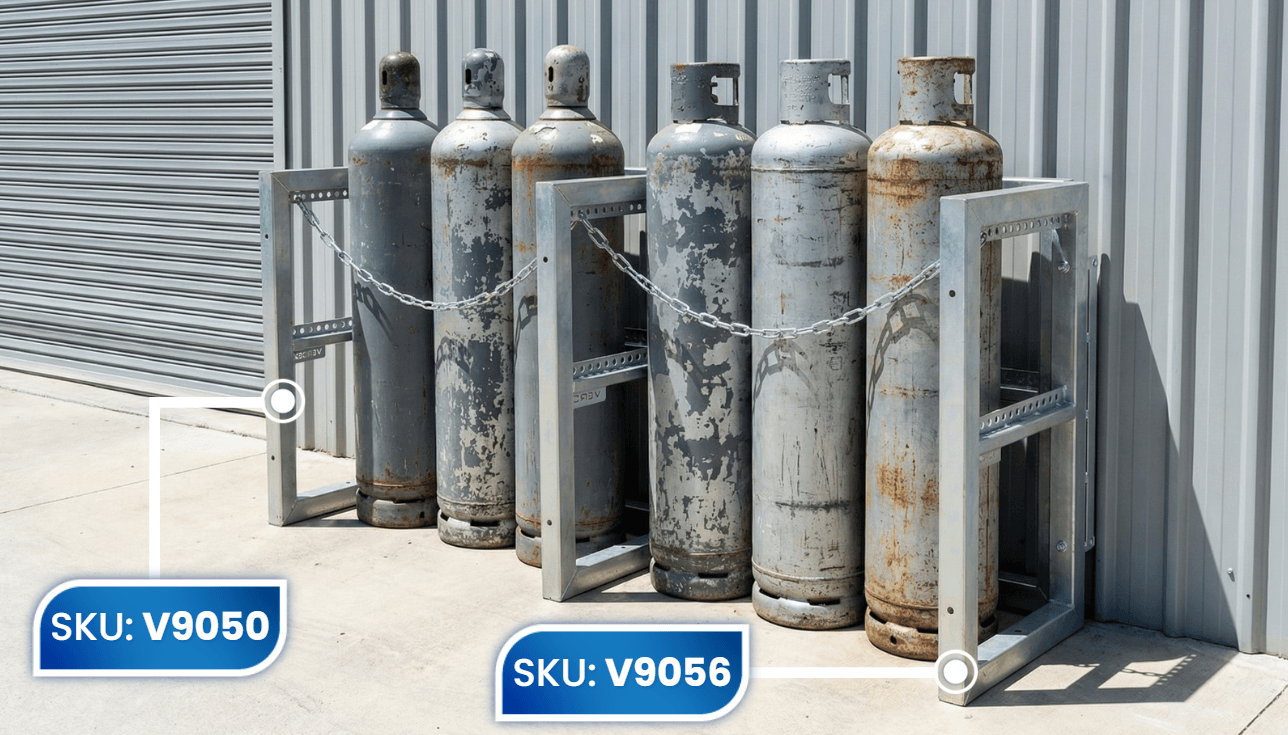
These risks are often most apparent in outdoor environments, where exposure to weather, traffic and uneven ground can increase the likelihood of damage or instability if cylinders are not properly contained.
Basic Safe Storage Principles
The good news is that most gas storage risks are preventable with simple principles:
1. Keep Cylinders Upright
Always store cylinders upright with the valve at the top. This ensures safety devices such as pressure relief valves work correctly and reduces the risk of liquid gas escaping through relief ports.
2. Secure Them Properly
Cylinders should be secured using properly rated chains, racks or cages so they cannot fall over or be knocked away from their storage position.
3. Store in Ventilated Areas
Choose storage locations that are well ventilated and clear of combustible materials. Outdoor storage with shelter and airflow is ideal for most industrial gases.
4. Separate Incompatible Gases
Flammable gases should be stored separately from oxidising gases and other hazardous chemicals to reduce the risk of reactions in the event of a leak.
5. Clear Access and Signage
Ensure gas cylinders are stored out of walkways, away from exits or emergency paths, and clearly signposted as hazardous goods.
Why Dedicated Gas Cylinder Bays and Cages Are a Safer Solution
Dedicated storage solutions — such as specialised cylinder cages or bays — provide structured containment that goes beyond ad hoc storage. They help manage risk and improve site safety in several key ways:
1. Physical Protection and Security
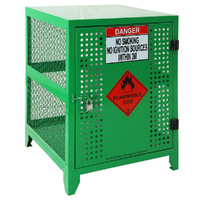
Products like the Gas Cylinder Cage or Lockable Gas Storage Cage are engineered to keep cylinders upright and locked in place, shielding them from accidental impacts, pedestrian traffic and unauthorised access. Lockable cages also reduce the risk of tampering or theft — a significant concern on busy industrial sites.
These cages are constructed from heavy duty steel, often with reinforced mesh sides and weather resistant finishes (e.g. zinc plated) designed to withstand harsh outdoor conditions while protecting contents from damage and corrosion.
2. Ventilation and Visibility
Good cylinder bays feature mesh sides or open frameworks that promote ventilation and allow workers to easily inspect stored cylinders. Proper airflow reduces the risk of gas build up from undetected leaks and improves safety compliance.
3. Segregation and Organisation
Dedicated storage allows you to segregate different types of gases — flammable, oxidising or inert — in line with safety standards. It also helps separate empty cylinders from full ones and incompatible gases from each other, reducing cross contamination risks.
4. Easy Handling and Efficiency
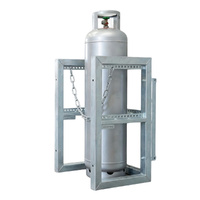
Solutions such as the Gas Cylinder Stillage Cage and larger fork style cages (e.g., up to 12 cylinders) allow forklifts to easily move cylinders in bulk around site, improving logistics and reducing manual handling risks.
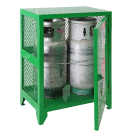
For smaller volumes, options like the Fork Gas Storage Cage - 2 Cylinders or Fork Gas Storage Cage - 4 Cylinders are ideal. They maintain security and ventilation in a compact footprint while still enabling forklift mobility.
When these storage principles are applied in a structured system, the result is a clearly defined and secure storage area that supports both safety and operational efficiency.
For sites using forklifts or handling cylinders in high-traffic areas, specialised cage solutions can provide additional safety and mobility benefits. Learn more in our guide on What Are Forklift Gas Storage Cages?
Gas Cylinder Bays vs. Simple Racks — Which Is Right?
Not all storage needs require a full scale cage or bay, but there are clear distinctions to help you decide:
Basic Gas Cylinder Racks
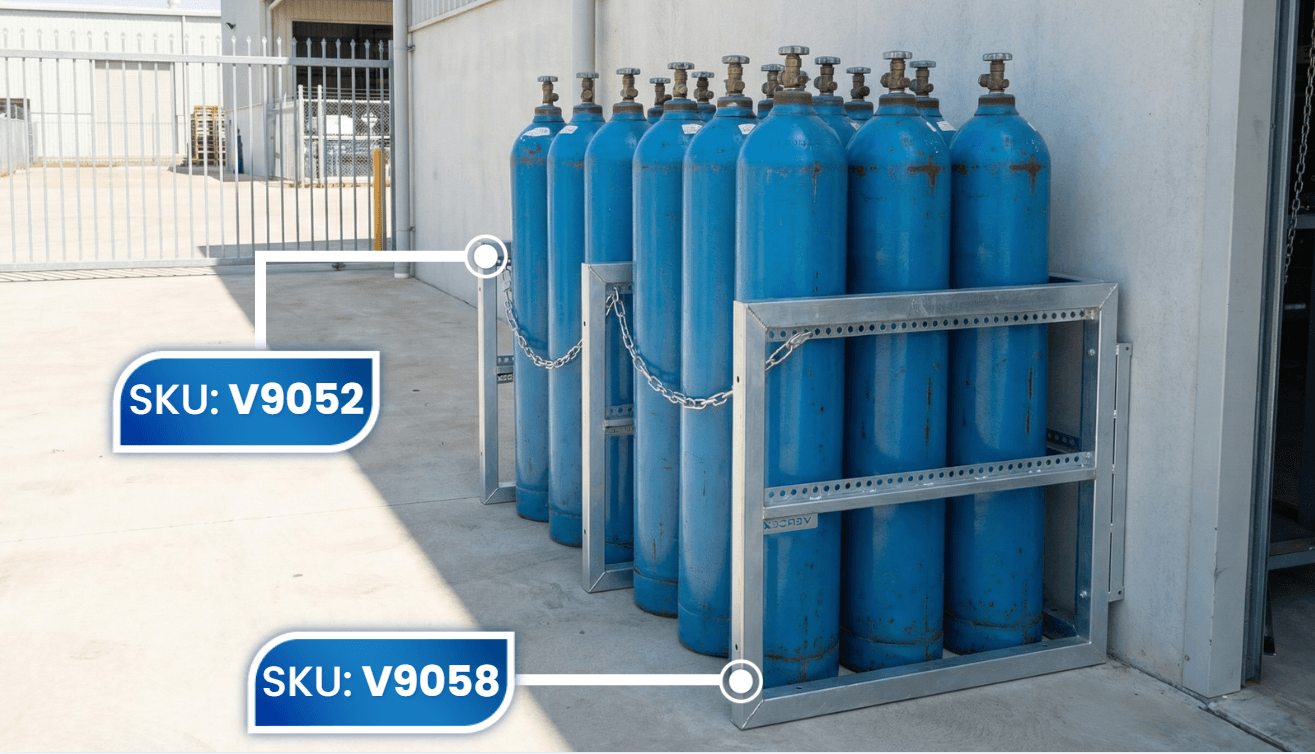
A product like the Gas Cylinder Rack is a cost effective option when you need to keep cylinders upright, easily accessible and organised without a fully enclosed structure. Racks are suitable for workshops or areas where theft risk is low, and where shorter duration storage is acceptable.
They’re ventilated, help secure cylinders in place and free up floor space. But they don’t provide the same level of weather protection or security against unauthorised access as cages.
Fully Enclosed Bays and Cages
For outdoor corridors, construction yards, mines or high traffic industrial zones, dedicated cylinder cages are a safer choice. They:
-
Protect against impact damage
-
Allow secure locking to discourage tampering
-
Shield cylinders from sunlight and rain
-
Comply more easily with strict safety regulations
-
Keep incompatible gases segregated
These factors make cages or bays particularly suitable for sites with high turnover, frequent handling or regulatory compliance requirements.
Integrating Safe Cylinder Storage into Site Safety Plans
Proper gas cylinder storage isn’t just a tick box compliance exercise — it contributes to:
Improved Workplace Safety
A structured gas cylinder bay lessens the risk of leaks, fires, and physical injuries associated with cylinder toppling or damage.
Regulatory Compliance
Organised and ventilated storage aligns with workplace hazardous chemicals standards, helping you meet national and state regulatory duties.
Operational Efficiency
Clear storage organisation saves workers time locating, transporting and preparing cylinders for use — reducing delays and improving productivity.
Professional Site Presentation
An industrial site that follows structured storage protocols projects competence and professionalism, which is especially important during audits, client visits or safety inspections.
Organised storage systems play a key role in improving both safety and efficiency. For more on how structured storage supports workplace operations, see our guide on 4 Reasons Organised Businesses Use Storage Cages.
Improve Gas Cylinder Storage with the Right Setup
Safe gas cylinder storage starts with the right structure. The correct combination of Dnagerous Goods and Spillage Equipment such as cages, bays or racks can significantly reduce risk, improve organisation and support compliance across your site.
Verdex supplies a range of gas cylinder storage solutions designed for industrial environments, including racks, stillages and lockable cages for both indoor and outdoor use.
If you’re reviewing your current setup or planning a safer storage solution, speak with the Verdex team to find an option suited to your site requirements and operational needs.