Login / Register













 Trolleys & Hand Trucks
 Cage Trolleys
 Cleaning Carts & Trolleys
 Construction Trolleys
 Custom Trolleys
 Hand Trucks & Dollies
 Laundry/Linen Trolleys
 Lifting Trolleys
 Order Picking Trolleys
 Panel Cart Trolleys
 Platform Trolleys
 Powered Trolleys
 Shelf & Tiered Trolleys
 Shopping Trolleys
 Stainless Steel Trolleys
 Tool Trolleys
 Utility & Service Carts
 Lifting & Handling Equipment
 Forklift Attachments
 Jib Attachments
 Lifting Hoists & Pallet Hooks Accessories
 Load Skates & Tow Tugs
 Manual Stackers & Lifters
 Pallet Jacks
 Pallet Lifters
 Pallet Rotators & Dispenser
 Powered Pallet Trucks & Electric Lifters
 Scissor Lift Trolleys and Tables
 Conveyor Equipment
 Conveyor Frames & Stands
 Roller & Skate Conveyors
 Ladders & Access Equipment
 Container & Yard Ramps
 Ladders & Step Stools
 Work Platforms & Crane Cages
 Drum Handling Equipment
 Drum Storage & Bunding
 Drum Trolleys & Lifters
 Forklift Drum Handling
 Waste Handling & Bins
 Bin Lifters & Tippers
 Plastic Waste & Wheelie Bins
 Steel Waste & Tipping Bins
 Waste Carts
 Dangerous Goods Storage & Spillage
 Aerosol Cans Storage Cages
 Bunded Pallets & Storage
 Corrosive Goods Storage Cabinets
 DG Storage & Trolleys
 Flammable Liquid Cabinets
 Forklift Gas Storage Cages
 Gas Cylinder Storage Bays
 Site Storage
 Spill Kits
 Shelving & Storage Equipment
 Stillage & Transport Cages
 750 Series Cage Configurations
 Heavy Duty Cabinets
 Heavy Duty Shelving
 Mega Bins & Pallets
 Packing & Workbenches
 Parts Trays & Stor-Pak Bins
 Pegboard & Louvre Panels
 Plastic Bins & Crates
 Plastic Handling Solutions Bins
 Plastic Pallets
 Stack & Nest Bins
 Pallet Racking Accessories
 Workplace Equipment
 Modular Workbenches
 Electric Height-Adjustable Workbenches
 Floor Matting
 General Workplace Equipment
 Industrial Weighing Scales
 Packaging Machinery
 Stationery Cupboards
 Storage and Stillage Cages
 Tool Trolleys
 Tooling Cabinets
 Workshop Fans and Coolers
 Safety Barriers, PPE & Signage
 Modular Safety Fence System
 Barriers & Bollards
 First Aid Equipment
 Gloves, Knives and PPE
 Signage
 Cleaning & Site Supplies
 Cleaning Equipment
 Cleaning Trolleys
 Rubbish Bins
 Signs & Traffic Supplies
 Construction Equipment
 Construction Trolleys
 Waste Handling
 General Site Equipment
 Concrete Equipment
 Site Storage
 Lifting Equipment
 Verdex Specials
How to Choose Between Stillage Cages and Pallet Racking for Your Business
Date Posted:17 December 2025
The right storage system can reduce clutter, protect stock, and streamline daily work. Find out whether stillage cages or pallet racking is the better fit for your business needs.
Verdex Insights: At a Glance
-
The Challenge: Warehouses often lose efficiency by choosing storage systems that don’t match their inventory or workflow. The wrong setup leads to wasted space, slow picking, safety risks, and rising handling costs.
-
The Insight: Stillage cages and pallet racking solve very different problems. Cages offer flexibility, portability, and protection for mixed or irregular goods, while pallet racking delivers high-density, structured storage for uniform palletised stock. Understanding your load type, turnover, and space constraints is the key to choosing correctly.
-
The Verdex Solution: Verdex supplies both stillage cages and pallet racking tailored to Australian warehouse demands. Our experts help businesses select the right system to maximise space, improve handling efficiency, and support safer, more organised operations across manufacturing, logistics, food, and commercial environments.
Stillage Cages vs. Pallet Racking: Which is Best for Your Business?
In any warehouse or industrial facility, efficient storage solutions are crucial to maintaining a streamlined operation. The choice of storage system can significantly impact workflow, space utilisation, inventory management, and ultimately, your bottom line.
Two of the most popular storage solutions in warehouse settings are stillage cages and pallet racking. Both have their distinct advantages and are suited for different needs, but choosing the right one for your business can be a challenge.
This blog will explore the key differences between stillage cages and pallet racking, highlighting their respective benefits and helping you determine which is the best option for your storage requirements.
What Are Stillage Cages?
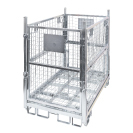
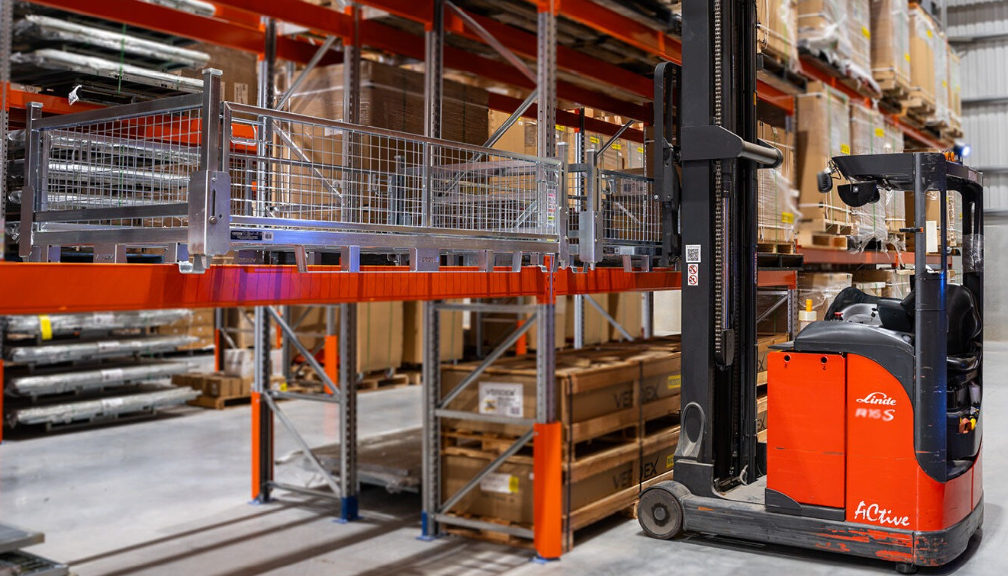
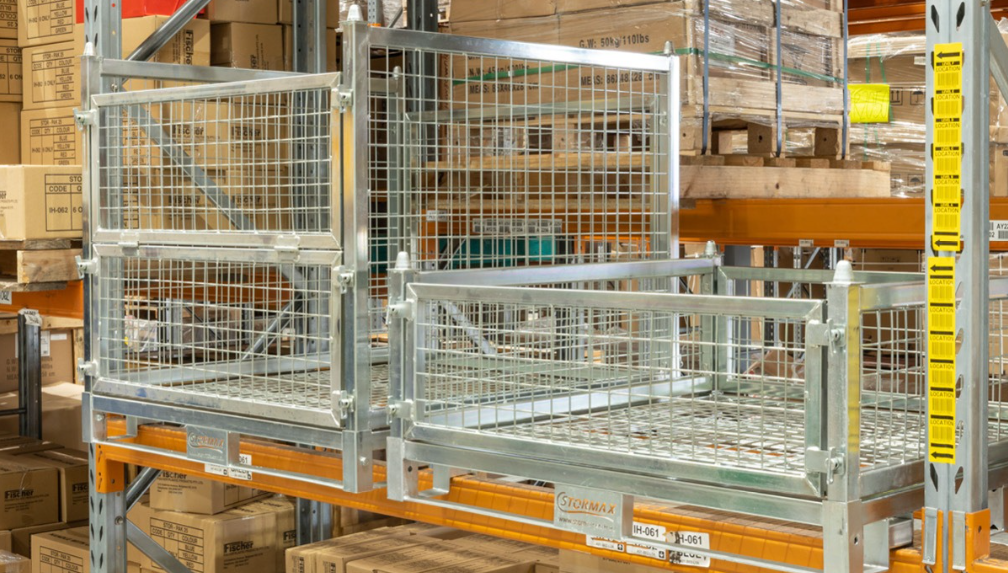
Stillage cages are robust, industrial-grade storage equipment containers designed to store and transport goods. Typically made from steel or galvanised metal, these cages are stackable, often featuring solid sides or mesh for visibility and security.
The main appeal of stillage cages lies in their versatility and adaptability to a wide range of goods, including fragile or irregularly shaped items, and their ability to be easily moved using forklifts or pallet jacks.
Stillage cages are ideal for businesses that require easy access to goods or need to store materials that need protection during transportation.
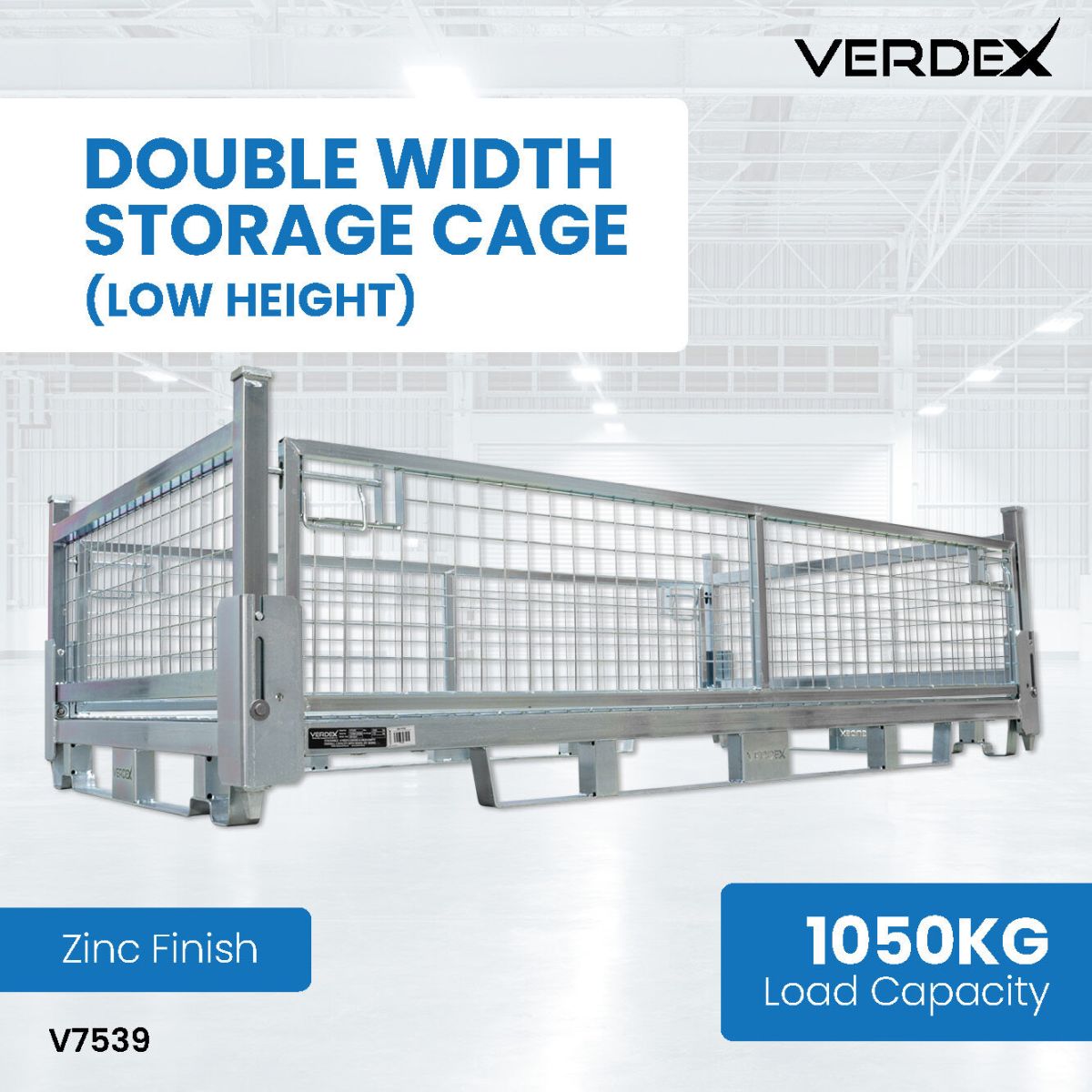
Many models, such as our Double Width Storage Cage (Low Height), offer increased volume and stability for bulky items while staying compact enough for tight warehouse layouts. They are commonly used in industries like automotive, pharmaceuticals, food, and general manufacturing.
For more information about stillage cages, see our blogs about:
What is Pallet Racking?
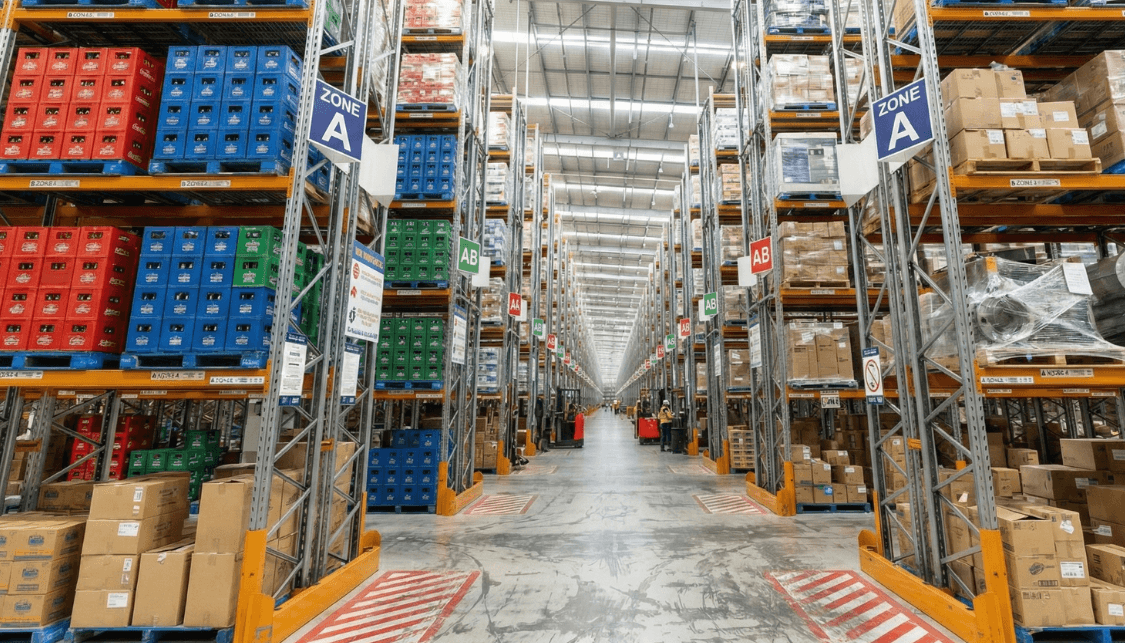
Pallet racking, on the other hand, is a storage system that utilises horizontal beams and vertical uprights to hold pallets of goods in a high-density configuration. These systems are typically used to maximise vertical space in a warehouse, providing easy access to large quantities of stock.
Pallet racking comes in various configurations, such as selective racking, drive-in racking, and push-back racking, allowing businesses to customise their racking systems based on the types of products and inventory management processes they have.
Pallet racking is particularly suited for businesses with high volumes of uniform goods or products that are consistently palletised, as it is designed to maximise space and support large quantities of stock.
At Verdex, we supply pallet racking accessories to suit your warehouse requirements.
Key Advantages of Stillage Cages
1. Flexibility in Storage
One of the standout advantages of stillage cages is their flexibility. Unlike pallet racking, which is designed for standardised loads (pallets), stillage cages can be used to store a wide variety of goods, including irregularly shaped, fragile, or small items. The ability to adjust the internal configuration of stillage cages with dividers or trays makes them highly adaptable to different products.
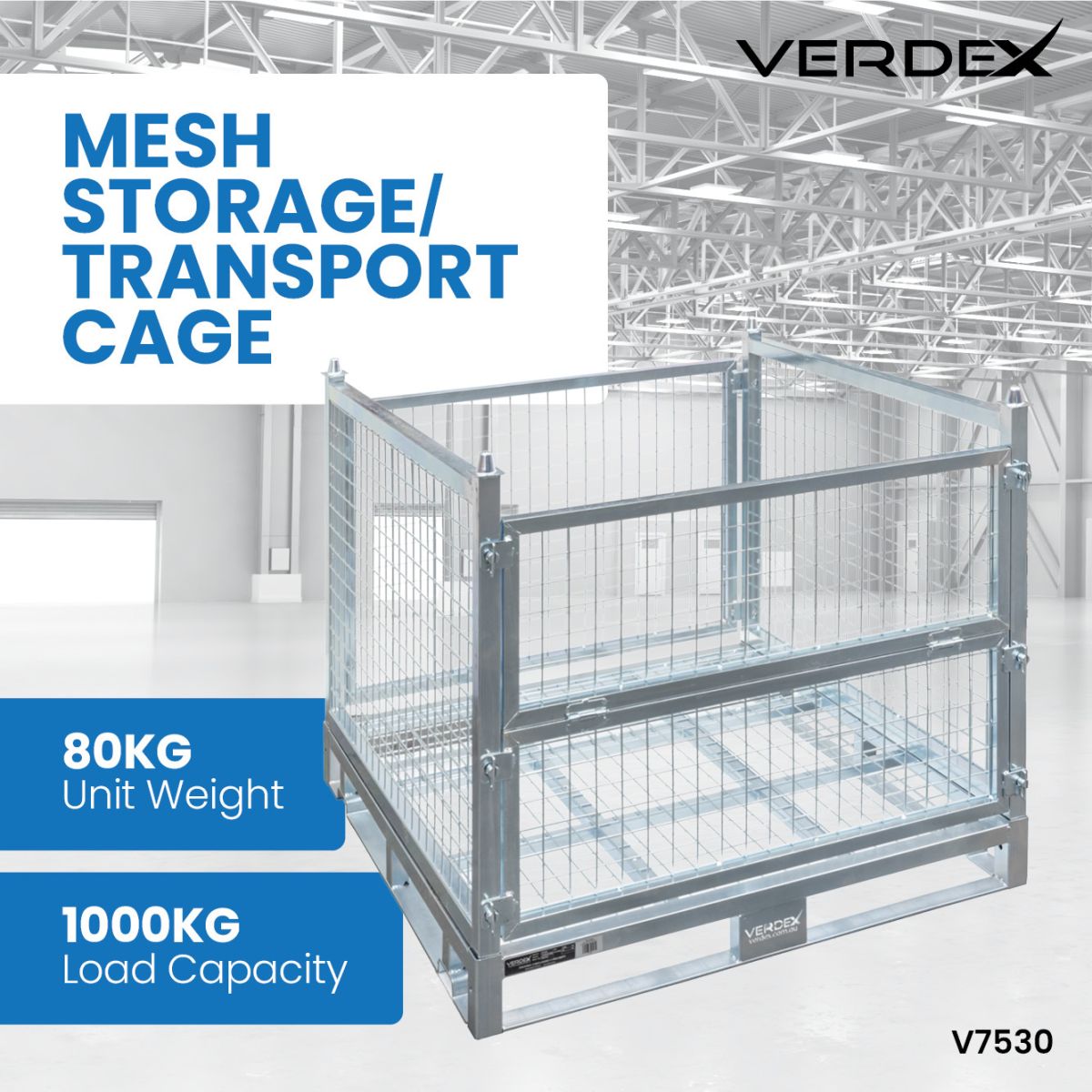
This flexibility makes stillage cages an excellent option for businesses that need to store different types of goods at once or for businesses in industries like manufacturing, pharmaceuticals, and food processing. Solutions such as our Mesh Storage / Transport Cage provide enhanced visibility and airflow, making them ideal for high-turnover or inspection-heavy environments.
2. Space Efficiency with Stackability
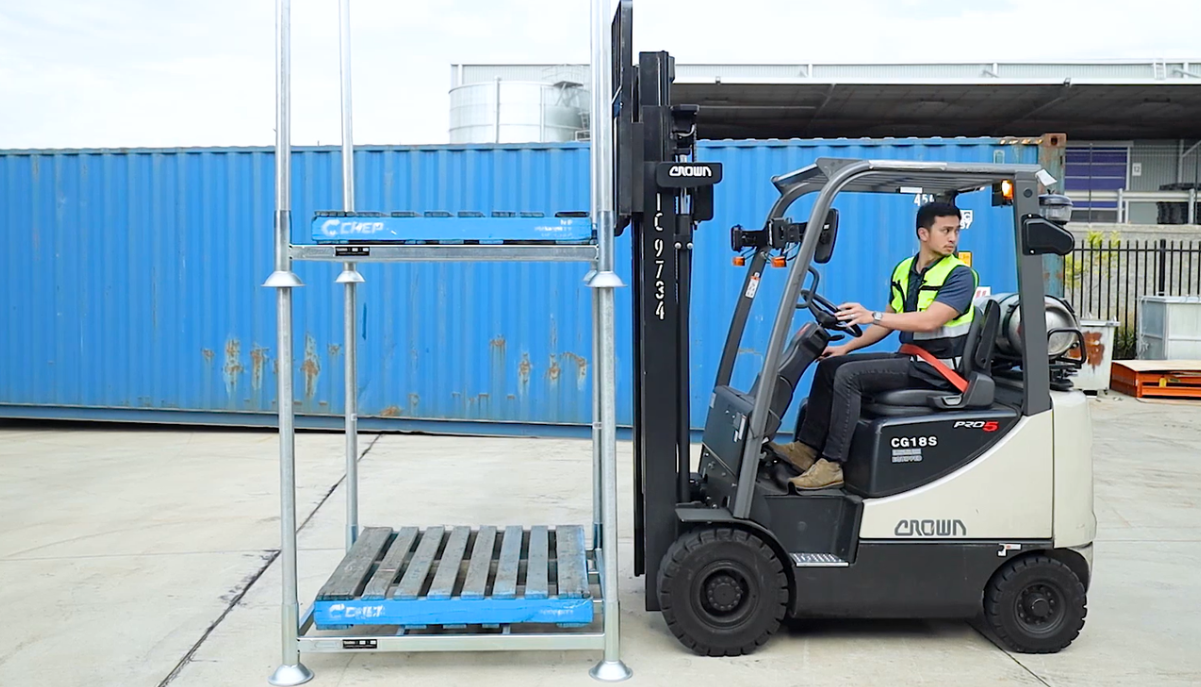
Stillage cages are stackable, meaning they can be stacked one on top of the other when not in use, allowing for greater vertical space utilisation. This feature helps businesses optimise their storage capacity and organise inventory more efficiently. By stacking cages, businesses can use their floor space more effectively, making them ideal for smaller warehouses or businesses looking to maximise every inch of available space.
3. Portability and Ease of Handling
Another key benefit of stillage cages is their portability. Unlike pallet racking, which is stationary, stillage cages can be easily moved around the warehouse, transported to different areas, or even used for deliveries. Many stillage cages come with wheels or castors, further enhancing their mobility, allowing employees to move them quickly and with minimal effort.
This makes them an ideal choice for businesses that require frequent access to stored goods or need to move items between different locations within the warehouse or factory.
4. Security and Safety
Stillage cages often come with features like lockable doors and reinforced sides, offering a higher level of security for valuable or sensitive goods. This is particularly beneficial for industries like pharmaceuticals, automotive, or electronics, where goods need to be securely stored and protected from theft or tampering.
Key Advantages of Pallet Racking
1. High Storage Capacity
Pallet racking systems are designed to maximise storage density, particularly for high-volume, uniform goods. By using vertical space efficiently, pallet racking allows businesses to store large quantities of products without compromising on accessibility. In businesses with a steady flow of palletised goods, pallet racking is often the go-to solution for managing inventory.
Moreover, some advanced forms of pallet racking, such as drive-in or push-back systems, can allow for high-density storage while maintaining easy access to products, further boosting warehouse efficiency.
2. Durability and Long-Term Investment
Pallet racking systems are typically built from heavy-duty materials like steel, ensuring long-term durability and stability. These systems are designed to handle the weight and size of full pallets and can support heavy loads, making them ideal for businesses with large or bulky stock.
Since pallet racking is stationary, it provides a more permanent storage solution, and the structure can last for many years with minimal maintenance. For businesses with large volumes of goods or those looking for long-term storage solutions, pallet racking offers durability and reliability that stillage cages may not.
3. Organisation and Accessibility
Pallet racking systems provide clear organisation of goods. Each pallet is stored on a dedicated rack, which makes it easy for employees to access stock, particularly in high-turnover industries. This organised system helps businesses keep track of inventory and optimise picking and restocking procedures.
Many modern pallet racking systems can be designed with selective access to ensure that the goods at the front of the rack are the first to be used, minimising the risk of stock becoming outdated or unsellable. This feature makes pallet racking ideal for businesses with FIFO (First In, First Out) inventory systems.
Which Storage System Is Best for Your Business?
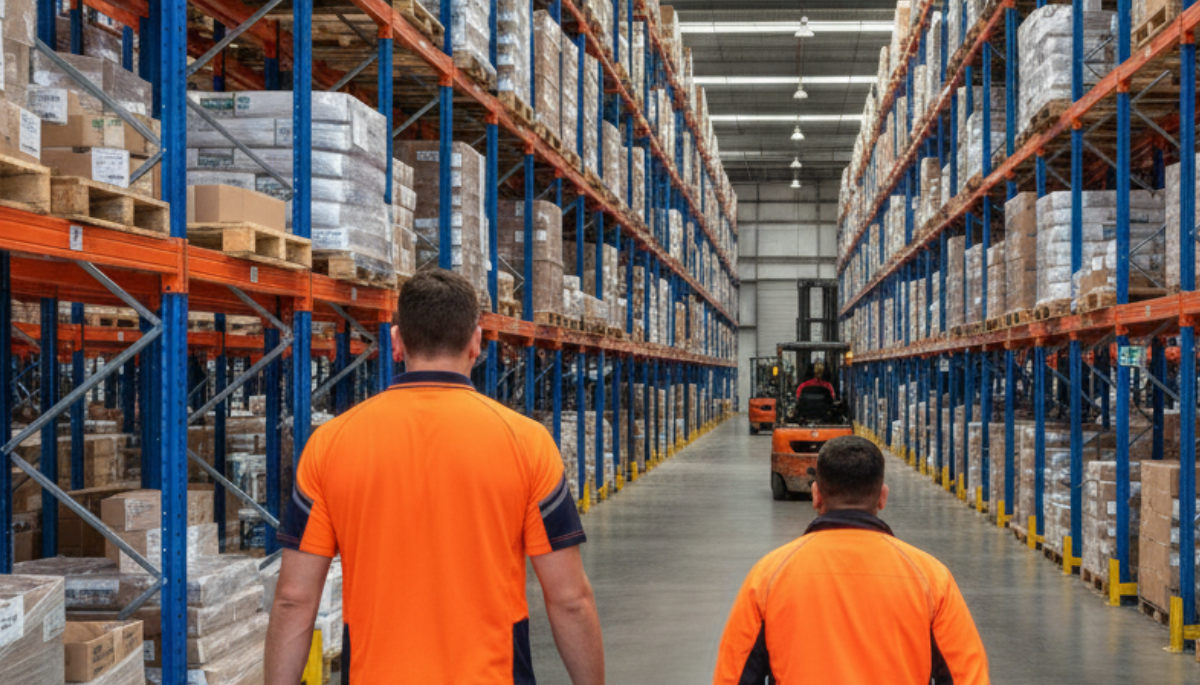
The right choice depends on what you store, how you operate, and the level of flexibility your space requires. The comparison below highlights how stillage cages and pallet racking each support different storage challenges.
|
Criteria |
Stillage Cages |
Pallet Racking |
|
Best For |
Mixed, irregular, fragile, or loose items |
Uniform palletised goods |
|
Mobility |
Highly portable; easy to move with forklifts or pallet jacks |
Fixed, permanent installation |
|
Space Efficiency |
Stackable; great for smaller sites |
Maximises vertical space in large warehouses |
|
Flexibility |
High; adaptable for many product types |
Lower; designed for consistent palletised loads |
|
Security |
Can include lockable doors and mesh sides |
Open structure; relies on pallet integrity |
|
Ideal Industries |
Manufacturing, automotive, food processing, pharmaceuticals |
Warehousing, logistics, bulk distribution |
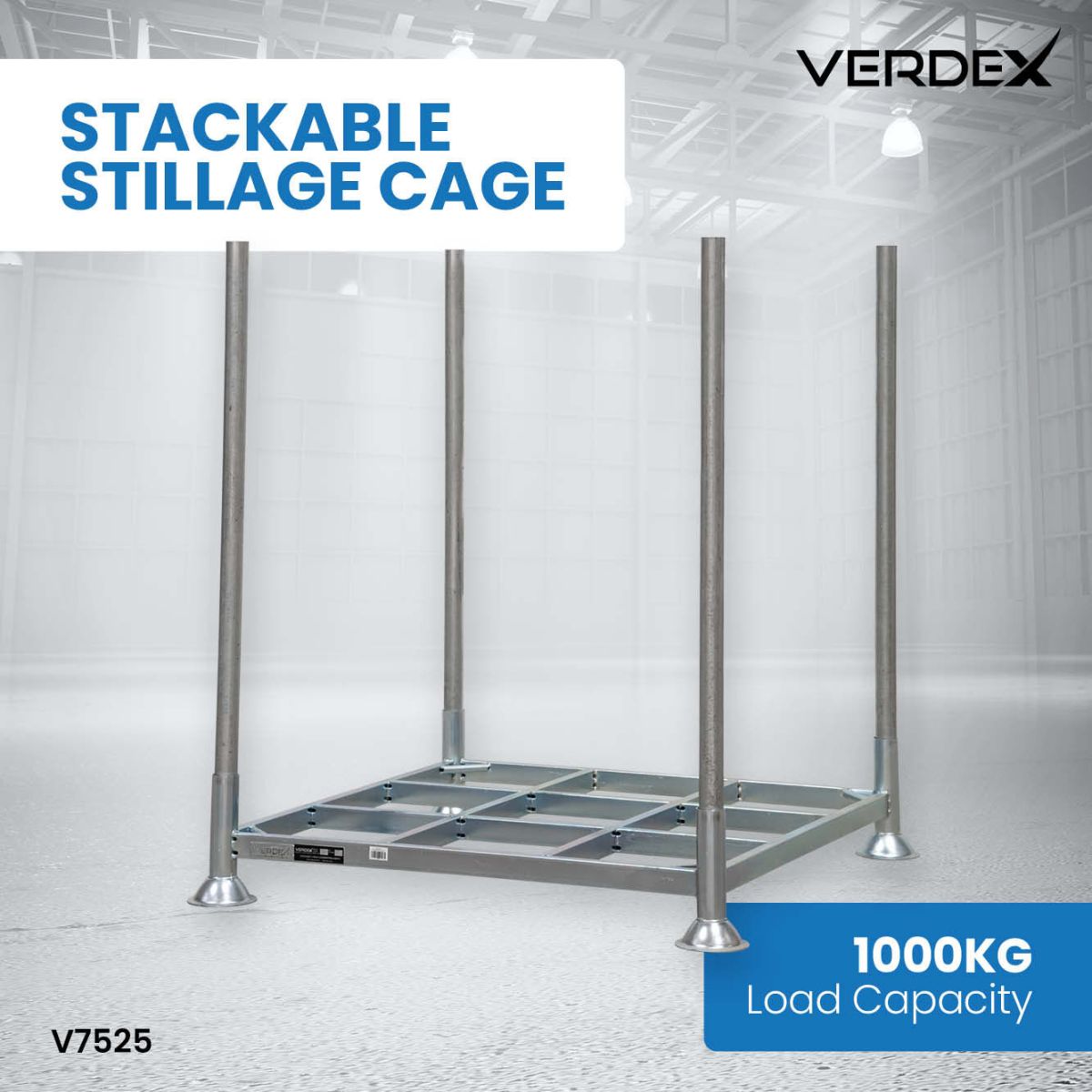
While stillage cages are often preferred in smaller or more varied storage environments and pallet racking is commonly used in large-scale warehouse operations, many businesses benefit from using both systems together. Stackable units such as our Stackable Stillage Cage make it easy to expand storage vertically without installing permanent racking, while pallet racking provides efficient high-capacity organisation for bulk palletised goods.
The best solution depends on your product mix, the workflow you need to support, and the long-term scalability of your storage setup.
Final Considerations Before Selecting Your Storage Solution
Both stillage cages and pallet racking have their distinct advantages, and the best choice for your business will depend on your specific needs. Stillage cages offer flexibility, portability, and space-saving benefits, making them perfect for businesses with diverse or smaller product lines.
On the other hand, pallet racking systems excel in high-density storage for uniform, palletised goods and provide long-term durability and organisation.