Login / Register













 Trolleys & Hand Trucks
 Cage Trolleys
 Cleaning Carts & Trolleys
 Construction Trolleys
 Custom Trolleys
 Hand Trucks & Dollies
 Laundry/Linen Trolleys
 Lifting Trolleys
 Order Picking Trolleys
 Panel Cart Trolleys
 Platform Trolleys
 Powered Trolleys
 Shelf & Tiered Trolleys
 Shopping Trolleys
 Stainless Steel Trolleys
 Tool Trolleys
 Utility & Service Carts
 Lifting & Handling Equipment
 Forklift Attachments
 Jib Attachments
 Lifting Hoists & Pallet Hooks
 Load Skates & Tow Tugs
 Manual Stackers & Lifters
 Pallet Jacks
 Pallet Lifters
 Pallet Rotators & Dispenser
 Powered Pallet Trucks & Electric Lifters
 Scissor Lift Trolleys and Tables
 Conveyor Equipment
 Conveyor Frames & Stands
 Roller & Skate Conveyors
 Ladders & Access Equipment
 Container & Yard Ramps
 Ladders & Step Stools
 Work Platforms & Crane Cages
 Drum Handling Equipment
 Drum Storage & Bunding
 Drum Trolleys & Lifters
 Forklift Drum Handling
 Waste Handling & Bins
 Bin Lifters & Tippers
 Plastic Waste & Wheelie Bins
 Steel Waste & Tipping Bins
 Waste Carts
 Dangerous Goods Storage & Spillage
 Aerosol Cans Storage Cages
 Bunded Pallets & Storage
 Corrosive Goods Storage Cabinets
 DG Storage & Trolleys
 Flammable Liquid Cabinets
 Forklift Gas Storage Cages
 Gas Cylinder Storage Bays
 Site Storage
 Spill Kits
 Shelving & Storage Equipment
 Stillage & Transport Cages
 750 Series Cage Configurations
 Heavy Duty Cabinets
 Heavy Duty Shelving
 Mega Bins & Pallets
 Packing & Workbenches
 Parts Trays & Stor-Pak Bins
 Pegboard & Louvre Panels
 Plastic Bins & Crates
 Plastic Handling Solutions Bins
 Plastic Pallets
 Stack & Nest Bins
 Pallet Racking Accessories
 Workplace Equipment
 Modular Workbenches
 Electric Height-Adjustable Workbenches
 Floor Matting
 General Workplace Equipment
 Industrial Weighing Scales
 Packaging Machinery
 Stationery Cupboards
 Storage and Stillage Cages
 Tool Trolleys
 Tooling Cabinets
 Workshop Fans and Coolers
 Safety Barriers, PPE & Signage
 Modular Safety Fence System
 Barriers & Bollards
 First Aid Equipment
 Gloves, Knives and PPE
 Signage
 Cleaning & Site Supplies
 Cleaning Equipment
 Cleaning Trolleys
 Rubbish Bins
 Signs & Traffic Supplies
 Construction Equipment
 Construction Trolleys
 Waste Handling
 General Site Equipment
 Concrete Equipment
 Site Storage
 Lifting Equipment
 Verdex Specials
Creating Safe Work Zones with Modular Safety Fence Systems
Date Posted:17 March 2026
Discover how modular safety fence systems help separate people from hazards inside warehouses and industrial facilities. Learn where fencing is used and how modular systems support safer, more organised work zones.
Verdex Insights: At a Glance
-
The Challenge: Busy indoor industrial environments often involve people, vehicles and machinery operating in close proximity. Without clearly defined physical boundaries, workers and visitors can unintentionally enter hazardous areas.
-
The Insight: Visual cues such as floor markings and signage help guide behaviour, but physical barriers provide a stronger and more reliable method of separating people from hazards inside active facilities.
-
The Verdex Approach: Verdex supplies modular safety fence systems that allow businesses to create clearly defined indoor work zones, isolate hazards and adapt safety layouts as operations evolve.
Creating Safe Work Zones with Modular Safety Fence Systems
In busy indoor industrial environments, safety depends on how effectively people are separated from hazards.
Warehouses, manufacturing plants, production facilities and distribution centres all operate with moving machinery, vehicles, maintenance activities and personnel working in close proximity.
Without clearly defined boundaries, the risk of incidents increases significantly.
Modular safety fence systems provide an effective and flexible solution for creating safe work zones inside enclosed facilities.
Designed for controlled indoor environments, these systems help businesses reduce risk, improve compliance and maintain productivity without the need for permanent structural changes.
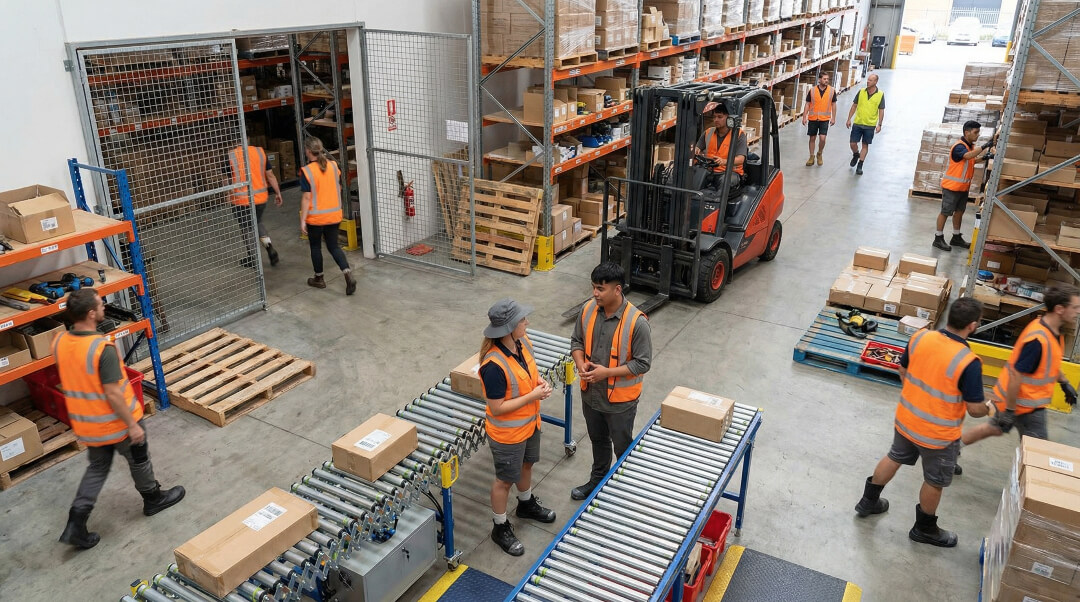
Crowded warehouse setup lacking safety fencing
Why Separating Indoor Work Areas Improves Safety
Clear separation between people and hazards is a fundamental principle of workplace safety. In indoor facilities, where space is shared and activity levels are high, physical barriers play a critical role in preventing accidental access to dangerous areas.
Unlike floor markings or signage alone, physical fencing provides a visible and tangible boundary.
Workers instinctively recognise fenced zones as restricted, which reduces reliance on memory or interpretation. This is particularly important in environments with noise, low visibility or frequent personnel movement.
From a compliance perspective, installing physical barriers supports the hierarchy of controls outlined by Safe Work Australia.
Clearly defined indoor work zones demonstrate that reasonably practicable steps have been taken to minimise risk and protect workers, contractors and visitors.
As part of maintaining a safe workplace, organisations should also conduct regular safety checks to ensure hazards remain controlled.
Our guide How Often Should Workplace Safety Inspections Occur? explains how inspection schedules support ongoing workplace safety management.
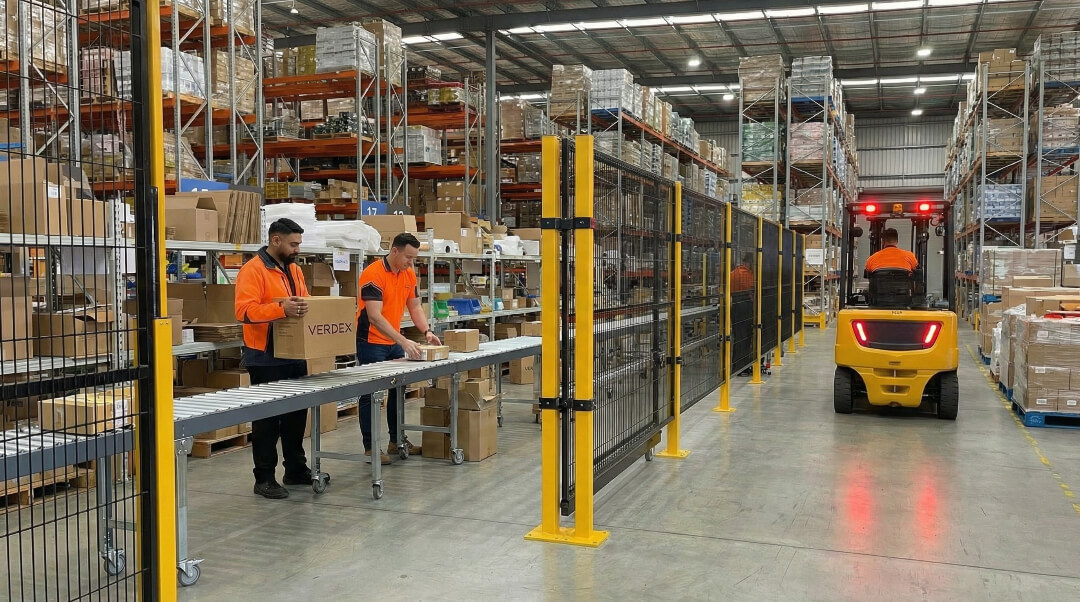
Two warehouse retail specialists managing packaging process within designated area separated by modular safety fencing
Common Indoor Work Zones That Require Safety Fencing
Modular safety fencing is a commonly used type of safety equipment common in indoor industrial and commercial settings to isolate hazards and control access.
Typical zones that benefit from fencing include:
Maintenance Areas Inside Facilities
Maintenance tasks often involve exposed machinery, tools, electrical systems or isolated equipment.
Fencing off indoor maintenance zones prevents unauthorised access and protects surrounding workers while repairs or servicing are underway.
Machinery and Automation Zones
Production equipment, robotic systems and automated machinery present significant risks if accessed unintentionally.
Modular safety fencing creates a controlled perimeter around these machines, ensuring only trained personnel can enter operational areas.
Internal Construction and Refurbishment Zones
Many warehouses and factories undergo internal construction, fit-outs or layout changes while remaining operational.
These enclosed construction areas can be safely isolated using modular fencing, protecting workers from tools, materials and temporary hazards without affecting surrounding operations.
Temporary Repair and Breakdown Areas
Unexpected equipment failures often require immediate attention within shared indoor spaces.
Modular fencing can be deployed quickly to isolate repair areas, reducing exposure to hazards while minimising downtime.
Indoor Vehicle and Pedestrian Separation Zones
Forklifts, pallet movers and other material handling equipment operate extensively inside warehouses.
Safety fencing helps establish pedestrian-only walkways and restricted vehicle zones, reducing the risk of collisions and near misses.
Restricted Access and Storage Areas
Certain indoor zones, such as high-value storage, hazardous material areas or controlled process zones, require restricted access.
Modular fencing supports access control while maintaining visibility and workflow.
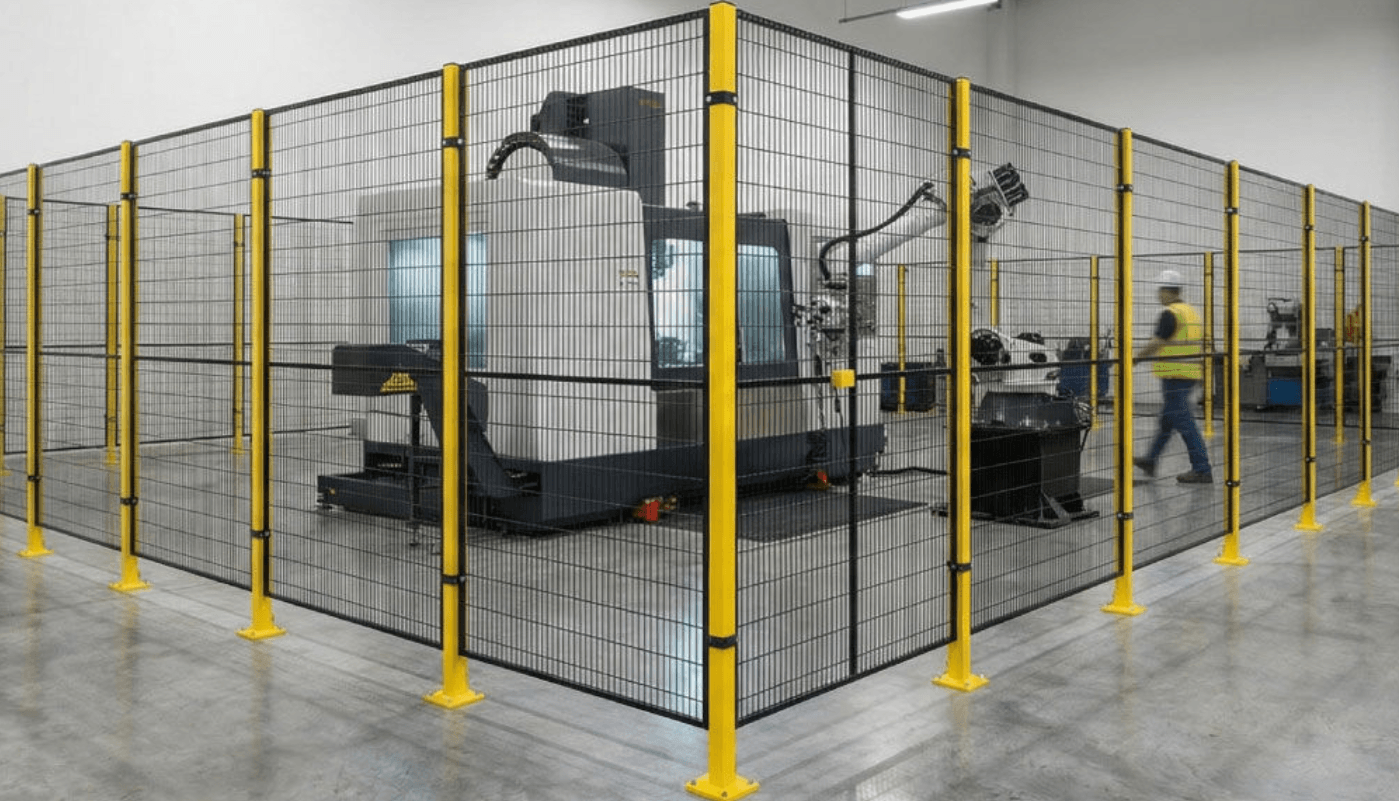
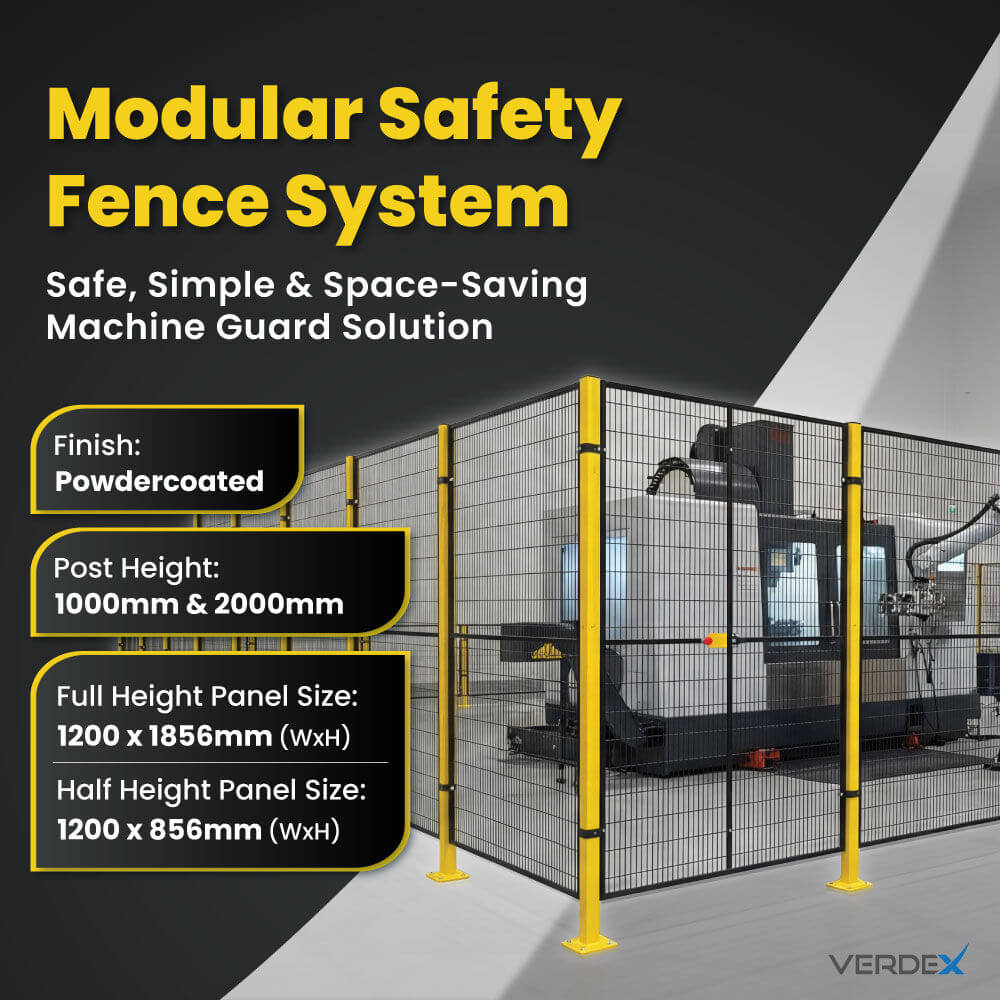
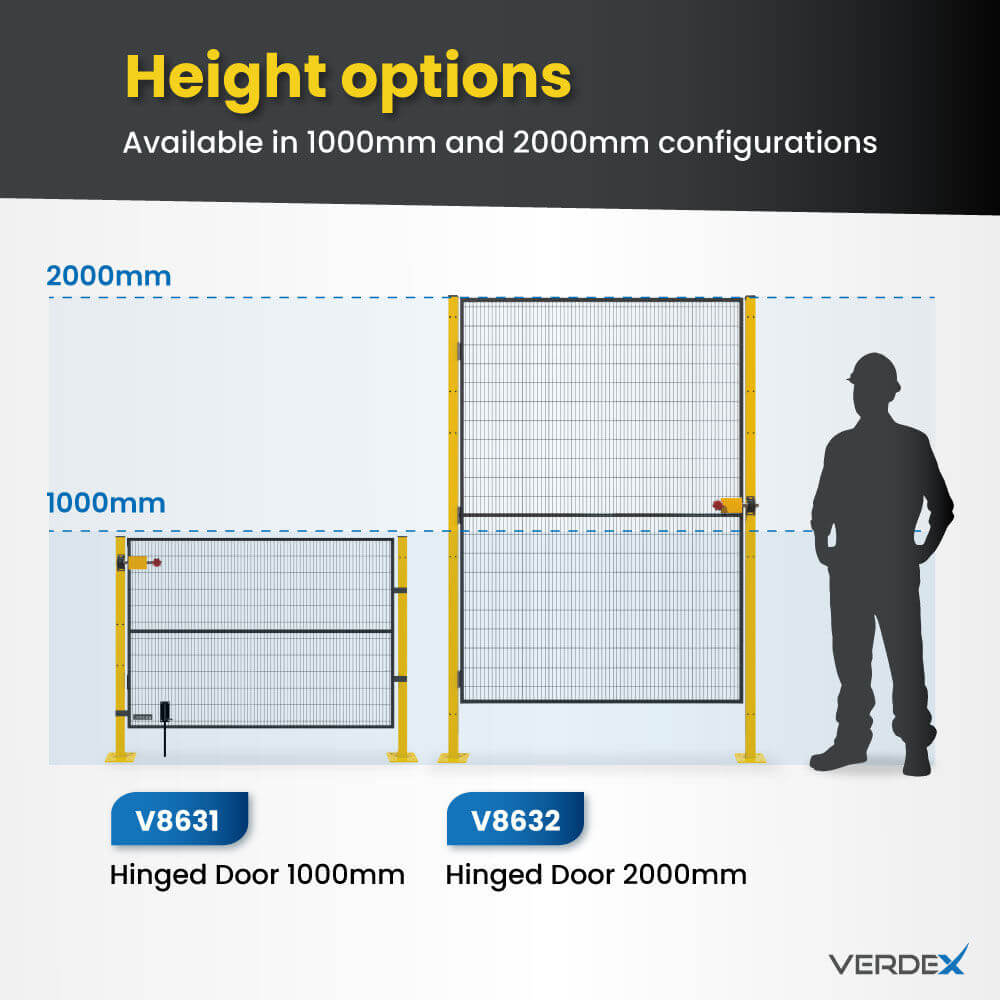
2000mm high modular safety fence configuration securing heavy machinery
The Risks of Not Using Physical Barriers Indoors
Without physical barriers, indoor workplaces rely heavily on behavioural controls, which can fail under pressure or distraction.
Common risks include:
Unauthorised Access
Workers or visitors may unintentionally enter restricted areas, particularly during busy shifts or peak periods. This can expose them to machinery, electrical hazards or active maintenance work.
Pedestrian Exposure
In shared indoor spaces, pedestrians are at risk of interacting with moving equipment or vehicles. Without fencing, designated walkways can be easily crossed or ignored.
Vehicle Interaction
Forklift operators rely on predictable movement paths. A lack of clear physical separation increases the chance of sudden encounters with pedestrians or obstacles.
Reduced Safety Accountability
When work zones are not clearly defined, enforcing safety rules becomes more difficult. Physical fencing provides a consistent reference point that supports site procedures and supervision.
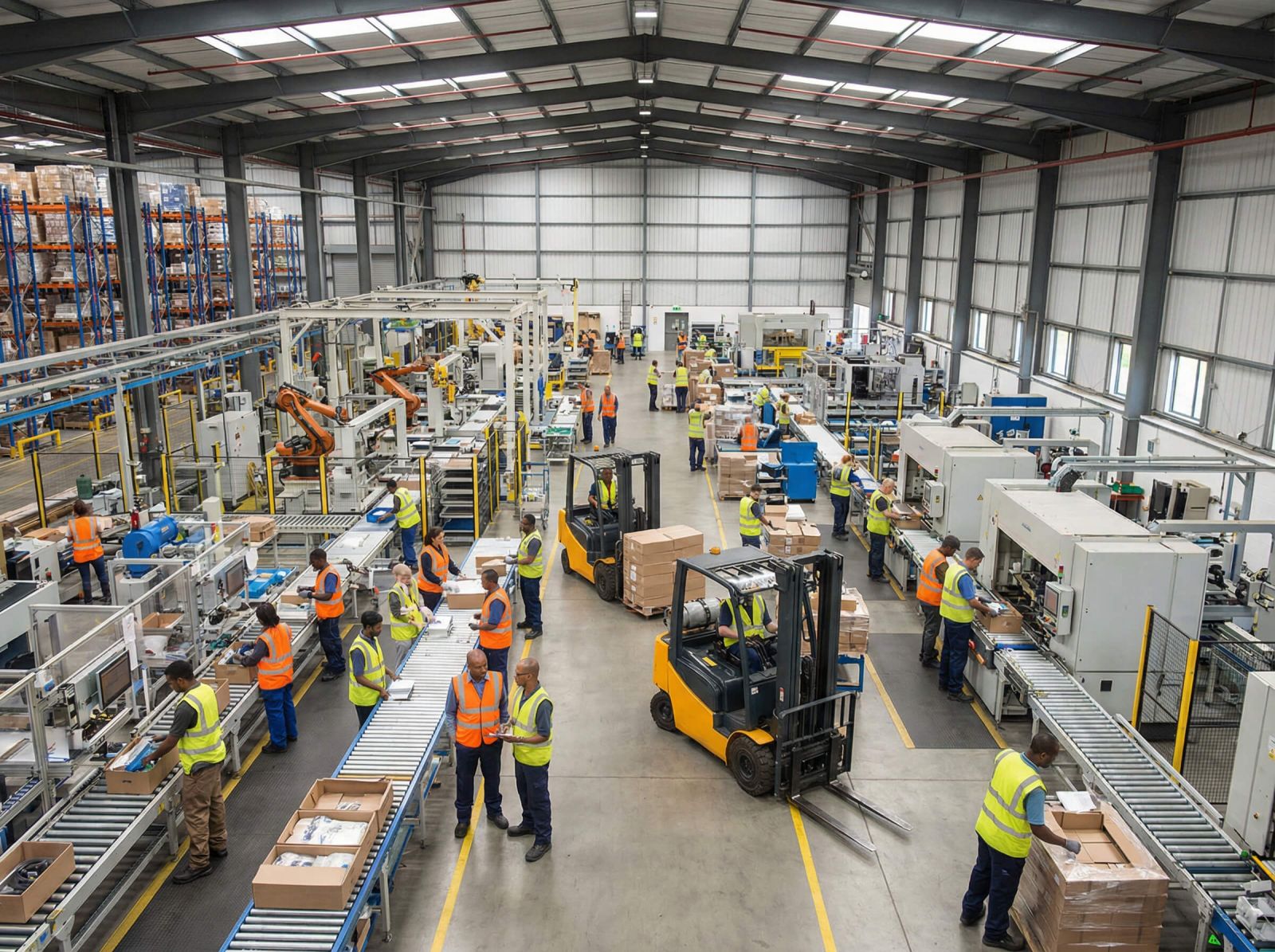
Crowded warehouse with clear workplace safety hazards
How Modular Safety Fence Systems Improve Indoor Safety
Modular safety fencing is specifically designed to suit dynamic indoor environments where layouts and processes may change over time.
Here's what they can help in achieving:
Creating Clear and Consistent Boundaries
Modular panels form strong, visible barriers that clearly define indoor work zones. This clarity helps workers quickly understand where access is permitted and where it is restricted.
Improving Visibility in Enclosed Spaces
Many modular fence systems feature mesh designs and high-visibility finishes, allowing clear sightlines across indoor facilities. This supports situational awareness while maintaining physical separation.
Adapting to Changing Indoor Layouts
As machinery is relocated or processes evolve, modular fencing can be reconfigured, expanded or moved without permanent modification to the building. This flexibility is ideal for growing or evolving operations.
Supporting Compliance and Risk Management
Physical fencing strengthens risk controls identified in assessments and safe work procedures. It also helps businesses demonstrate compliance with workplace safety obligations.
Reducing Downtime
Quick installation and adjustment mean safety improvements can be implemented without prolonged interruptions to indoor operations.
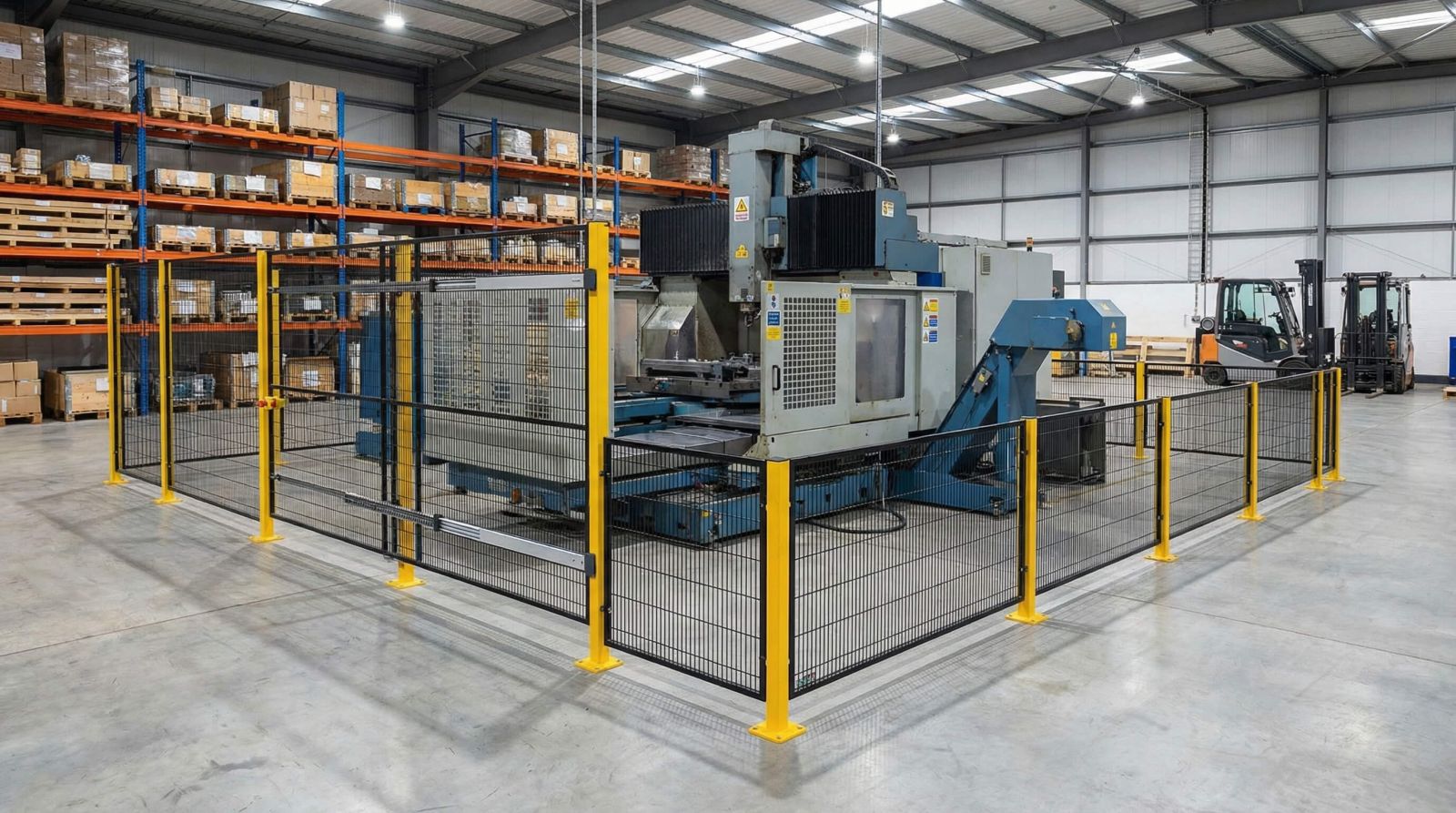
1000mm and 2000mm safety fence height combinations surrounding heavy duty machinery
Modular Safety Fencing Solutions for Indoor Workplaces
Verdex supplies modular safety fence systems designed specifically for indoor industrial and commercial environments. These systems can be configured to suit a wide range of applications while maintaining consistency and durability.
Modular Safety Fence Panels
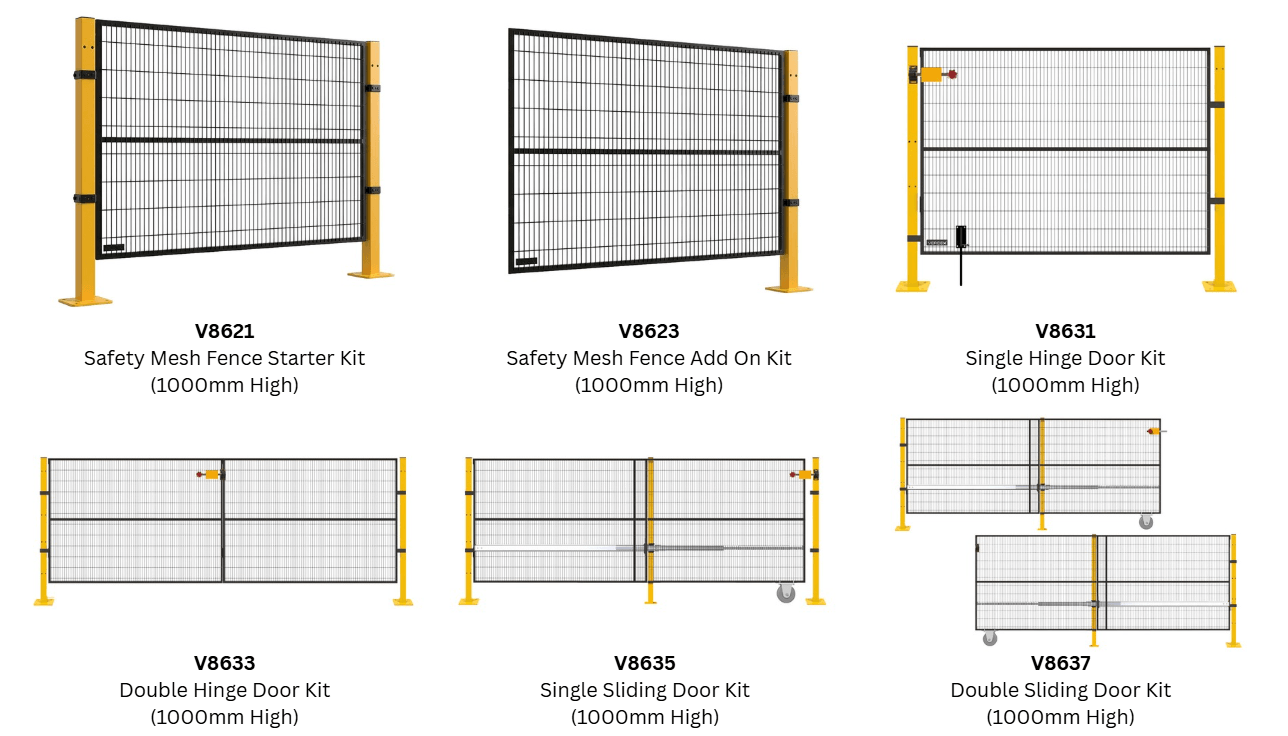
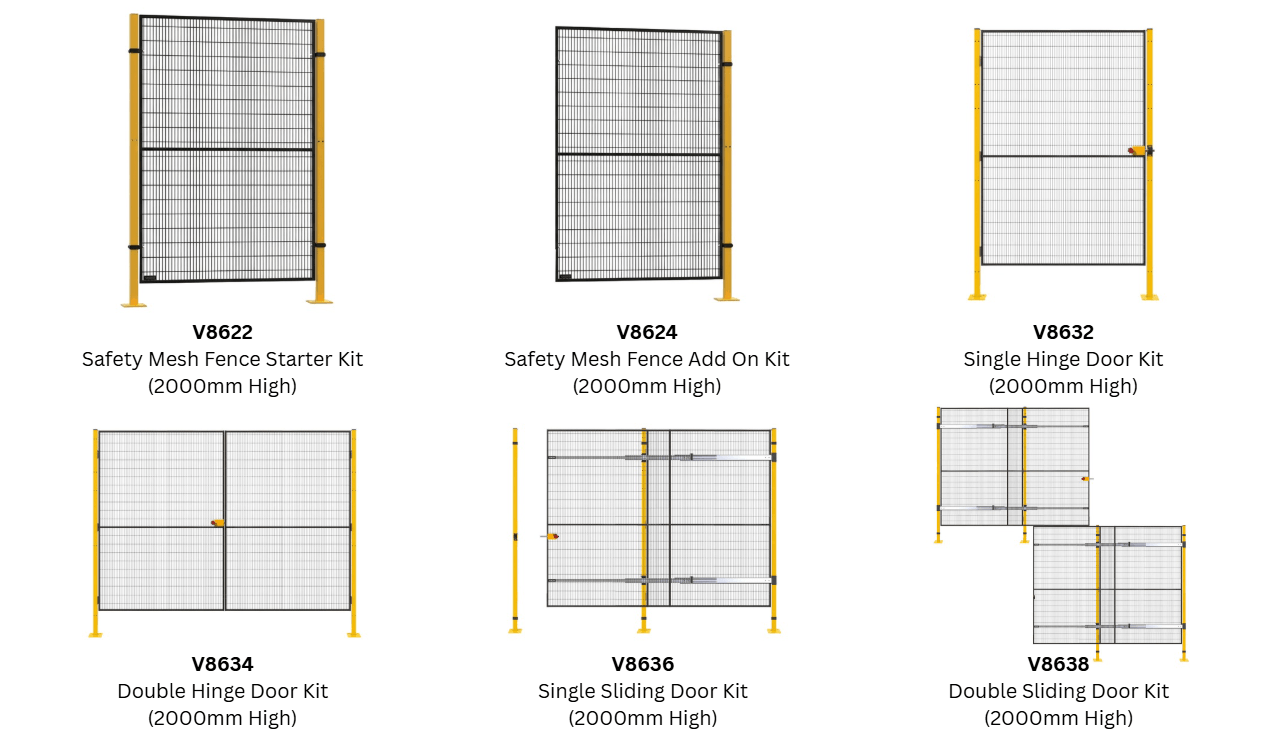
Fence panels form the foundation of indoor safety zones. They can be installed as standalone barriers or combined with posts and gates to create enclosed areas around machinery, maintenance zones or construction works.
Safety Gates for Controlled Access
Integrating safety gates allows authorised entry into restricted zones without compromising protection. Gates can be configured for pedestrian or equipment access within indoor facilities.
Temporary Indoor Safety Barriers
For short-term tasks such as maintenance or internal refurbishment, temporary modular barriers provide rapid deployment and removal, making them ideal for changing hazards.
Integration with Other Indoor Safety Equipment
Modular fencing works effectively alongside bollards, pedestrian barriers and safety signage to create layered protection within enclosed environments.
Why Modular Fencing Is Ideal for Australian Indoor Facilities
Australian warehouses and manufacturing sites often operate under space constraints and strict safety requirements. Modular fencing provides a practical solution that balances safety, flexibility and cost efficiency.
Because components are reusable and adaptable, businesses can scale their safety infrastructure as operations change. This makes modular fencing a long-term investment for indoor facilities managing growth, automation or layout changes.
Reinforcing a Strong Indoor Safety Culture
Visible physical controls send a clear message that safety is a priority. When workers see consistent use of fencing to manage indoor hazards, it reinforces safe behaviours and supports training and induction processes.
Clearly defined work zones also make it easier to manage contractors, visitors and new employees, reducing the likelihood of misunderstandings or unsafe access.
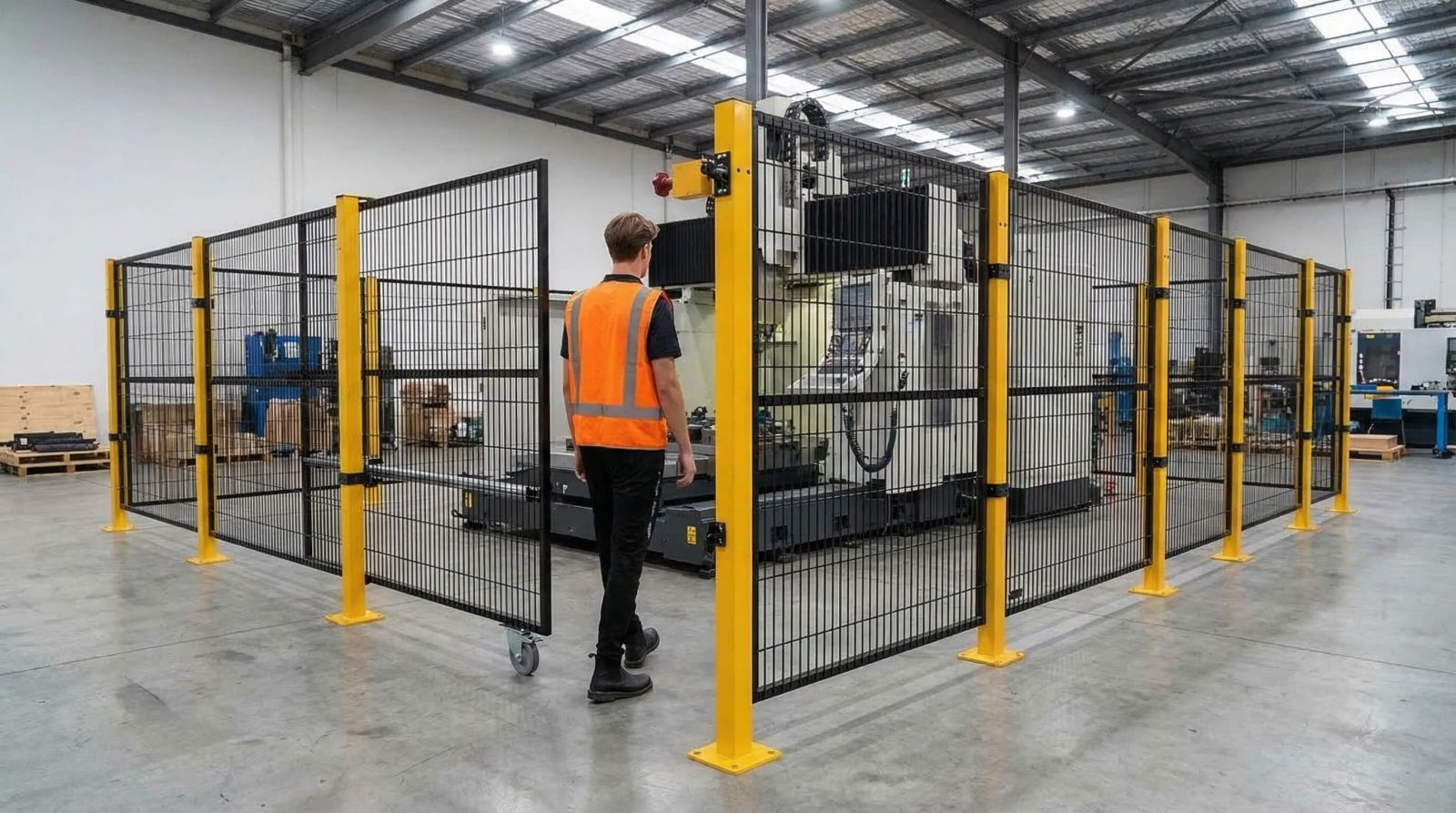
Industrial designer observing heavy machinery equipment in a warehouse setting
Creating Safer Indoor Work Zones with Confidence
Modular safety fence systems offer a reliable and flexible way to separate people from hazards inside enclosed industrial and commercial facilities.
By creating clear boundaries, improving visibility and allowing for easy reconfiguration, these systems help Australian businesses manage risk without compromising efficiency.
For warehouses, factories and production facilities seeking adaptable indoor safety solutions, modular fencing provides a practical foundation for safer, more compliant operations.
Verdex supplies modular safety fence systems designed for indoor industrial environments.
Our team can help businesses assess their facility layout, identify risk zones and configure fencing systems that support both safety and operational efficiency.
To learn more about Verdex modular safety fencing solutions, contact the Verdex team or explore our full range of modular safety fencing components.