Login / Register








 Trolleys & Hand Trucks
 Cage Trolleys
 Cleaning Carts & Trolleys
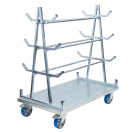 Construction Trolleys
 Custom Trolleys
 Hand Trucks & Dollies
 Laundry/Linen Trolleys
 Lifting Trolleys
 Order Picking Trolleys
 Panel Cart Trolleys
 Platform Trolleys
 Powered Trolleys
 Shelf & Tiered Trolleys
 Shopping Trolleys
 Stainless Steel Trolleys
 Tool Trolleys
 Utility & Service Carts
 Lifting & Handling Equipment
 Forklift Attachments
 Jib Attachments
 Lifting Hoists & Pallet Hooks Accessories
 Load Skates & Tow Tugs
 Manual Stackers & Lifters
 Pallet Jacks
 Pallet Lifters
 Pallet Rotators & Dispenser
 Powered Pallet Trucks & Electric Lifters
 Scissor Lift Trolleys and Tables
 Conveyor Equipment
 Conveyor Frames & Stands
 Roller & Skate Conveyors
 Ladders & Access Equipment
 Container & Yard Ramps
 Ladders & Step Stools
 Work Platforms & Crane Cages
 Drum Handling Equipment
 Drum Storage & Bunding
 Drum Trolleys & Lifters
 Forklift Drum Handling
 Waste Handling & Bins
 Bin Lifters & Tippers
 Plastic Waste & Wheelie Bins
 Steel Waste & Tipping Bins
 Waste Carts
 Dangerous Goods Storage & Spillage
 Aerosol Cans Storage Cages
 Bunded Pallets & Storage
 Corrosive Goods Storage Cabinets
 DG Storage & Trolleys
 Flammable Liquid Cabinets
 Forklift Gas Storage Cages
 Gas Cylinder Storage Bays
 Site Storage
 Spill Kits
 Shelving & Storage Equipment
 Stillage & Transport Cages
 750 Series Cage Configurations
 Heavy Duty Cabinets
 Heavy Duty Shelving
 Mega Bins & Pallets
 Packing & Workbenches
 Parts Trays & Stor-Pak Bins
 Pegboard & Louvre Panels
 Plastic Bins & Crates
 Plastic Handling Solutions Bins
 Plastic Pallets
 Stack & Nest Bins
 Pallet Racking Accessories
 Workplace Equipment
 Modular Workbenches
 Electric Height-Adjustable Workbenches
 Floor Matting
 General Workplace Equipment
 Industrial Weighing Scales
 Packaging Machinery
 Stationery Cupboards
 Storage and Stillage Cages
 Tool Trolleys
 Tooling Cabinets
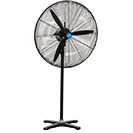 Workshop Fans and Coolers
 Safety Barriers, PPE & Signage
 Modular Safety Fence System
 Barriers & Bollards
 First Aid Equipment
 Gloves, Knives and PPE
 Signage
 Cleaning & Site Supplies
 Cleaning Equipment
 Cleaning Trolleys
 Rubbish Bins
 Signs & Traffic Supplies
 Construction Equipment
 Construction Trolleys
 Waste Handling
 General Site Equipment
 Concrete Equipment
 Site Storage
 Lifting Equipment
 Verdex Specials
Warehouse Cooling vs Air Circulation: What’s the Difference and What Works Best?
Date Posted:10 March 2026
Warehouse still hot even with ceiling fans running? Discover why airflow isn’t always the same as cooling, and learn which solutions work best for large warehouse spaces, workstations, and enclosed zones.
Verdex Insights: At a Glance
-
The Challenge: Effective heat management in large warehouse environments requires more than airflow alone. High ceilings, wide spans and varying workloads mean airflow and temperature control must be carefully considered.
-
The Insight: Air circulation improves comfort by moving air. Cooling systems reduce temperature. Understanding the difference (and when each is appropriate) is critical for effective heat management.
-
The Verdex Approach: Verdex supplies both high-volume airflow systems and active cooling solutions designed to support practical, ground-level heat management across Australian warehouse environments.
When Air Moves — But the Heat Stays
Keeping warehouse teams comfortable during hot conditions is not always straightforward. Large spaces, high ceilings, and constantly changing layouts make heat management more complex than simply installing a fan.
Air circulation systems such as ceiling-mounted or portable fans improve airflow and help reduce discomfort. Cooling systems such as evaporative coolers and portable air conditioners, however, actively lower air temperature.
Understanding the difference between airflow and temperature reduction helps businesses choose the right solution (or combination of solutions) for their specific warehouse environment.
In high-roof warehouses (often 6–12 metres or more), heat naturally accumulates near the ceiling throughout the day. Metal roofing absorbs solar heat, concrete floors retain warmth, and machinery adds additional heat. Open roller doors can also disrupt controlled airflow, allowing hot air to circulate through the building.
In large industrial buildings, a natural process known as heat stratification occurs. Warm air rises and collects near the roof structure, while cooler air settles closer to ground level.
During extended heat events, temperature differences of several degrees can develop between ceiling height and worker level.
Unless heat is actively removed or cooled where people are working, circulating warm air alone may not significantly change ground-level conditions.
The key is not choosing between airflow and cooling. It is understanding what each system is designed to do and applying it where it will be most effective within the warehouse.
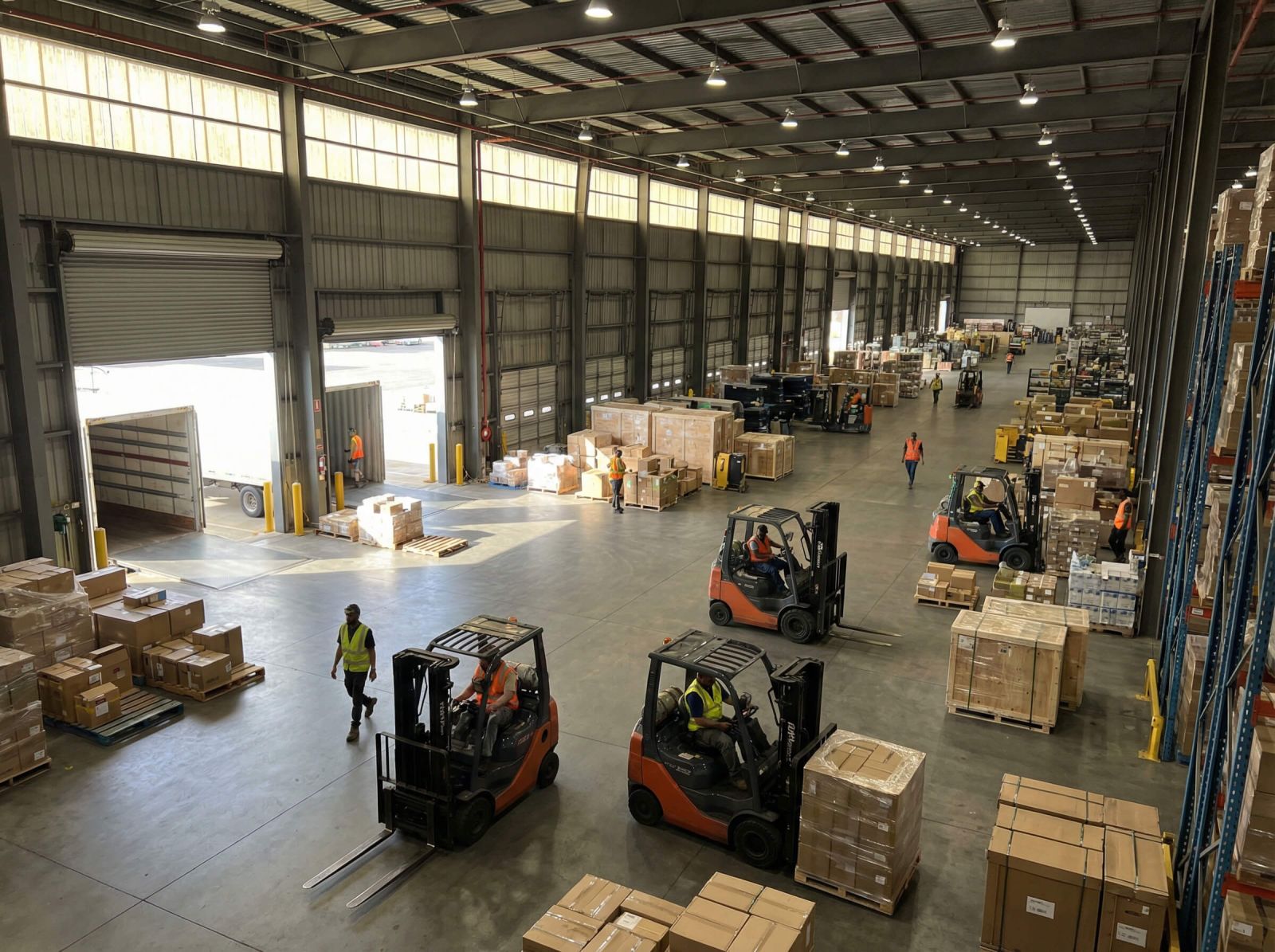
Understanding the Role of Ceiling-Mounted Industrial Fans
Large industrial ceiling-mounted fans, including HVLS (High Volume Low Speed) systems, are designed to move large volumes of air across wide areas.
They are commonly used in warehouses across major cities and regional industrial centres.
Ceiling-mounted fans are designed to:
-
Move large volumes of air
-
Improve overall air circulation
-
Reduce heat build-up near the roof
-
Create a cooling effect through increased airflow
-
Support more even temperature distribution during cooler periods
These systems are major infrastructure investments and are typically installed for long-term operation.
However, it is important to understand what they are not designed to do.
Ceiling-mounted fans do not:
-
Lower the actual air temperature
-
Provide focused cooling in specific work zones
-
Easily adapt to layout changes
-
Deliver targeted airflow at operator height
In very large distribution centres or milder climates, ceiling fans can significantly improve overall airflow.
During sustained summer heat, air circulation alone may not always provide sufficient relief where measurable temperature reduction is required at ground level.
This does not mean ceiling-mounted fans are ineffective. They are highly effective at distributing air across large open spans.
Their performance simply depends on factors such as ceiling height, building layout, and how air moves throughout the space.
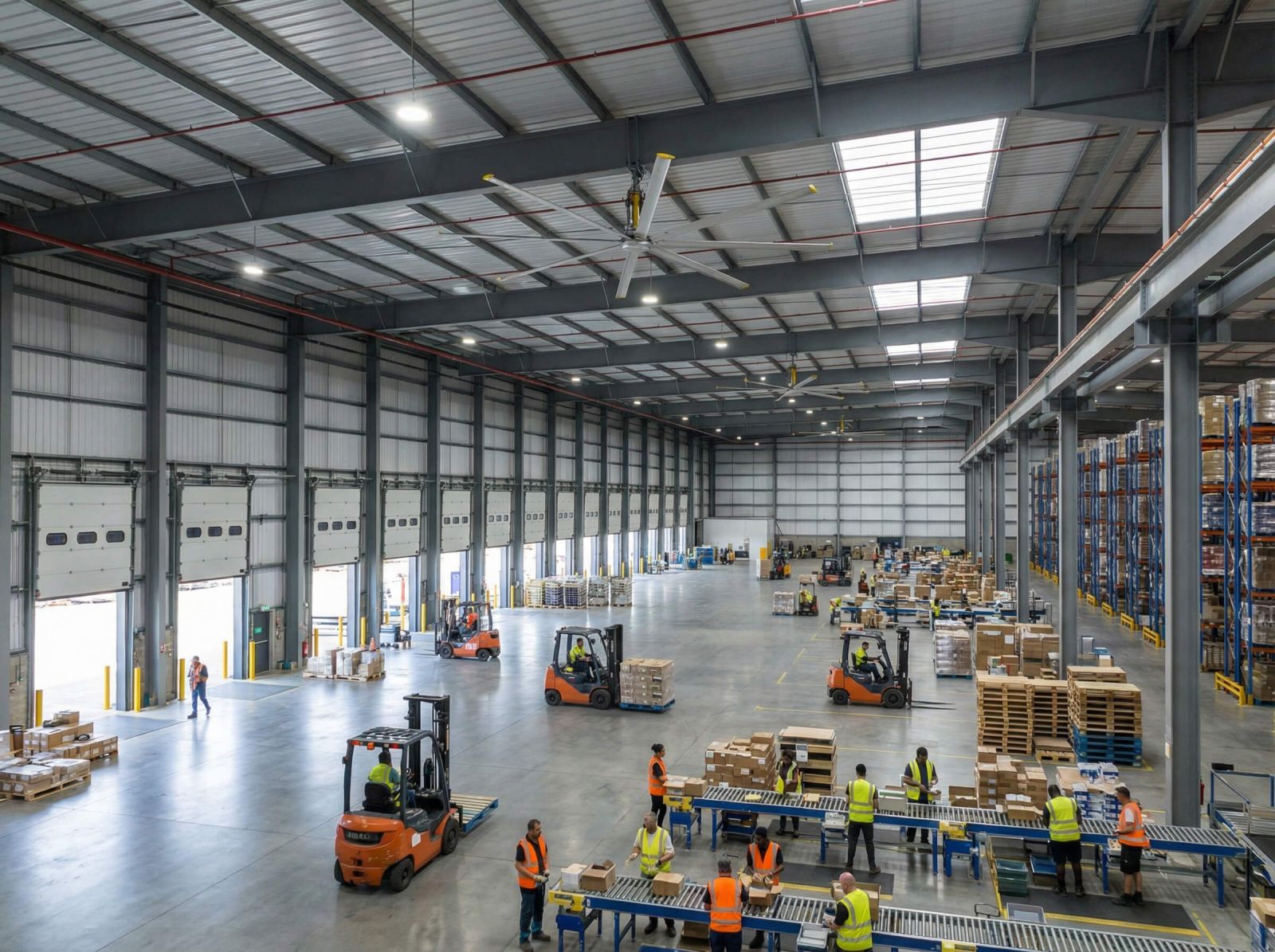
Why Warehouses Get Hotter Than You Expect
On peak summer days, warehouse temperatures can rise well above the outside temperatures.
Several factors contribute to this:
-
Metal roofing absorbing direct sunlight
-
Limited insulation in large-span buildings
-
Heat radiating downward from the roof cavity
-
Concrete floors retaining warmth throughout the day
-
Restricted airflow caused by racking or warehouse layouts
-
Heat generated by machinery and equipment
As the day progresses, heat can continue to accumulate inside the building.
Without active cooling at ground level, internal temperatures may remain elevated long after outside conditions begin to cool.
Heatwaves across Australia are also increasing in frequency and duration, placing additional pressure on industrial workplaces to manage sustained periods of high heat.
Safe Work Australia identifies heat as a recognised workplace hazard. There is no single “safe” temperature at which work must stop.
Instead, businesses are expected to manage heat-related risks based on factors such as humidity, airflow, workload intensity, and worker condition.
Heat Management Is a WHS Responsibility
Under Australian Work Health and Safety laws, businesses must provide and maintain a work environment that is without health and safety risks so far as is reasonably practicable.
Heat is recognised as a workplace hazard.
Managing heat risks may include:
-
Increasing airflow
-
Installing air conditioning or evaporative cooling
-
Scheduling work during cooler parts of the day
-
Reducing physical strain during extreme heat
Cooling solutions are not simply comfort upgrades. They form part of a broader workplace risk management strategy.
Air Circulation vs Active Cooling: A Practical Comparison
Ceiling-mounted systems are designed to move air across large areas.
Ground-level cooling solutions are designed either to direct airflow where people are working or to reduce the actual air temperature.
Across Australian warehouse environments, facilities often combine airflow and active cooling to manage heat more effectively across different zones.
The most appropriate solution depends on factors such as building height, warehouse layout, workforce density, and whether the priority is improved airflow or measurable temperature reduction.
In many cases, the most effective heat management strategies use multiple systems together. This allows businesses to distribute air overhead, increase airflow at ground level, and reduce temperature where required.
Both air circulation and active cooling have an important role to play.
The difference becomes clearer when the systems are compared side by side:
| Feature | Ceiling-Mounted HVLS Fan | Industrial Mobile Fan | Evaporative Cooler | Portable Industrial AC |
|---|---|---|---|---|
| Moves Air | ✔ Yes | ✔ Yes | ✔ Yes | ✔ Yes |
| Reduces Air Temperature | ✘ No | ✘ No | ✔ Yes | ✔ Yes |
| Installation Required | ✔ Yes (Permanent Mounting) | ✘ No | ✘ No | ✘ No |
| Portable / Repositionable | ✘ No | ✔ Yes | ✔ Yes | ✔ Yes |
| Best For | Air circulation in very large open spans | High-volume ground-level airflow | Temperature reduction in dry climates | Controlled cooling in enclosed zones |
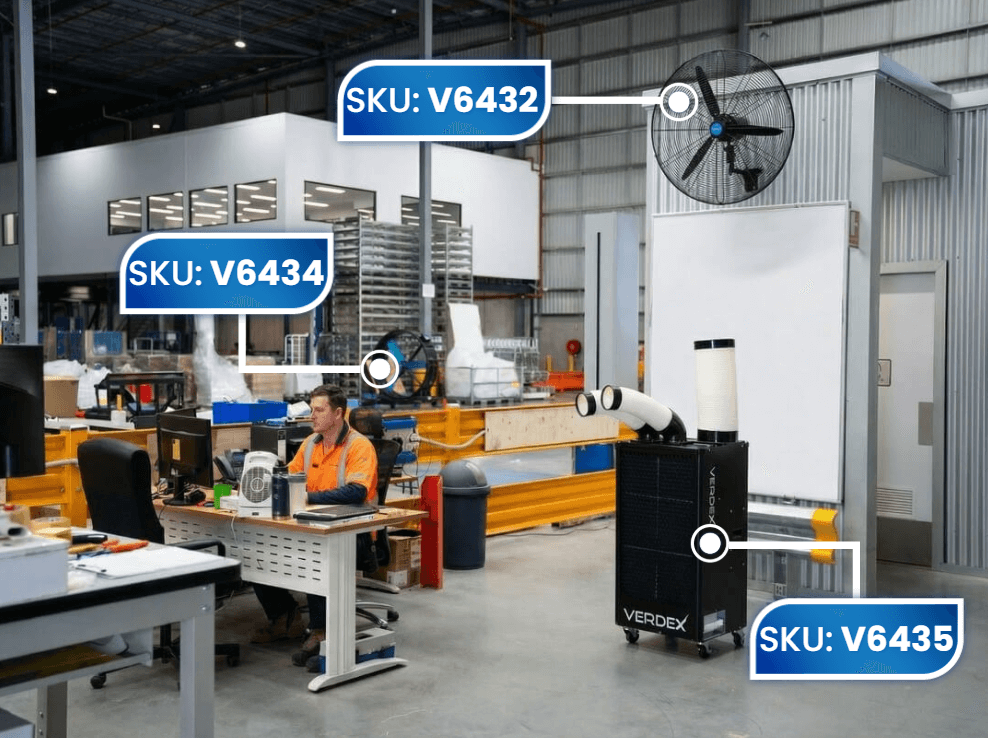
| Verdex Model | - | V6432: 1880mm Pedestal Industrial Fan
|
V6425: Portable Evaporative Cooler | V6435: Portable Industrial Air Conditioner |
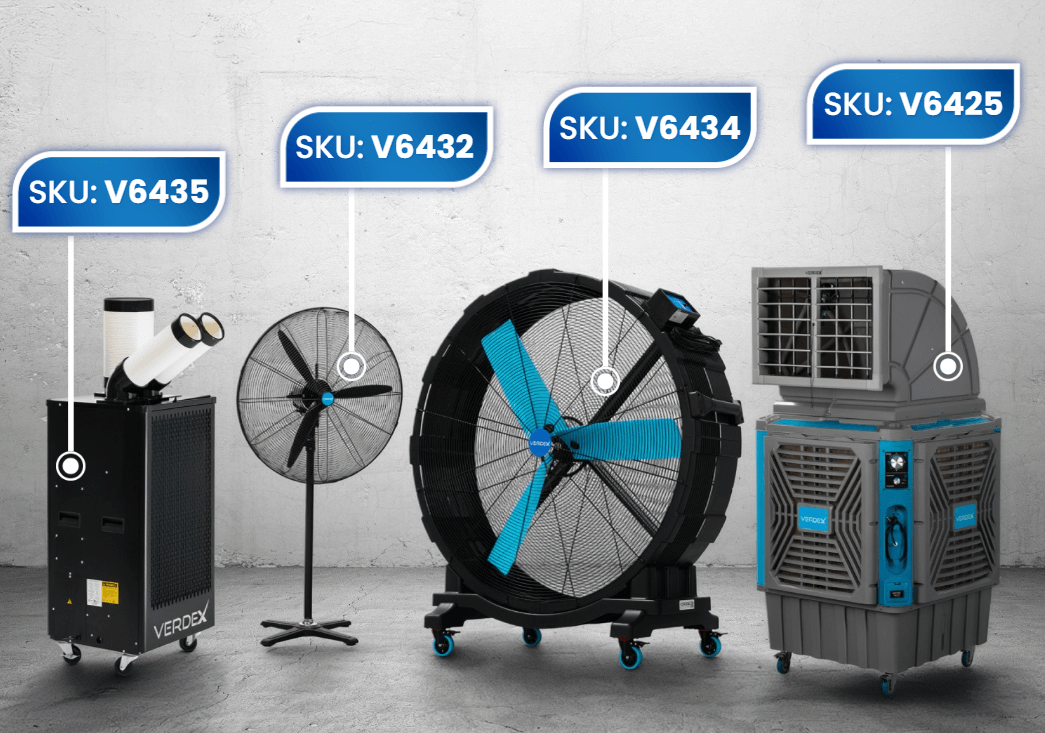
Verdex’s workshop fans and coolers range is designed for flexible, ground-level deployment across Australian warehouse environments.
Whether the requirement is high-volume airflow, ambient temperature reduction, or controlled cooling for enclosed zones, there are solutions suited to different layouts and operational needs.
Cooling strategies are rarely one-size-fits-all. In practice, many facilities combine airflow and active cooling to manage heat across different areas of the same warehouse.
Below is a short in-house video from our Summer launch campaign featuring one of our warehouse retail specialists showing how these systems operate in real warehouse conditions!
Cooling That Focuses on People, Not Just Air
Effective warehouse cooling needs to operate where people are working.
Rather than simply moving warm air near the ceiling, practical cooling solutions deliver airflow or reduce temperatures at ground level — around packing benches, loading areas, and active work zones.
This approach focuses on improving real working conditions, not just overall air movement within the building.
The examples below illustrate how different cooling solutions can be applied across typical warehouse environments.
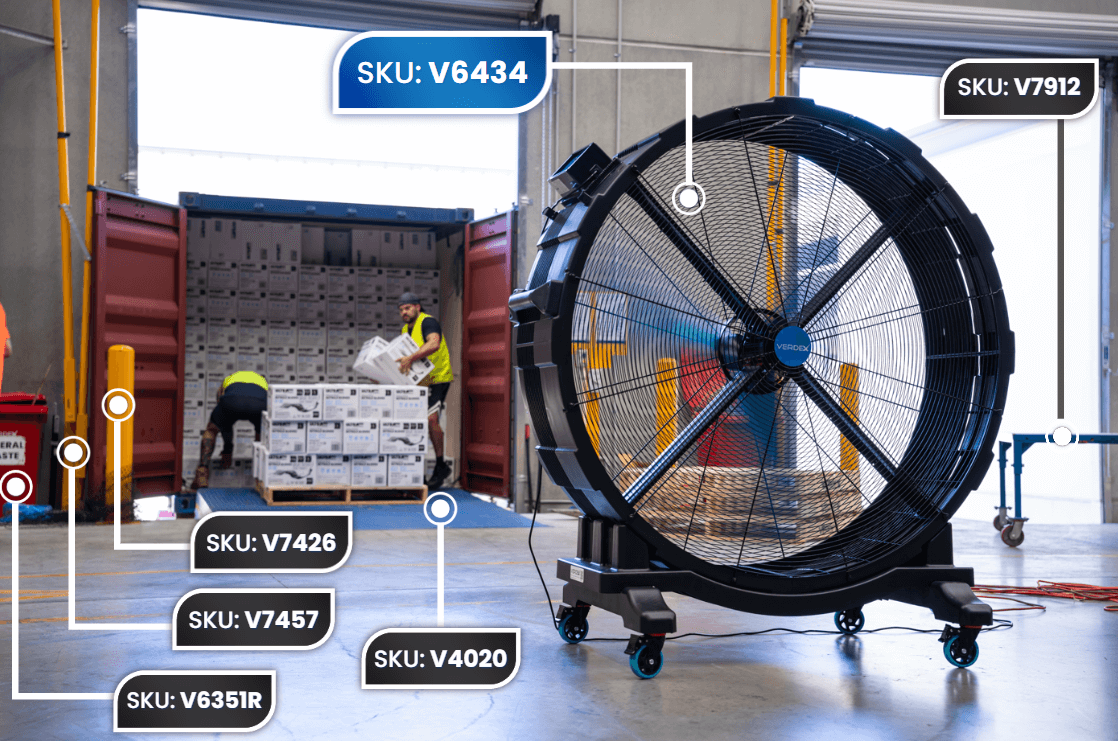
Cooling Scenario: High-Volume Ground-Level Airflow
Recommended solution:
Floor fans
Best for:
Large open warehouse floors where strong airflow is required at operator height.
Why it works:
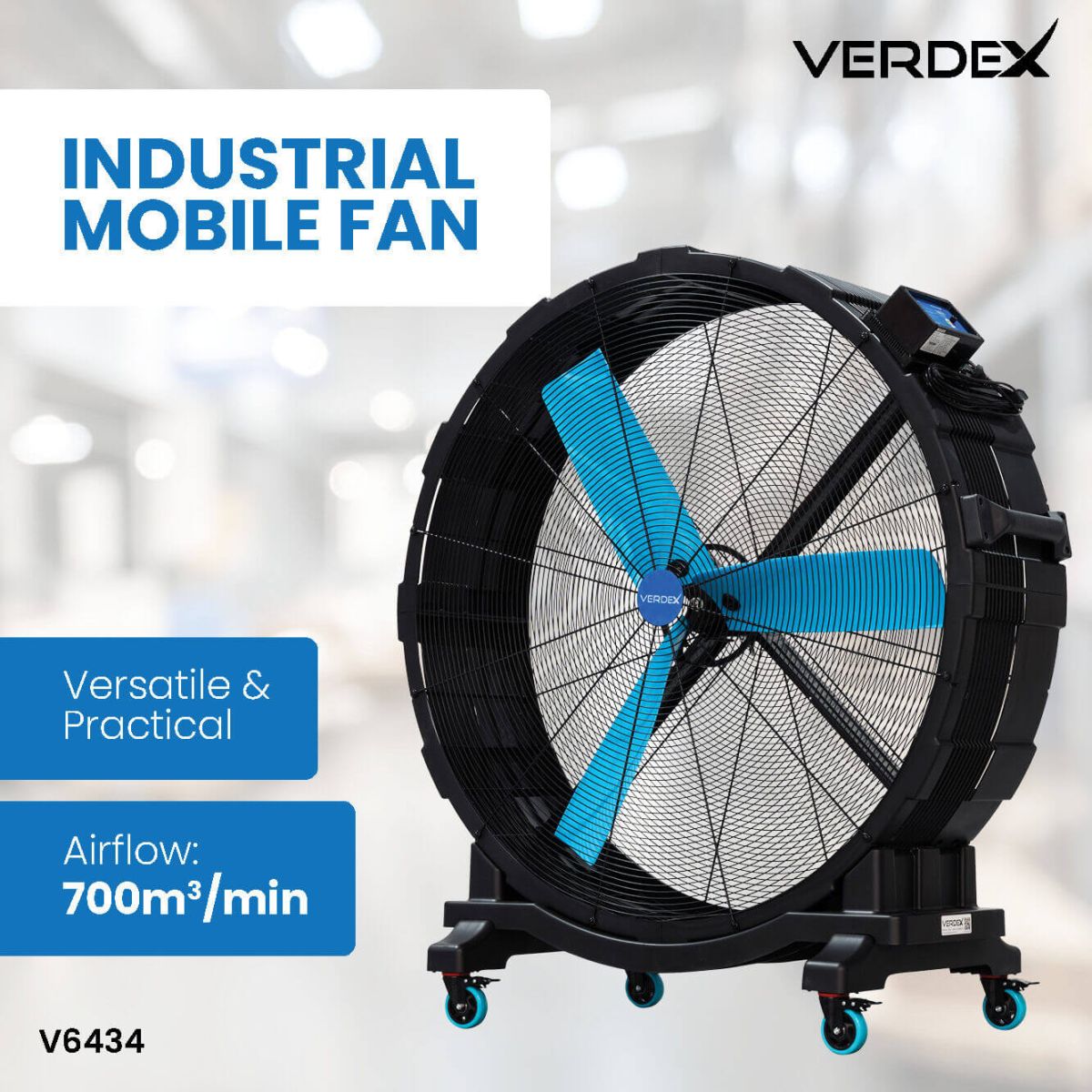
A mobile industrial fan with long blades delivers strong, directional airflow exactly where teams are working, improving air movement across large active floor areas.
Key benefits:
-
Immediate airflow in busy work areas
-
Easy repositioning as layouts change
-
No structural installation required
-
Quick setup during peak heat
Where it helps most:
Ground-level fans are particularly effective in areas where ceiling airflow may struggle to reach, such as container loading zones, racked aisles, enclosed packing areas and partially partitioned spaces.
In these environments, increasing air movement at operator height can significantly improve perceived comfort.
Our product:
Cooling Scenario: Targeted Workstation Cooling
Recommended solution:
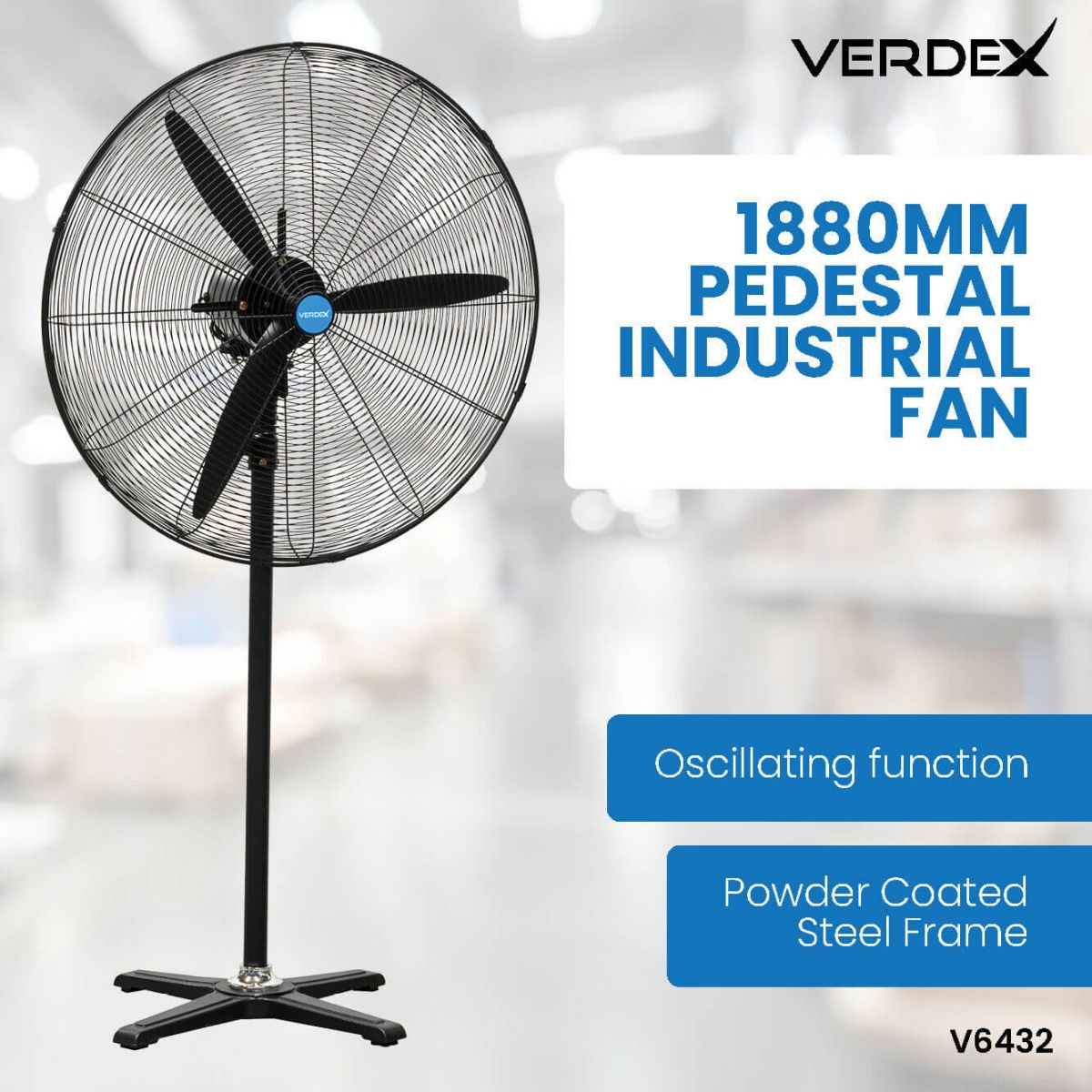
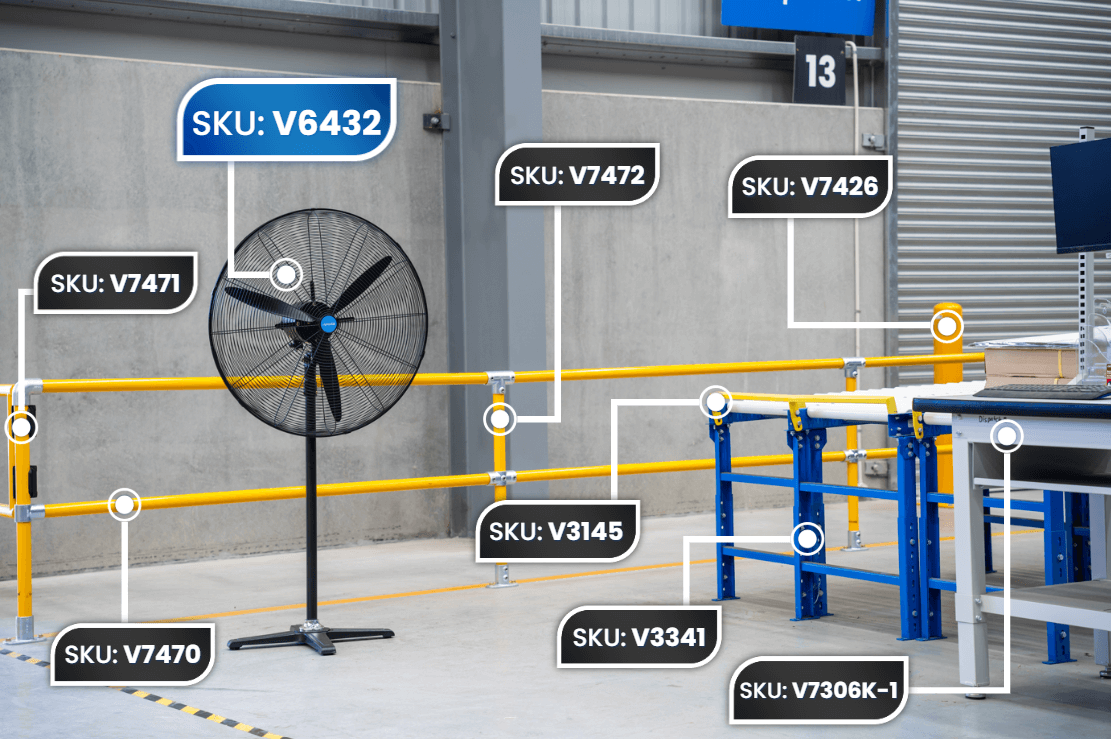
Pedestal fans
Best for:
Specific work areas where employees remain in one location, such as packing benches, assembly stations, maintenance areas, or dispatch desks.
Why it works:
A pedestal industrial fan delivers focused airflow directly to workstations, improving air movement and comfort in areas where full-floor airflow is unnecessary.
Key benefits:
-
Adjustable height and direction
-
Direct airflow to workstations
-
Simple, cost-effective setup
-
Easy repositioning as needs change
Where it helps most:
Pedestal fans are particularly useful in smaller work zones where employees remain stationary for long periods.
While these units do not actively reduce air temperature, increasing airflow across the workspace can significantly improve perceived comfort in areas that may otherwise feel stagnant.
Our product:
See the Airflow Difference in Action
To better understand the difference between high-volume airflow and targeted workstation cooling, watch the short video below.
It shows both the Industrial Mobile Fan - 1500mm Blade Diameter (V6434) and the Pedestal Industrial Fan (V6432) operating at ground level in a real warehouse setting.
You’ll see how each unit distributes airflow, how they differ in coverage, and how easily they can be positioned where cooling is needed most.
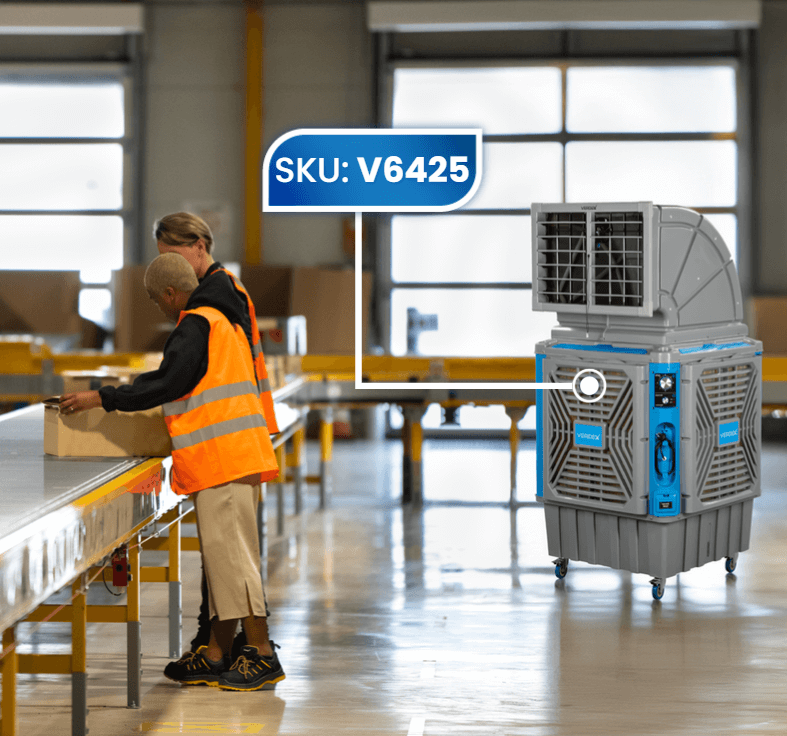
Temperature Reduction in Open Warehouse Areas
Recommended solution:
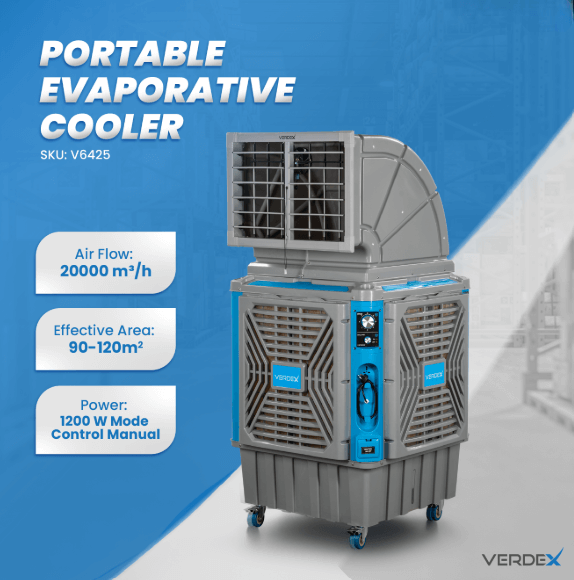
Evaporative coolers
Best for:
Open warehouse environments where sustained heat is affecting comfort and productivity.
Why it works:
Unlike standard fans that simply move warm air, an evaporative cooler draws hot air through water-saturated cooling pads and releases cooler air back into the workspace, helping reduce the actual air temperature.
Benefits include:
-
Noticeable reduction in air temperature
-
Energy-efficient cooling compared with traditional air conditioning
-
Effective performance in open warehouse spaces
-
Quick setup with no permanent installation
Where it helps most:
Evaporative coolers perform best in large open areas where heat builds up throughout the day and additional temperature reduction is needed beyond airflow alone.
In hot, dry summer conditions common across many parts of Australia, evaporative cooling can provide meaningful temperature relief while maintaining strong air circulation across active work zones.
Verdex product:
Controlled Cooling for Enclosed Zones
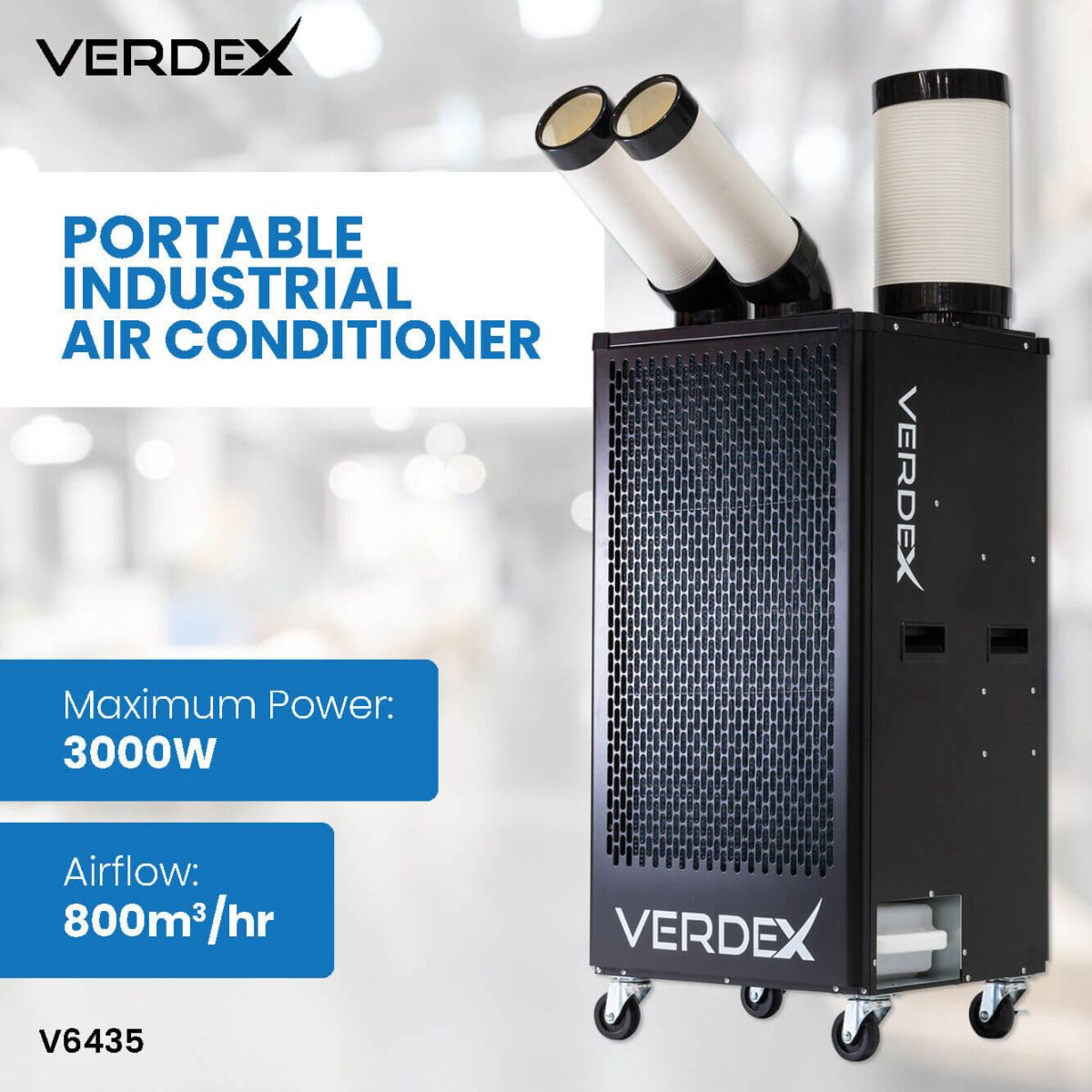
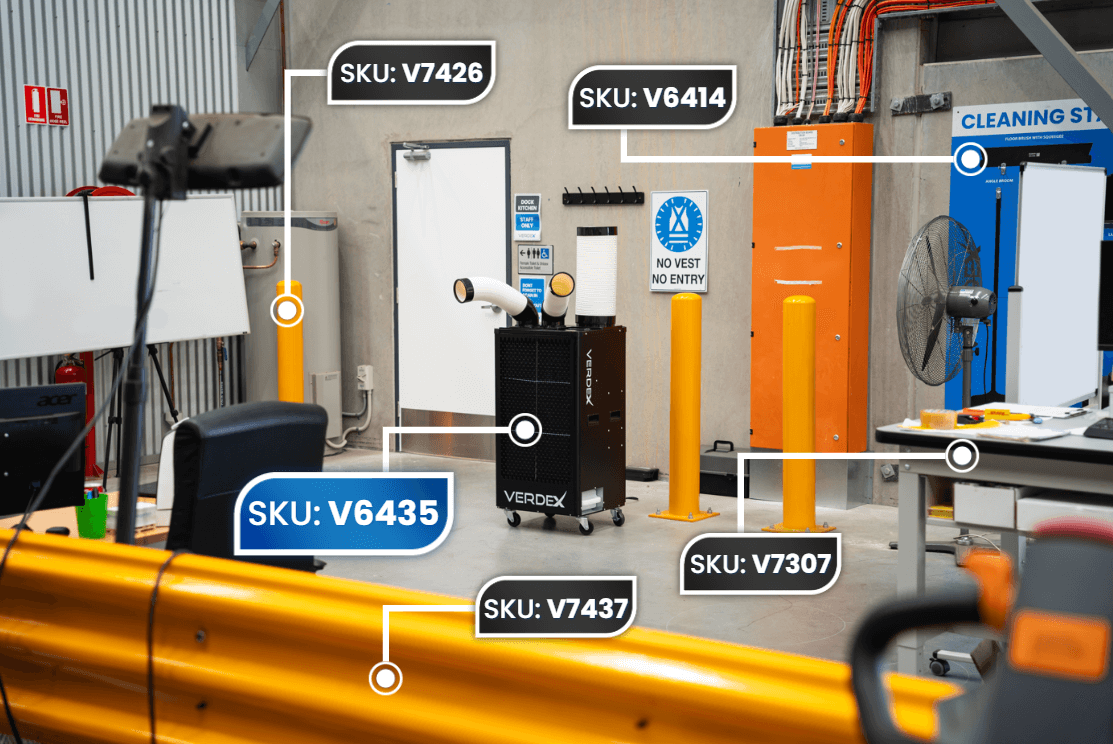
Recommended solution:
Portable industrial air conditioners
Best for:
Enclosed or semi-enclosed areas where consistent temperature control is required.
Why it works:
A portable industrial air conditioner actively lowers air temperature and maintains stable cooling conditions, providing reliable temperature control regardless of humidity levels.
Benefits include:
-
Direct temperature control
-
Suitable for enclosed or semi-enclosed spaces
-
Independent operation from building air conditioning systems
-
Easy positioning where precision cooling is required
Where it helps most:
Portable industrial air conditioners are particularly effective in enclosed environments such as quality control rooms, packing areas, server rooms, and temperature-sensitive storage zones.
In these environments, maintaining stable temperatures can be critical for equipment performance, product quality, or operational compliance.
Portable units provide reliable cooling without requiring permanent installation or modifications to existing building systems.
Verdex product:
See the Portable Industrial Air Conditioner in Action
To see how controlled cooling works in a real warehouse environment, watch the product demonstration below.
The video shows the Portable Industrial Air Conditioner (V6435) operating within an enclosed workspace, demonstrating how it delivers consistent and measurable temperature control where airflow alone is not sufficient.
For facilities managing sensitive products, compliance requirements, or heat-critical processes, this provides a practical example of how precision cooling can be deployed quickly and effectively.
Capital Infrastructure vs Flexible Deployment
Large ceiling-mounted systems are major capital investments.
They typically require:
-
Professional installation
-
Structural mounting and engineering review
-
Dedicated electrical setup
-
Ongoing servicing schedules
-
Lift equipment for maintenance access
Once installed, they become fixed infrastructure. Adjusting or relocating them is not simple.
In many cases, the investment required for a large ceiling-mounted system can equal the cost of multiple ground-level cooling units.
Deploying several portable units allows cooling to be distributed across high-traffic zones rather than concentrated overhead, providing greater flexibility as layouts and staffing levels change.
By contrast, portable industrial cooling solutions offer:
-
No permanent installation
-
Immediate deployment
-
Flexible positioning across different zones
-
Easy access for servicing
-
Minimal disruption to daily operations
For many small to mid-sized Australian warehouses — and even larger facilities with evolving layouts — ground-level cooling provides a more adaptable and scalable approach.
Instead of committing to a single fixed overhead system, businesses can position cooling exactly where it is needed and expand coverage as operational demands change.
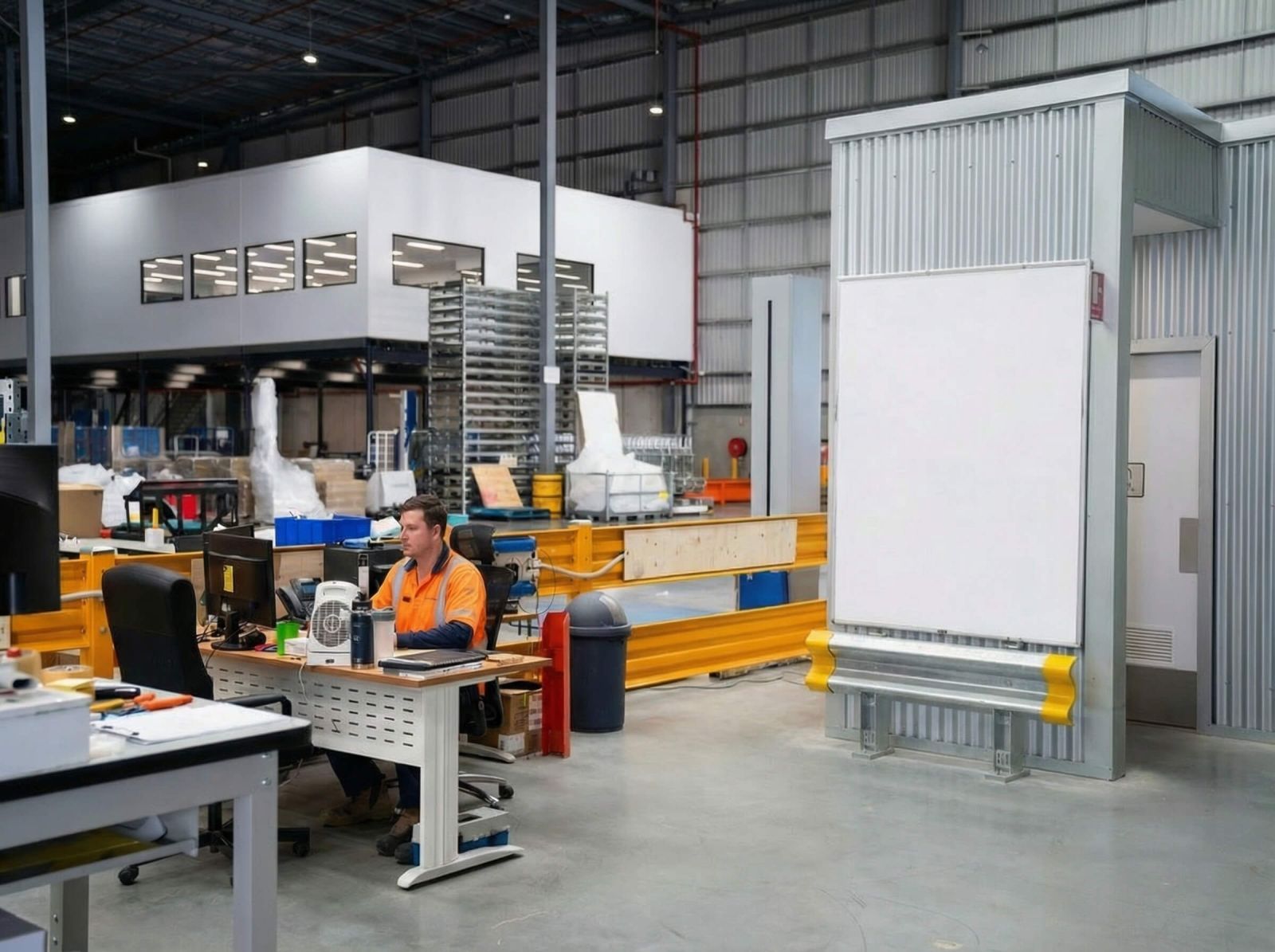 Warehouse Operations Manager working without cooling solutions
 Portable warehouse cooling solutions added to a warehouse manager's receiving area ↗
Cooling Impacts More Than Comfort
Warehouse cooling decisions affect more than just how a space feels.
They influence:
-
Heat stress risk
-
Worker concentration
-
Picking and packing accuracy
-
Staff morale and retention
-
WHS compliance
-
Overall operational continuity
When temperatures rise, productivity can decline. Mistakes increase and fatigue sets in faster.
Research on indoor workplace performance consistently shows that productivity drops as temperatures move beyond comfortable working ranges, particularly in physically demanding environments.
Prolonged exposure to high temperatures can contribute to fatigue, dehydration, heat exhaustion and, in severe cases, heat stroke.
These risks increase during heatwaves and in enclosed industrial environments.
In Australia’s increasingly hot summers, effective cooling is not a luxury — it is a safeguard for performance, safety and operational consistency.
Smarter Cooling for Australian Warehouses
Warehouse cooling decisions are rarely one-size-fits-all. Building height, layout, workforce density and heat load all influence which approach will deliver the best result.
Rather than asking which system is “better,” the more practical question is: what is the primary objective in your space?
The guide below summarises common warehouse scenarios and the solutions typically suited to each.
| If Your Warehouse… | Then Consider… | Why It Works |
|---|---|---|
| Has high ceilings and large open spans | Ceiling-mounted industrial fans | Distributes air broadly across wide areas and improves overall airflow |
| Has targeted work zones, container areas or partially enclosed spaces | Ground-level industrial fans | Delivers direct airflow at operator height and improves comfort in stagnant zones |
| Experiences sustained high heat affecting productivity | Evaporative coolers or portable industrial air conditioners | Actively lowers air temperature rather than only moving air |
| Has multiple heat challenges across different zones | A combination of airflow and active cooling | Provides layered heat management tailored to each area |
In many Australian warehouses, the most effective strategy combines air distribution and active cooling.
Broad airflow can improve overall comfort, while targeted ground-level systems and temperature-reducing equipment address specific high-heat zones. Effective heat management is not about selecting one system over another.
It’s about applying the right tool to the right conditions, and adjusting as operational demands change.
Explore Verdex’s full range of Workshop Fans and Coolers to assess which approach aligns with your warehouse size, layout and summer workload.