Login / Register








 Trolleys & Hand Trucks
 Cage Trolleys
 Cleaning Carts & Trolleys
 Construction Trolleys
 Custom Trolleys
 Hand Trucks & Dollies
 Laundry/Linen Trolleys
 Lifting Trolleys
 Order Picking Trolleys
 Panel Cart Trolleys
 Platform Trolleys
 Powered Trolleys
 Shelf & Tiered Trolleys
 Shopping Trolleys
 Stainless Steel Trolleys
 Tool Trolleys
 Utility & Service Carts
 Lifting & Handling Equipment
 Forklift Attachments
 Jib Attachments
 Lifting Hoists & Pallet Hooks Accessories
 Load Skates & Tow Tugs
 Manual Stackers & Lifters
 Pallet Jacks
 Pallet Lifters
 Pallet Rotators & Dispenser
 Powered Pallet Trucks & Electric Lifters
 Scissor Lift Trolleys and Tables
 Conveyor Equipment
 Conveyor Frames & Stands
 Roller & Skate Conveyors
 Ladders & Access Equipment
 Container & Yard Ramps
 Ladders & Step Stools
 Work Platforms & Crane Cages
 Drum Handling Equipment
 Drum Storage & Bunding
 Drum Trolleys & Lifters
 Forklift Drum Handling
 Waste Handling & Bins
 Bin Lifters & Tippers
 Plastic Waste & Wheelie Bins
 Steel Waste & Tipping Bins
 Waste Carts
 Dangerous Goods Storage & Spillage
 Aerosol Cans Storage Cages
 Bunded Pallets & Storage
 Corrosive Goods Storage Cabinets
 DG Storage & Trolleys
 Flammable Liquid Cabinets
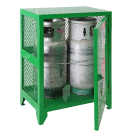 Forklift Gas Storage Cages
 Gas Cylinder Storage Bays
 Site Storage
 Spill Kits
 Shelving & Storage Equipment
 Stillage & Transport Cages
 750 Series Cage Configurations
 Heavy Duty Cabinets
 Heavy Duty Longspan Shelving
 Heavy Duty Shelving
 Mega Bins & Pallets
 Packing & Workbenches
 Parts Trays & Stor-Pak Bins
 Pegboard & Louvre Panels
 Plastic Bins & Crates
 Plastic Handling Solution Bins
 Plastic Pallets
 Stack & Nest Bins
 Pallet Racking Accessories
 Workplace Equipment
 Modular Workbenches
 Electric Height-Adjustable Workbenches
 Floor Matting
 General Workplace Equipment
 Industrial Weighing Scales
 Packaging Machinery
 Stationery Cupboards
 Storage and Stillage Cages
 Tool Trolleys
 Tooling Cabinets
 Workshop Fans and Coolers
 Safety Barriers, PPE & Signage
 Modular Safety Fence System
 Barriers & Bollards
 First Aid Equipment
 Gloves, Knives and PPE
 Signage
 Cleaning & Site Supplies
 Cleaning Equipment
 Cleaning Trolleys
 Rubbish Bins
 Signs & Traffic Supplies
 Construction Equipment
 Construction Trolleys
 Waste Handling
 General Site Equipment
 Concrete Equipment
 Site Storage
 Lifting Equipment
 Spring Workplace Selections
Verdex Insights: At a Glance
-
The Challenge: Unsecured gas cylinders can tip, damage valves, leak hazardous gas, and create serious injury, fire, or compliance risks in busy industrial workplaces.
-
The Insight: Stable flooring, chain restraints, secure anchor points, and separation from vehicle traffic all play a critical role in preventing cylinder movement and reducing workplace hazards.
-
The Verdex Solution: Verdex supplies gas cylinder racks, restraint systems, lockable cages, and forklift-compatible storage bays that help businesses keep cylinders upright, secure, ventilated, and organised across workshops, warehouses, and industrial sites.
How to Secure Gas Cylinders to Prevent Tipping and Damage
Practical Strategies to Protect People, Equipment and Workplace Safety
Gas cylinders are indispensable in many industrial workplaces — from welding and fabrication yards to warehouses and construction sites. But because they contain compressed gases under pressure, they present a serious safety risk if not stored and secured correctly. One of the most fundamental aspects of safe gas cylinder management is ensuring cylinders remain upright and stable to avoid tipping, damage and uncontrolled gas release.
If you’re still assessing where cylinders should be stored, our guide Indoor vs Outdoor Gas Cylinder Storage: What Should You Consider? explains how location, ventilation, access, and traffic flow affect storage decisions.
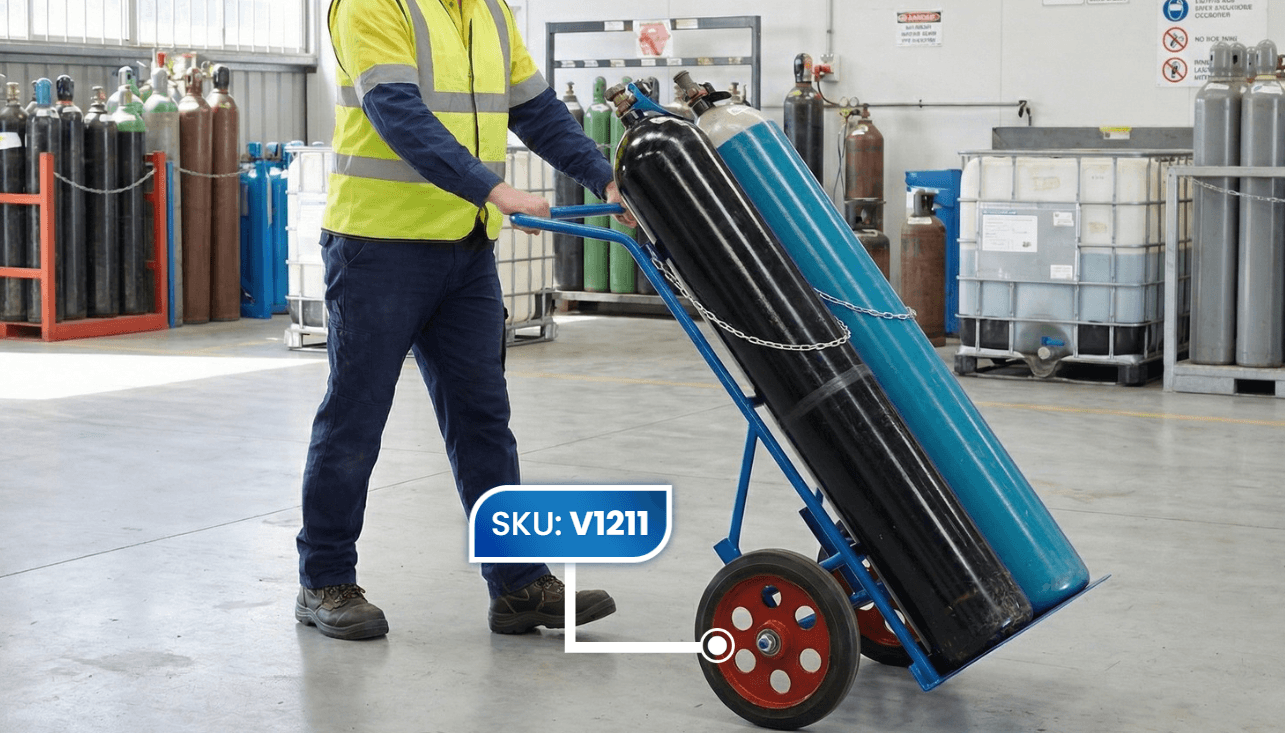
Gas Cylinder Trolleys, including Double Gas Cylinder Trolleys, are useful where cylinders need to be moved safely between storage points and active work areas.
In this blog we’ll explain why gas cylinders must stay upright, the hazards associated with falling cylinders and how to secure them properly using industry approved methods — such as chain restraints, secure anchor points, stable flooring and purpose built storage bays. We’ll also reference relevant Verdex products to help you improve gas safety on your site.
Why Gas Cylinders Must Remain Upright
Keeping gas cylinders in an upright position isn’t a preference — it’s essential for safety.
Most industrial gas cylinders contain valves and pressure relief devices designed to operate when the cylinder is upright. When a cylinder is tilted, several risks increase:
-
Liquid gas may reach the valve opening, causing dangerous spurting or malfunction
-
Pressure relief devices may activate incorrectly
-
The cylinder becomes less stable and more likely to fall
-
Connecting regulators and hoses may be stressed or damaged
For flammable, oxidising or toxic gases, a tipped cylinder drastically increases the risk of fire, explosion, chemical exposure or asphyxiation.
Where cylinders need to be moved between storage and work areas, Double Cylinder Trolleys help workers transport them upright and securely, reducing manual handling strain and the risk of tipping during movement.
Risks of Falling Gas Cylinders
Understanding the hazards of a falling cylinder helps emphasise the importance of securing them properly.
1. Valve Damage and Gas Release
The valve is the most vulnerable part of a cylinder. A falling cylinder can snap its valve assembly, releasing pressurised gas uncontrollably. For flammable gases like LPG or acetylene, this can create an immediate fire hazard.
2. Physical Impact Injury
Cylinders are heavy. A falling 9kg or larger industrial cylinder can cause significant injury to workers if it hits feet, legs or hands.
3. Secondary Hazards
Once a cylinder is compromised, other hazards may follow — fire, asphyxiation, chemical exposure or risk to nearby equipment and infrastructure.
4. Equipment Damage
Dropping or tipping cylinders can also damage attached regulators, gauges, hoses or nearby machinery — creating costly downtime and repair work.
For larger outdoor storage areas, Gas Cylinder Storage Bays (900mm Deep) with Add On Bay provide a structured way to keep multiple cylinders upright, separated, and protected from movement.
These risks are why structured securing systems are essential in any workplace where gas cylinders are used.
For a broader overview of cylinder storage risks and safe handling principles, see our guide Safe Storage of Gas Cylinders in Industrial Workplaces.
Chain Restraints — A Simple but Effective Solution
One of the most basic and reliable methods to secure gas cylinders upright is using chain restraints.
How Chain Restraints Work
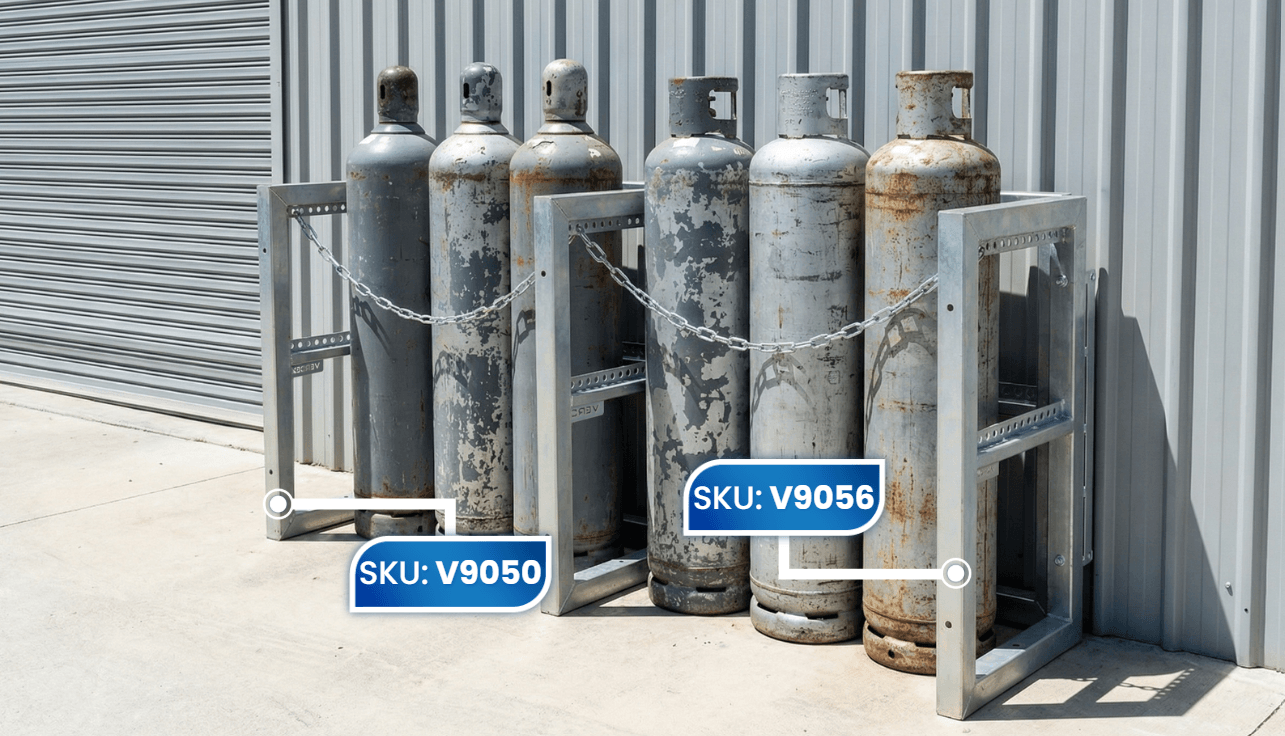
Chain restraints wrap around the neck or body of a gas cylinder and anchor it to a fixed point — such as a wall, rack or dedicated storage bay frame. This prevents the cylinder from tipping or rolling if nudged.
A typical secure gas cylinder storage setup will include a:
-
wall bracket or post rated for cylinder restraint
-
heavy duty chain or strap
-
lockable connection point
Chains should be rated for industrial use and checked regularly for wear or corrosion.
Verdex Chain Restraint Solutions
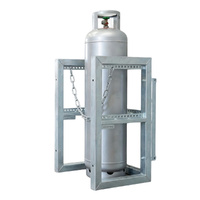
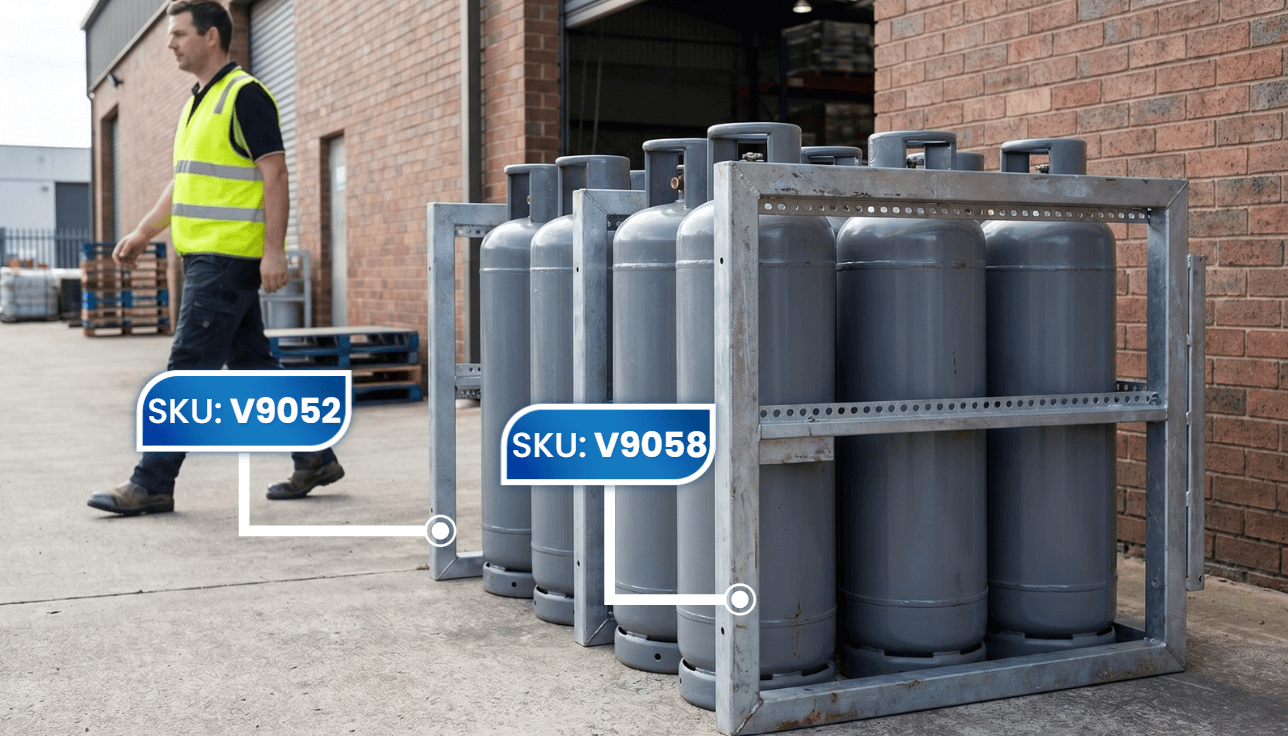
Products such as the Gas Cylinder Rack often include pre drilled holes for securing cylinders with chains, or can be used in conjunction with restraint chains to keep cylinders stable and accessible.
Combined with a rack, chain restraints help create a stable, compliant storage system that prevents cylinders tipping even in high traffic areas.
Securing Points – Walls, Racks and Bays
To effectively prevent tipping, gas cylinders must be secured to something solid.
1. Wall Anchors and Posts
Fixed wall anchors or posts provide a sturdy anchor point for chains or straps. They’re ideal in workshops with available wall space and low traffic around stored gas cylinders. In smaller controlled storage areas, Gas Cylinder Cabinets can also support secure cylinder storage where access control and organisation are important.
2. Racks and Stillages
Cylinders placed in racks or stillages are already kept upright and segregated. With restraint chains in place, they’re even more secure. Storage products such as the Gas Cylinder Stillage Cage provide built-in restraint and separation between cylinders.
3. Purpose Built Cylinder Bays and Cages
The safest and most structured approach for industrial workplaces — especially outdoors or in higher volume zones — is a dedicated gas cylinder bay or storage cage.
Examples include:
-
Gas Cylinder Cage — A heavy duty cage that encloses cylinders in a ventilated, secure frame.
-
Lockable Gas Storage Cage — Adds security by preventing unauthorised access.
-
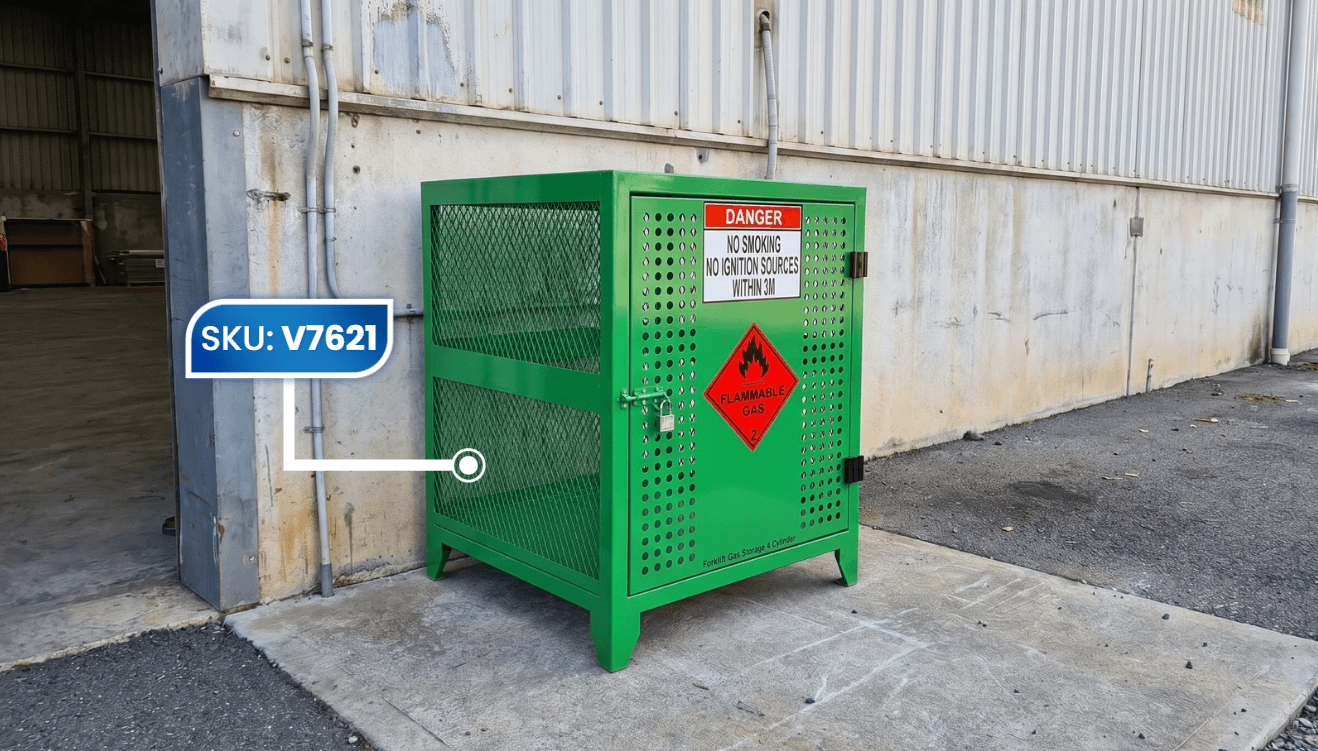
Fork Gas Storage Cages — Allow forklift movement of cylinders in bulk (e.g., 2, 4, 6 or 12 cylinder cages).
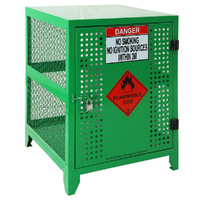
In workplaces where cylinders need to be moved by forklift, a Fork Gas Storage Cage - 4 Cylinders provides secure storage while allowing safer bulk handling across yards or warehouse areas. Purpose-built Gas Cylinder Storage Bays also help keep cylinders upright, separated, and organised in outdoor industrial environments.
These systems combine physical restraint with organisation — helping keep cylinders upright, separated, and protected from impact or tampering.
Stable Flooring Matters
No matter how well you anchor cylinders, the surface they sit on matters.
Ideal Flooring Conditions
-
Level and firm surfaces
-
No loose gravel or uneven concrete
-
Non slip coatings where possible
-
Free from standing water or chemical spills
Uneven flooring increases the likelihood of cylinders tilting even before they’re secured. For outdoor areas, consider installing flat concrete or paved pads in cylinder storage zones. If this isn’t possible, purpose built bases within cages often include stabilised floor frames to ensure cylinders remain upright.
Separation from Vehicle Movement
In busy workplaces — warehouses, yards and workshops — vehicles like forklifts, trucks and service vehicles are constantly in motion. Gas cylinders stored near these pathways are at higher risk of being struck and tipped.
A few key tips:
-
Position cylinders well away from vehicle routes
-
Use bollards or barriers around static storage areas to protect against accidental vehicle impact
-
Clearly mark the storage area with high visibility signage
Products such as Safety Barriers or Bollards can help keep cylinder zones physically separated from vehicle lanes — reducing the chance of impact damage.
Why Purpose Built Bays Improve Stability and Safety
While racks and chains are effective, purpose built cylinder bays take safety and stability a step further — which is important for larger worksites, outdoor areas, or high turnover operations.
1. Integrated Restraint Systems
Cages and bays are designed to hold cylinders in place with built in anchoring points and structured frames. This ensures multiple cylinders can be held securely side by side without risk of mutual tipping.
2. Segregation and Organisation
Cylinders containing incompatible gases (e.g. oxygen vs flammable gas) should not be stored together. Many purpose built bays have compartments or separation features that help meet this need.
3. Shelter and Weather Protection
Outdoor bays often include top covers or weather resistant designs that shield cylinders from rain, sunlight and corrosion — while still allowing ventilation. This helps protect the integrity of cylinder valves and labels.
4. Security
Lockable cages prevent unauthorised access and minimise tampering — particularly important in open industrial environments.
For sites with limited space, Gas Cylinder Storage Bays (450mm Deep) with Add On Bay offer a compact way to secure cylinders outdoors while maintaining separation and organisation.
Practical Steps to Secure Your Gas Cylinders
To implement a safe gas cylinder storage program:
-
Select a stable, level storage area away from vehicle routes and ignition sources.
-
Choose the right storage solution — wall mounts, racks or purpose built cages based on volume of cylinders and site layout.
-
Use industrial rated chain restraints attached to secure anchor points.
-
Ensure cylinders stay upright at all times — loading, storage, transport and handling.
-
Inspect restraints and mounts regularly for wear, corrosion or loosening.
-
Train staff on correct storage and handling — consistency prevents accidents.
By combining effective physical securing methods with well designed storage systems, you minimise risk and protect both people and assets.
Improve Gas Cylinder Safety and Storage with Verdex
Keeping gas cylinders upright, secure, and properly separated is essential for reducing workplace risks and maintaining safer industrial environments. From chain restraints and stable flooring to purpose built cages and storage bays, the right storage setup helps prevent tipping, protect equipment, and improve day-to-day site organisation.
Verdex supplies a wide range of gas cylinder racks, lockable cages, restraint systems, and forklift-compatible storage solutions designed for warehouses, workshops, construction sites, and industrial workplaces. Whether you need secure outdoor storage, organised cylinder separation, or improved protection in high traffic areas, our solutions help support safer and more compliant operations.
If you’re reviewing your current gas cylinder storage setup or planning a new storage area, the Verdex team can help you identify practical solutions suited to your site layout, cylinder volumes, and operational requirements.